

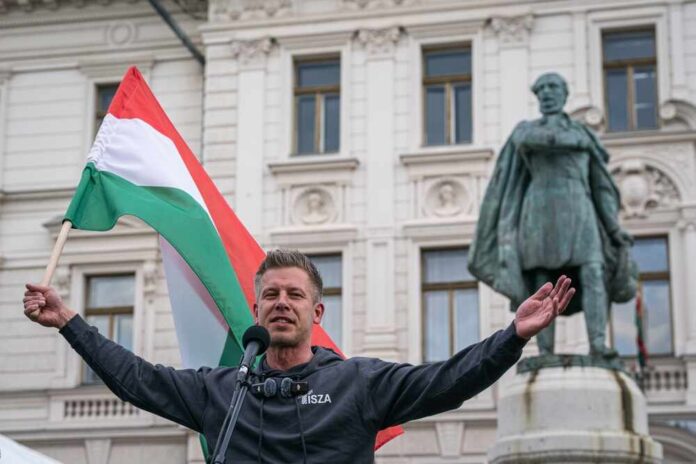
A stunning electoral earthquake in Hungary has toppled Viktor Orbán after 16 years in power, raising critical questions about what this means for Trump administration diplomacy and Europe’s future direction as incoming Prime Minister Peter Magyar promises sweeping changes.
Story Snapshot
- Opposition leader Peter Magyar won a landslide victory, ousting Viktor Orbán after 16 years as Hungary’s Prime Minister
- Magyar plans to reverse Orbán’s EU obstruction and support a €90 billion loan to Ukraine previously blocked by the outgoing government
- Hungarian voters cited concerns about Orbán’s Russian connections and desire to remain integrated with Europe as key motivations
- The new government faces challenges redefining relationships with the EU, Russia, and the Trump administration
Landslide Victory Shocks Political Observers
Peter Magyar’s electoral triumph exceeded even the most optimistic projections, delivering what observers characterized as a stunning repudiation of Orbán’s lengthy tenure. Bloomberg correspondent Oliver Crook reported from Budapest that the magnitude of the victory left analysts astonished, describing the outcome as “hard to overstate” in its political significance. Magyar declared victory with triumphant language, proclaiming Hungarians had “liberated” their homeland and “changed the Orbán regime together.” The emotional intensity among celebrating citizens reflected years of frustration with authoritarian governance that many felt had betrayed Hungary’s foundational principles.
Foreign Policy Shift Signals Major Realignment
Magyar enters office with an explicit mandate to reorient Hungary’s international relationships, particularly regarding the European Union and Ukraine. Orbán’s blocking of a €90 billion EU loan to Ukraine had created significant friction with Brussels and member states supporting Kyiv against Russian aggression. Magyar’s government is expected to reverse this obstruction, signaling a more constructive approach to European cooperation. Hungarian voters specifically cited Orbán’s “Russian connections and Russian relationships” as troubling, emphasizing their European identity with statements like “We are Europeans and we want to stay in Europe.” This shift carries implications for the Trump administration’s European strategy and raises questions about how Washington will navigate relationships with a Hungarian government moving away from Orbán’s positions.
Government Purge and Democratic Reforms Expected
Magyar has wasted no time demanding accountability from officials loyal to the previous administration. He accused Orbán-aligned government personnel of betraying national interests by prioritizing personal loyalty over the Hungarian people’s welfare. This purge signals Magyar’s determination to consolidate his mandate and implement promised reforms. While Magyar is described as nationalistic and right-leaning, his approach to governance appears fundamentally different from Orbán’s model. Citizens expressed hope for substantial policy changes after 16 years of what they characterized as a system “against our fundamentals,” though whether Magyar can deliver on these expectations while maintaining his nationalist credentials remains uncertain.
Implications for American Interests and Governance
This dramatic political transformation in a NATO member state presents both opportunities and challenges for American policymakers. For conservatives concerned about European stability and the costs of defending Ukraine, Magyar’s willingness to support EU aid to Kyiv could reduce pressure on American resources. However, his strong mandate and emboldened position may create unpredictability in transatlantic relations as he seeks to redefine Hungary’s role. The election also highlights a broader pattern familiar to Americans across the political spectrum: citizens rejecting entrenched leadership they believe has grown disconnected from national interests. Whether Magyar represents genuine reform or simply a new face on old problems will become clear as his government takes shape and confronts the difficult economic and diplomatic challenges inherited from Orbán’s extended tenure.
Magyar’s two-year campaign succeeded in building a coalition that delivered overwhelming electoral victory, but governing will require navigating complex relationships with the EU, managing economic pressures, and maintaining public trust. His calls for sweeping changes resonate with voters tired of perceived corruption and mismanagement, yet the specific policies he implements will determine whether this represents meaningful reform or disappointing continuity. For Americans watching European developments, Hungary’s transition offers lessons about the limits of long-serving leaders and the volatile nature of contemporary democratic politics when citizens feel their governments have failed them.