

A beach walker found a human jaw in San Clemente, and early signs point to old remains, not a fresh crime.
Story Snapshot
- San Clemente beachgoer found a lower human jaw with teeth in the sand [9][11].
- Similar finds often prove historic or indeterminate until lab tests finish [16][17][18].
- Forensic methods like radiocarbon analysis can estimate time since death [2].
- Teeth endure for decades, aiding identification and aging of remains [5].
What Was Found On The Beach
Local outlets reported that a woman walking in San Clemente discovered the lower part of a human jaw with teeth exposed on the sand. The find occurred along a public beach and was turned over to authorities for review and handling by the coroner. Reports did not state any clear link to a current crime or a missing person case. The jaw’s condition and setting raised questions that only lab work can resolve with confidence [9][11].
Officials have handled similar cases in the area. Years earlier, hikers found a skull and bone fragments in rural San Clemente. Deputies and the coroner determined those remains appeared very old, and investigators hoped teeth could still help with identification. That case showed that visual age cues and tooth study often guide next steps while labs confirm timing and identity, sometimes after weeks or months of work [10].
Why Forensic Tests Matter More Than First Impressions
Forensic anthropology lays out a clear path for fragment analysis. Experts first confirm whether the material is bone or tooth. They may use scanning electron microscopy and energy dispersive X-ray spectroscopy to check composition. They then consider DNA, histology, and, when possible, radiocarbon testing. Radiocarbon analysis can clarify time since death by comparing the sample’s carbon to known levels over time, including the modern bomb-curve signal from past nuclear tests [2].
Teeth offer durable clues when the rest of the body has broken down. Forensic dentistry literature explains that teeth resist decay and heat, which makes them reliable for identification long after soft tissue is gone. Dentists can compare dental records, examine root and pulp features, and estimate age ranges. This resilience is why a small jaw piece can remain intact in sand and still help labs place the person’s age and era even if the rest is missing or scattered [5].
How Beach Remains Are Usually Classified
Beach and shoreline discoveries often start with uncertainty. Police and reporters in other jaw finds have said it was too early to tell whether remains were recent or many decades old. In Florida, an archaeologist noted a jaw could belong to an Indigenous person from centuries ago, triggering different handling rules if proven older than seventy-five years. Authorities stress that only testing can settle these questions, and timelines for lab results are often open-ended [16][17][18].
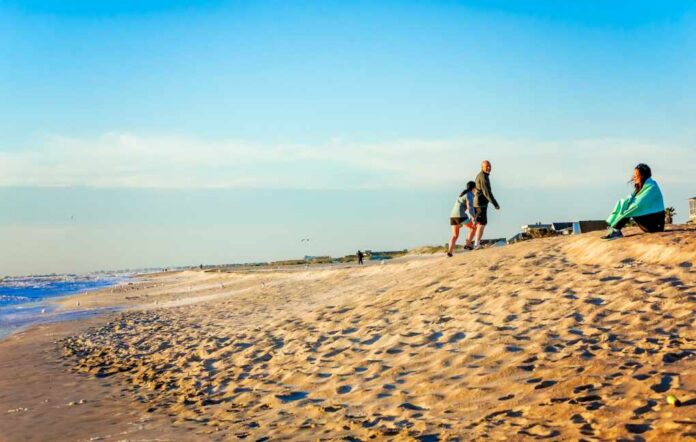
A human jaw with teeth was discovered by a woman who was walking on the beach in San Clemente.
Details: https://t.co/NeIwglV0x6 pic.twitter.com/0N0mbyhrbf— KTLA (@KTLA) June 20, 2026
This pattern fits the San Clemente report. There is no lab result in hand linking the jaw to a new crime, and no agency has labeled it part of a homicide. Prior local findings that “appear very old,” combined with the strength of teeth as long-term evidence, point to a careful, methodical process rather than a rush to judgment. The next facts that matter will come from the lab bench, not from quick takes or social media [10].
What Readers Should Watch For Next
Concerned residents should look for three updates. First, confirmation that the fragment is definitively human tooth and jaw tissue from a single person. Second, any radiocarbon or other age estimate that places the remains in a modern or historic window. Third, any match to dental records, which could connect the jaw to a known missing person. Until then, patience is wise, and speculation is not. Teeth can tell the story, but only after scientists do the work [2][5].
Sources:
[2] Web – [PDF] Identification of a charred body by comparative analysis of …
[5] Web – A portion of a human jaw with teeth was discovered by a woman …
[9] Web – The role and evolution of dental and radiological examinations in …
[10] Web – Macabre discovery, involving human jaw, made on California beach
[11] Web – Human skull found in rural area of San Clemente – ABC7 Los Angeles
[16] YouTube – Burned Bone Fragments Recovered on Property of Man …
[17] Web – Mystery surrounds human jawbone discovery on beach – ABC News
[18] Web – Woman finds human jaw bone while shelling at Florida beach: report