
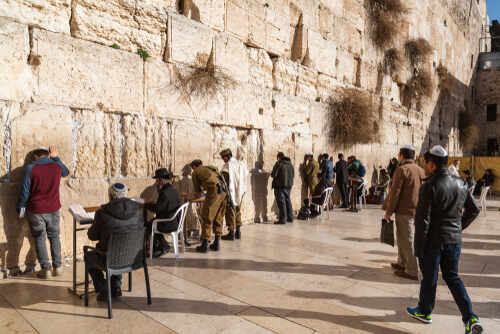
Iran’s Islamic Revolutionary Guard Corps launched missiles that landed mere hundreds of meters from Jerusalem’s holiest sites—including the Temple Mount, Western Wall, and Church of the Holy Sepulchre—forcing unprecedented closures and exposing the regime’s reckless disregard for sacred ground revered by billions worldwide.
Story Snapshot
- Iranian missile strike landed within hundreds of meters of Jerusalem’s Old City holy sites during “True Promise 4” operation in early March 2026
- Temple Mount, Western Wall, Al-Aqsa Mosque, and Church of the Holy Sepulchre temporarily closed for safety during Ramadan
- Attack part of broader Iranian retaliation against U.S.-Israeli strikes that killed over 1,200 in Iran
- No casualties at holy sites due to preemptive closures, but 10 Israeli civilians killed in related strikes
- U.S. CENTCOM reports 86% reduction in Iranian missile launches after targeted strikes on launch facilities
Iranian Escalation Threatens Jerusalem’s Sacred Heart
The Islamic Revolutionary Guard Corps launched missiles toward Jerusalem’s Old City during early March 2026, with warheads falling just hundreds of meters from sites sacred to Judaism, Christianity, and Islam. Israeli authorities immediately closed the Temple Mount, Western Wall, Al-Aqsa Mosque, and Church of the Holy Sepulchre under emergency guidelines. The strike occurred during the IRGC’s “True Promise 4” campaign, a multi-wave missile operation using Fattah, Emad, and Kheibar Shekan missiles. Israeli police neutralized debris and conducted searches while sirens blared across central Israel, forcing worshippers and pilgrims to evacuate.
U.S.-Israeli Operation Provokes Iranian Retaliation
The missile strikes followed coordinated U.S.-Israeli offensive operations that began February 28, 2026, targeting IRGC assets and infrastructure across Iran. Those strikes reportedly killed over 1,200 Iranians and injured 10,000, prompting Tehran’s aggressive response. The IRGC deployed drones and missiles against Israeli civilian areas and U.S. bases in Jordan, Iraq, and Gulf states. Hezbollah coordinated rocket launches from Lebanon, opening a northern front. This represents a dangerous escalation from decades of Iran-Israel proxy conflicts, now intensified by direct military engagement between Tehran and Washington alongside Jerusalem.
Holy Site Closures Disrupt Ramadan Worship
Jerusalem’s holy site closures occurred during Ramadan, disrupting worship for Muslims, Jews, and Christians alike. Israeli Foreign Ministry officials announced prayer suspensions as temporary safety measures, prioritizing worshipper protection over routine access. Catholic pilgrim groups visiting the Holy Land became stranded amid the escalating attacks and aviation disruptions. While no casualties occurred at the holy sites themselves due to preemptive restrictions on gatherings, nine Israeli civilians died near Jerusalem synagogues and homes in related Iranian strikes. The timing during Ramadan and proximity to multiple Abrahamic faith sites distinguishes this attack from previous strikes on military or peripheral targets.
American Military Power Degrades Iranian Capabilities
U.S. Central Command reported an 86% reduction in Iranian missile launches following precision strikes on Iran’s “missile cities” and underground launch facilities. The coordinated U.S.-Israeli campaign systematically destroyed IRGC launchers and production infrastructure, significantly degrading Tehran’s offensive capabilities. American naval assets including the USS Gerald R. Ford carrier strike group supported operations, though the Ford reportedly experienced fire damage during the campaign. The second phase of operations now targets Iran’s deep underground missile facilities. This demonstrates how decisive American military action, properly applied alongside our Israeli allies, can neutralize threats from rogue regimes that endanger regional stability and attack sacred sites.
The Iranian regime’s willingness to strike so close to Jerusalem’s holiest sites reveals its contempt for religious sanctity and international norms. While Israeli defenses intercepted most incoming missiles, debris and warheads fell dangerously near populated religious areas. Israeli Home Front Command continues enforcing emergency guidelines as the conflict expands into Syria and Turkey’s airspace. Druze communities in northern Israel have formed rapid-response units to support IDF operations. The Trump administration’s support for Israel’s right to defend itself and degrade Iranian capabilities stands in stark contrast to previous policies that appeased Tehran through failed nuclear agreements and cash payments.
Sources:
Iran launches new missile attacks on Israel, Jerusalem area hit
Iranian Warhead Falls Hundreds of Meters from Temple Mount
Amid escalating attacks, Catholic groups visiting Holy Land are stranded
US strikes cut Iranian missile launches by 86% – CENTCOM
Iran Launching Missiles Toward Jerusalem, City Sacred to Billions of Believers: IDF