
A catastrophic runway collision at one of America’s busiest airports has claimed two lives and exposed alarming failures in communication protocols that every traveler should know about.
Story Snapshot
- Air Canada regional jet struck Port Authority fire truck during landing at LaGuardia Airport, killing both pilots
- Air traffic control audio captured controller desperately yelling “Stop, Truck 1. Stop” moments before fatal impact
- Fire truck crossed active runway while responding to separate United Airlines incident, raising serious coordination questions
- Airport closure stranded travelers as 41 passengers and crew were hospitalized following the collision
Fatal Collision During Active Landing Operations
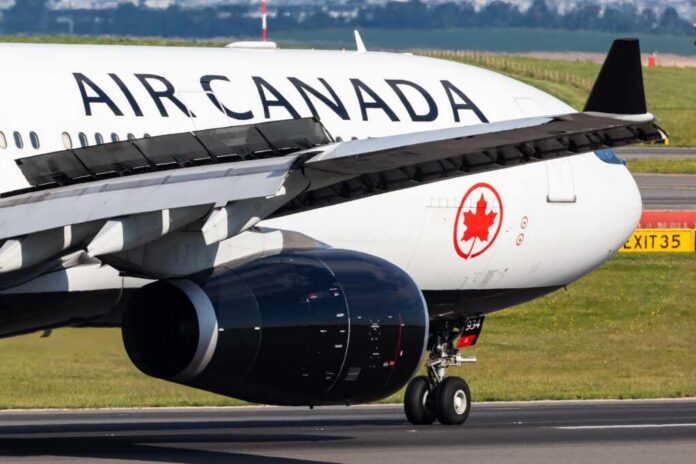
An Air Canada regional jet operating from Montreal struck a Port Authority fire truck on a LaGuardia Airport runway late Sunday night, killing the pilot and copilot instantly. The Bombardier CRJ aircraft, carrying 72 passengers and four crew members, was on final approach when it collided with the emergency vehicle crossing the active runway. The impact crushed the aircraft’s nose, causing severe structural damage visible in photographs from the scene. This tragedy occurred at one of the nation’s busiest airports, managed by the Port Authority of New York and New Jersey under Executive Director Kathryn Garcia’s oversight.
Emergency Response Breakdown Revealed in Audio
Air traffic control recordings expose a chilling sequence of events leading to the disaster. The audio captures a controller urgently attempting to stop the fire truck with the command “Stop, Truck 1. Stop” just moments before impact. The emergency vehicle was crossing the runway to respond to a separate issue aboard a United Airlines aircraft, indicating simultaneous emergencies at the airport. This raises fundamental questions about coordination between air traffic control and ground operations during critical flight phases. The communication breakdown suggests potential gaps in safety protocols that are supposed to prevent exactly this type of catastrophe.
Passenger Chaos and Investigation Underway
Following the collision, 41 passengers and crew members were transported to area hospitals, though most were subsequently released after treatment. Two Port Authority employees in the fire truck sustained non-life-threatening injuries. The National Transportation Safety Board immediately launched an investigation to determine the exact sequence of events and identify failures in adherence to safety protocols. LaGuardia Airport remained closed until at least Monday afternoon, forcing travelers to rebook flights for Tuesday or divert to alternative airports including Long Island MacArthur Airport in Ronkonkoma. This operational disruption affected thousands of travelers relying on one of America’s critical transportation hubs.
Safety Protocol Failures Demand Answers
This incident exposes serious vulnerabilities in runway safety procedures at major U.S. airports. The collision occurred during active landing operations, precisely when coordination between air traffic control, pilots, and ground operations must be flawless. The fact that an emergency vehicle crossed an active runway while an aircraft was on final approach represents either a catastrophic communication failure or a dangerous procedural breakdown. American travelers deserve airports where safety protocols actually work, not bureaucratic systems that fail at the worst possible moment. The NTSB investigation will likely trigger regulatory scrutiny from the FAA and potentially mandate enhanced safety measures across the industry, though such changes come too late for the two Canadian pilots who lost their lives.
Sources:
Pilot and Copilot Killed, LaGuardia Airport Closed After Collision Between Jet and Fire Truck – WGBH