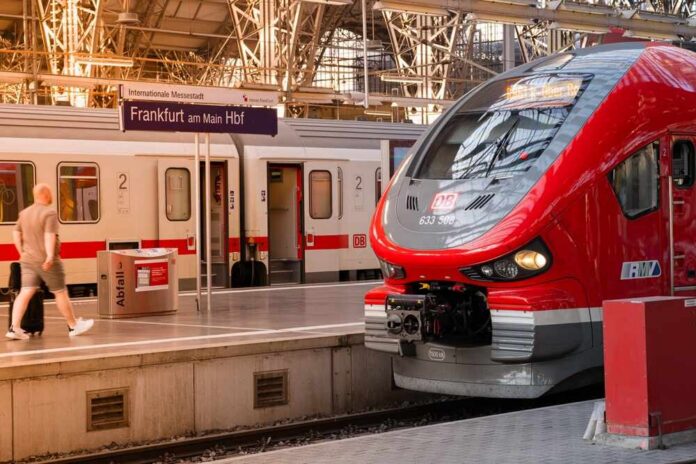
A single failure in Germany’s rail radio system just froze every train in the country and exposed how fragile Europe’s “modern” infrastructure really is.
Story Snapshot
- Germany halted every train nationwide after its GSM-R rail communication system went down, stranding passengers for hours.
- The state-owned operator admits the cause was “pinpointed” but still refuses to tell the public what actually failed.
- The outage highlights Europe’s dependence on aging, centralized tech systems that can be taken down by one point of failure.
- For Americans, it is a warning about big-government control of infrastructure and the risks of hiding the truth from taxpayers.
Nationwide Shutdown Shows the Danger of Single-Point Failures
Late Tuesday night, Germany’s state-owned rail operator, Deutsche Bahn, stopped every train in the country after a failure in its GSM-R digital communication system, the radio link between train drivers and control centers that keeps traffic moving safely.[2] For nearly two and a half hours, nothing rolled, and passengers were left stuck on trains or in stations while the network went dark step by step.[2] The company called it a “nationwide problem” in the system, but offered few details. For a country that lectures others on efficiency and green transit, one glitch turned their “model” network into a parking lot. That is what happens when one central system controls everything with no backup that can carry the full load.
Deutsche Bahn says its technicians worked “non-stop” and used an emergency system to stabilize operations until the main radio network came back online.[2] Trains then started moving again in stages, with the company warning that some delays would spill into the next morning.[10] Officials insist the problem has been fixed and that service is now “largely seamless,” but they still have not shared what actually broke or why it failed in the first place.[10] That leaves millions of riders and taxpayers in the dark about a system that is supposed to be safe, robust, and ready for crisis.
State-Controlled Rail, Vague Answers, and Stranded Passengers
During the outage, Deutsche Bahn tried to limit public anger by handing out taxi and hotel vouchers and keeping some trains at stations so people had a place to sit.[2] The gesture helped some travelers get home, but it did not change the basic fact: one communications breakdown froze an entire nation’s rail system and exposed serious planning gaps. Reports from the ground described long lines at information desks and confused staff who had little more information than the passengers in front of them.[10] For a rail network that is heavily funded and run by the federal government, that kind of chaos raises hard questions about competence and accountability, especially when the operator still refuses to say what failed.
Media reports say the fault hit the Global System for Mobile Communications–Railway, or GSM-R, a specialized mobile network adopted across Europe since about 2000 to standardize rail operations.[2] This system carries voice and data so drivers and dispatchers can coordinate every movement, which means trains must stop if it is not fully reliable. European rail bodies have already warned that support for GSM-R will fade toward the end of this decade and that it will be hard or impossible to keep it going after 2030 without major investment.[14] Yet Germany, like many European countries, still leans heavily on this aging technology, creating a huge single point of failure in the name of central planning and standardization.
Europe’s Tech Fragility Is a Warning for American Infrastructure
For American readers, especially those who value limited government and local control, the German shutdown is more than a foreign travel story. It is a real-time example of what happens when critical systems are centralized, politicized, and allowed to age under layers of bureaucracy. One digital radio network fails, and the entire country stops moving. There is no competing operator, no real redundancy, and no clear public explanation, even though taxpayers fund the whole operation.[10] That model looks a lot like what many globalists want to bring to energy, transport, and even communication here at home.
Germany's Entire Rail Network Went Dark Tuesday Night After GSM-R Communications System Failed
Deutsche Bahn halted every train in Germany late Tuesday after a nationwide failure of the GSM-R digital radio network severed communication between drivers and traffic control.… pic.twitter.com/Q3r9imKkN5
— Unbiased Headlines (@UnbiasedHdlns) June 23, 2026
Experts have warned for years that legacy systems like GSM-R are nearing the end of their life and need secure, modern replacements with stronger protection against both bugs and sabotage.[11] Yet European agencies and big rail operators have moved slowly, even as they push aggressive climate and transit targets on their people. Meanwhile, ordinary riders pay the price in delays, confusion, and higher costs. For Americans, the lesson is clear: when Washington talks about “smart” infrastructure, green mandates, or national systems for power and transport, we need hard questions about resilience, backup plans, and who answers when something fails. Freedom, safety, and basic reliability all suffer when one unseen computer network can bring a whole country to a standstill.
Sources:
[2] Web – Trains halted across Germany by communication system problem
[10] Web – Deutsche Bahn Suspends Trains Nationwide After GSM-R Digital …
[11] Web – Germany rail network briefly halted nationwide due to IT malfunction
[14] Web – German trains running after communication outage but questions …