A federal judge ordered New York City to give Immigration and Customs Enforcement targeted shelter records to help remove criminals who should not be here, despite City Hall’s sanctuary roadblocks.
Story Highlights
- Judge Lewis Kaplan compelled New York City to comply with an Immigration and Customs Enforcement subpoena, as modified.
- The order covers names and birth dates tied to serious criminal histories, not the entire shelter roster.
- The court found the city failed to prove producing the narrowed list is unduly burdensome.
- A special master will screen and transmit only qualifying names to Immigration and Customs Enforcement.
Federal Court Enforces Narrowed Immigration Records Subpoena
United States District Judge Lewis A. Kaplan ordered New York City to comply with an Immigration and Customs Enforcement subpoena for names and birth dates of certain Bronx shelter residents linked to serious criminal histories. The judge said the information is relevant to an ongoing immigration-enforcement investigation and that the court had no choice but to compel enforcement, with safeguards in place. The ruling rejects the city’s broader resistance to cooperation, while limiting collection to a targeted subset rather than every resident.
Judge Kaplan’s decision followed months of standoff over a 2025 subpoena that first sought two shelters’ full rosters. Federal officials later narrowed the demand to residents associated with specified serious offenses, focusing on names and birth dates only. The court-approved plan uses a special master to filter data and send only qualifying names to Immigration and Customs Enforcement, lowering privacy concerns while advancing federal law enforcement’s mandate to identify and remove deportable offenders.
Why the Court Said New York City Must Comply
The court concluded the subpoena met legal standards: legitimate purpose, possible relevance, and proper procedure. The judge also ruled the city did not show that producing the narrowed list would be too hard or costly, undercutting claims of undue burden. The order reinforces that federal immigration law preempts local sanctuary policies when disclosure is legally required. The ruling enforces cooperation only to the extent needed to support the investigation, not a sweeping handover of all shelter records.
The relief granted is specific and structured. Immigration and Customs Enforcement will not receive an open database. Instead, a special master will screen lists against agreed serious-crime criteria, then share limited identifiers for those who meet the threshold. This process aims to balance privacy and public safety. It helps agents focus on high-risk individuals while preventing exposure of people who do not match the serious-crime screen. The targeted approach narrows political friction and centers on law and order.
City Sanctuary Push Collides With Federal Law-Enforcement Duties
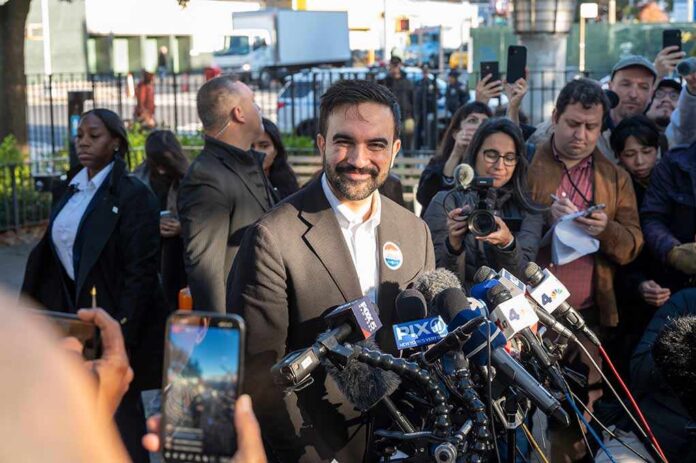
Mayor Zohran Mamdani’s administration argued that federal agents were trying to sidestep sanctuary rules and turn city staff into deportation enforcers. City policies and an executive order restrict sharing data and bar entry to non-public city spaces without a judicial warrant, except where law requires disclosure. Judge Kaplan’s order is exactly that kind of legal requirement. The ruling sets a clear line: when a valid subpoena seeks relevant data, the city must provide it, subject to the court’s limits.
Mamdani lost.
New York City fought to keep shelter records from ICE, even after the federal government accepted a screening process focused on people with serious criminal histories. On November 6, Judge Lewis Kaplan ordered enforcement of the subpoena through a special master.
— Fay Moore (@MooreFay) November 9, 2026
The record still has gaps. Public filings do not list every offense in the screening criteria or name targeted individuals, and the order is not a finding that any specific person broke the law. But the ruling affirms a core principle: federal immigration enforcement can access needed records, with checks, to protect public safety. For many Americans tired of sanctuary politics, this is a win for the rule of law and a step toward removing criminals who should not be in our communities.
Sources:
zerohedge.com, politico.com, law.justia.com, immigration-analytics.com, nycbar.org