
As Washington tells NATO that Europe must finally carry its own weight, American taxpayers may be watching the first real rollback of our endless military subsidy to the continent.
Story Snapshot
- Defense Secretary Pete Hegseth launched a six‑month review of U.S. troops and bases in Europe, branded “NATO 3.0.”[1][2]
- The review’s goal is clear: push Europe to take primary responsibility for its own conventional defense instead of relying on U.S. forces.[1][2][8]
- Hegseth warned that some NATO nations are “free riders” and that U.S. money and forces are not guaranteed anymore.[4][7]
- Strategists argue Europe is rich enough to defend itself, and that U.S. forces in Europe can be safely reduced over time.[3][7][19]
Hegseth’s ‘NATO 3.0’ Review: Time For Europe To Stand Up
At a tense NATO defense ministers meeting in Brussels, U.S. Defense Secretary Pete Hegseth told allies that the Pentagon will run a six‑month review of America’s troop presence and basing across Europe.[1][2][4] He called it a “real review” meant to move NATO “fast and irreversibly toward Europe leading” and taking primary responsibility for its own defense.[1][2] In plain terms, he signaled the days of Europe hiding behind U.S. troops while underfunding its own militaries are coming to an end.
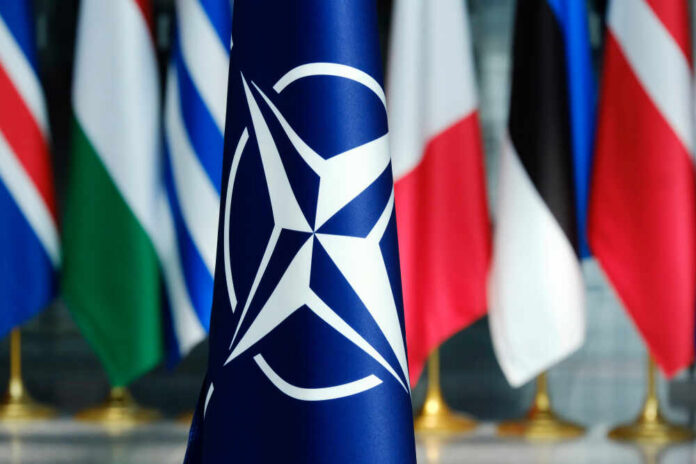
Hegseth framed the effort as “NATO 3.0,” a reboot of the alliance into a hard‑power defense pact where Europe, not Washington, leads conventional defense on the continent.[2][4] U.S. officials say the study will look at where forces are stationed, what missions they are tied to, and whether that matches America’s wider global priorities, including growing challenges in Asia and at home.[1][2][5] The review will consult U.S. European Command, Congress, and allies, with recommendations due within six months.[1]
‘Free Riders’ On Notice As U.S. Weighs Cuts
Hegseth did more than talk about structure; he called out behavior. In Brussels he blasted some NATO partners for “free riding” on American security guarantees and for dragging their feet on defense spending.[4][7] He warned that future U.S. financial contributions to NATO could be reduced if countries keep missing their defense spending promises or refuse to support U.S. operations, including recent actions tied to the war with Iran.[4][7] For many European leaders used to soft talk from Washington, this was a sharp wake‑up call.
Recent reporting shows the administration already moved to shrink the pool of U.S. air and naval assets automatically committed to NATO in a crisis, including reductions in fighter jets and drones assigned to alliance missions.[4] At the same time, senior analysts at Defense Priorities and other think tanks argue that U.S. posture in Europe is simply too large, encourages allies to under‑invest, and should be cut back toward pre‑2014 levels.[3][7] They note more than eighty thousand American personnel stayed in Europe long after the Cold War ended, even as European economies grew and Russia’s conventional forces suffered heavy losses.[7][19]
Strategic Shift: From Subsidizing Europe To Focusing On U.S. Interests
For years, restraint‑minded experts have pushed for a posture that puts American interests first, not alliance habits from the 1980s.[3] Their research claims the current footprint in Europe exceeds what is needed for deterrence and pulls U.S. attention and money away from higher‑priority challenges like China, border security, and rebuilding our own industrial base.[3][4][19] They argue Europe is wealthy and populous enough to match or exceed Russia’s capabilities if it chooses, and should carry the main burden for its own defense with only a smaller U.S. “tripwire” presence and nuclear guarantee in the background.[7][19]
Other military studies, including work done for the U.S. Army War College, lay out options to gradually reduce permanent forces in Europe over the next decade while keeping the ability to surge back in a crisis.[8][19] That plan would shift from large, expensive permanent deployments to a leaner presence focused on key missions and rapid reinforcement, while encouraging Europeans to fill in the gaps.[19] The goal is not to abandon NATO, but to stop treating Europe as a protected ward and instead as a mature partner that takes responsibility for its own neighborhood.[3][7][19]
European Anxiety And The Alliance Debate
Not everyone in Europe is happy about this turn. Some allies warn that racing to reduce U.S. forces could unsettle the eastern flank and weaken alliance cohesion if countries start competing for a shrinking American presence rather than building up their own capabilities.[20][21] Officials from countries on Russia’s border argue that permanent U.S. units on their soil are still the strongest political signal to Moscow and a key reassurance to their public.[20][21] They fear that fast cuts, if poorly managed, could widen splits between “old” and “new” Europe.
BRUSSELS—@SecWar Hegseth announced that the Pentagon will conduct a six-month review of America’s posture and basing in Europe during a meeting of NATO’s North Atlantic Council.
In addition to a push for increased European defense spending, Hegseth said some nations lack of…
— Chris Gordon (@ByChrisGordon) June 18, 2026
But even many European security thinkers now admit that Washington cannot keep splitting resources between Europe and the Pacific forever and that Russia’s heavy losses in Ukraine create space for a planned, conditions‑based drawdown of U.S. forces.[19] That makes Hegseth’s message harder to ignore: the American presence “may not be forever,” and Europe has to invest now if it wants real deterrence.[9][8][19] For American readers tired of footing Europe’s defense bill while fighting inflation, open borders, and debt at home, this review could be the first step toward a more balanced load‑sharing that puts U.S. interests and sovereignty back at the center of our foreign policy.
Sources:
[1] Web – Hegseth tells NATO US will review force presence in Europe
[2] Web – Washington’s latest force posture moves have Europeans feeling …
[3] Web – [PDF] Fact Sheet: Posture Updates in Support of Allies in Europe
[4] Web – Aligning global military posture with U.S. interests – Defense …
[5] Web – No surprises? Preparing for the US defence strategy and posture …
[7] Web – Allies and Congress are about to lose a key window into US military …
[8] Web – [PDF] GLOBAL POSTURE REVIEW 2021 – Defense Priorities
[9] Web – Striking the Balance: US Army Force Posture in Europe, 2028—A …
[19] YouTube – “US military presence in Europe may not be forever”, warns Hegseth
[20] Web – Revisiting the Global Posture Review – Marine Corps University
[21] YouTube – U.S. Military Posture and Implications for European Security