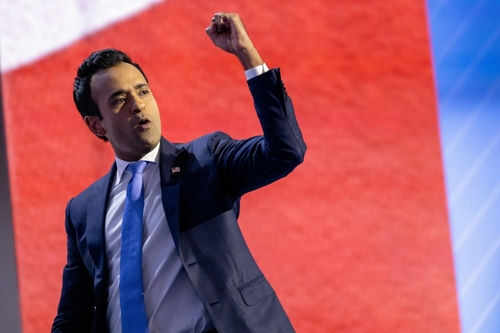
Vivek Ramaswamy’s sweep of all 88 Ohio counties in the Republican gubernatorial primary signals unprecedented GOP unity in a swing state, setting up a consequential November showdown that will test whether outsider momentum can sustain against an experienced opponent in a race many view as a bellwether for the nation’s political direction.
Quick Take
- Ramaswamy won 85% of the GOP primary vote, capturing every county in Ohio—a rare display of unified Republican support
- The biotech entrepreneur and Trump ally will face Democrat Amy Acton, the former Ohio Health Director, in November’s general election
- Ohio’s race carries national significance as a swing state barometer, with polls indicating a competitive fall campaign despite the primary’s lopsided result
- The primary outcome reflects GOP strength in the Rust Belt while raising questions about whether Ramaswamy’s national profile and efficiency-focused platform will resonate with general election voters
A Clean Sweep Reflects GOP Momentum
Ramaswamy’s victory across all 88 Ohio counties represents a dominant performance rarely seen in competitive primaries. The Cincinnati-born biotech founder captured 85 percent of the vote, decisively defeating Toledo YouTuber and business owner Casey Putsch, who garnered approximately 15 percent. The Associated Press called the race just 20 minutes after polls closed at 7:30 PM ET, underscoring the decisive nature of the outcome. This county-by-county sweep demonstrates broad-based support across Ohio’s diverse regions—from urban centers to rural areas—signaling organizational strength and name recognition advantages that Ramaswamy leveraged throughout the campaign.
Ramaswamy’s Path: From DOGE to Governor
Ramaswamy’s gubernatorial bid follows a high-profile national political trajectory. The billionaire biotech entrepreneur ran for president in 2024, dropping out after the Iowa caucuses and endorsing Donald Trump. Following Trump’s election victory, Ramaswamy joined the administration as part of Trump’s Department of Government Efficiency (DOGE) initiative before pivoting to the Ohio governor’s race in early 2025. His positioning as an anti-establishment outsider pushing efficiency reforms and “Ohio first” policies resonated with Republican primary voters. Unlike traditional politicians, Ramaswamy’s substantial personal wealth and national platform allowed him to dominate the primary landscape against lesser-known challengers.
November’s Competitive Landscape
While Ramaswamy’s primary dominance appears decisive, the general election presents a fundamentally different political environment. Democrat Amy Acton, who ran unopposed in her primary, brings significant name recognition from her role as Ohio Health Director from 2019 to 2020. Acton gained prominence during COVID-19 briefings, earning praise for transparency from supporters and criticism from some conservatives regarding lockdown policies. Current polling indicates the November matchup will be substantially tighter than the primary results suggest. Acton’s experience in state government and established public profile provide a contrasting narrative to Ramaswamy’s outsider positioning, setting up a compelling ideological and stylistic clash.
The red map paints a clear picture as Vivek Ramaswamy wins every county in Ohio during the state’s GOP gubernatorial primary.
Ramaswamy swept the state from corner to corner and says he wants everyone in Ohio to experience the blessings his family has had:
“My faith teaches me… pic.twitter.com/mru6iZMgQS
— Fox News (@FoxNews) May 6, 2026
Ohio’s Role as a National Bellwether
Ohio’s 2026 gubernatorial race carries implications extending far beyond the state’s borders. As a pivotal swing state that backed Trump in 2024, Ohio’s electoral outcomes often signal broader national political trends. The race between Ramaswamy’s efficiency-focused, Trump-aligned platform and Acton’s public health and equity-centered approach will provide insight into voter priorities heading into 2028. Additionally, Ohio’s simultaneous Senate races—featuring Republican Jon Husted running unopposed and Democrat Sherrod Brown facing a competitive challenge—amplify the state’s importance as a testing ground for both parties’ messaging and organizational capacity in the post-2024 political environment.
GOP Unification and Democratic Challenges
The drama-free Republican primary contrasts sharply with internal Democratic dynamics. Acton’s unopposed path to nomination, while ensuring party unity, offered limited opportunity to build grassroots enthusiasm or test messaging against primary opponents. Conversely, Ramaswamy’s primary dominance energizes the GOP base and demonstrates the party’s consolidation around Trump-aligned candidates. This organizational advantage enters the general election, though political analysts note that primary strength does not guarantee general election success. The tightness of polling between Ramaswamy and Acton suggests that Ohio voters remain persuadable, with November’s outcome hinging on how effectively each candidate mobilizes their coalition and persuades independent voters concerned about governance competence and policy direction.
Ramaswamy’s historic county sweep establishes him as the presumptive Republican nominee and positions him as a rising national GOP figure. However, the general election will test whether primary dominance translates to broader appeal. Ohio voters will ultimately decide whether they prioritize the outsider reform agenda Ramaswamy represents or the experienced governance that Acton offers—a choice that will reverberate across the political landscape.
Sources:
Ramaswamy, Acton, Husted, and Brown Win Primary Elections; Ohio’s Fall Races Are Set
Vivek Ramaswamy, Casey Putsch, Dr. Amy Acton Hope to Secure Primary Victories for Governor
Vivek Ramaswamy Wins Republican Primary for Ohio Governor
Ramaswamy Takes Nomination for Ohio Governor; Three Trump-Backed Challengers Win in Indiana