

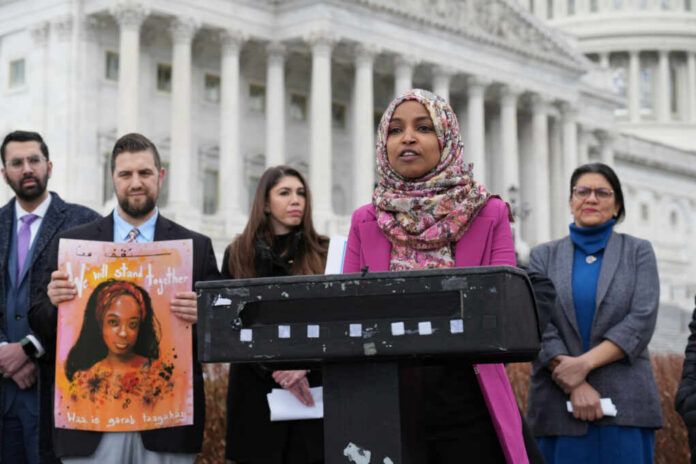
Rep. Ilhan Omar’s financial disclosure swung from $30 million to under $100,000, blaming an “accounting error”—a glaring red flag exposing elite congressional opacity that erodes public trust in Washington.
Story Highlights
- Omar’s May filing claimed $6-30 million in combined assets tied to her husband’s winery and consultancy, later amended to $95,000 max.
- She reviewed the initial filing but caught no issues, pinning blame on accountants and reporting ranges.
- A reported 3,500% net worth jump from 2023 raises questions about transparency and competence.
- Highlights bipartisan frustration with government officials prioritizing power over accountability.
Disclosure Details and Dramatic Reversal
Minnesota Congresswoman Ilhan Omar filed her mandatory financial disclosure in May, listing combined net worth with her husband between $6 million and $30 million. His businesses, including a winery and a consultancy/venture capital firm, drove the figure. Federal law under the 1978 Ethics in Government Act requires such annual reports in broad ranges to balance privacy and transparency. Omar’s team later amended it voluntarily to under $100,000, specifically up to $95,000 in shared assets. This shift followed public notice of discrepancies.
Omar’s Explanation and Critics’ Pushback
Omar stated, “I made a MISTAKE… we actually still broke,” attributing the error to accountants, misunderstandings in ownership percentages, and range-based reporting. Her aides confirmed she reviewed the initial filing before submission but flagged no problems. Critics spotlight the 3,500% jump from her 2023 disclosure’s lower baseline, questioning how such a massive oversight occurred. They demand unturned documents, viewing the rapid correction as suspicious despite no external pressure prompting it. Her office insists no wrongdoing or probe exists.
Historical Precedents and Omar’s Track Record
Congressional disclosures often see amendments—around 10-20% annually per ethics data—but Omar’s extreme swing stands out. As a “Squad” progressive elected in 2018, she faced prior 2019-2020 probes into campaign finance and marriage issues, settled without charges. Precedents like Sen. Richard Burr’s 2020 amendments and scrutiny of Rep. Nancy Pelosi’s spousal stocks underscore recurring transparency battles. In today’s polarized climate, with Republicans controlling Congress under President Trump’s second term, GOP voices amplify calls for stricter oversight of Democratic figures like Omar.
This incident resonates across political lines. Conservatives decry “deep state” elites hiding wealth amid America First reforms slashing overspending. Liberals question if fiscal mismanagement persists despite GOP majorities. Both sides share outrage over officials more focused on reelection than serving citizens struggling for the American Dream. Heightened focus on spousal businesses may spur ethics reforms for precise reporting.
Throw this bitch out of the country!
Ilhan Omar Blames ‘Accounting Error’ For Financial Disclosure Showing Multimillion-Dollar Wealth https://t.co/4TyuAElqV4 #gatewaypundit via @gatewaypundit
— Ares Unchained (@AresUnchained) April 18, 2026
Implications for Trust and Reform
Short-term, the episode fuels partisan attacks and potential ethics complaints, though none are active. It dents Omar’s “everywoman” image in her safe Minnesota district while vindicating critics temporarily. Long-term, it reinforces skepticism of congressional wealth, amplifying narratives of a self-serving elite. With no confirmed investigation, the matter lingers in media discussions. Broader impacts include demands for audits on spousal assets and non-range disclosures to restore faith in limited government and individual accountability—core principles now strained.
Sources:
Ilhan Omar blames ‘accounting error’ insisting she’s NOT rich despite claiming up to $30M in assets