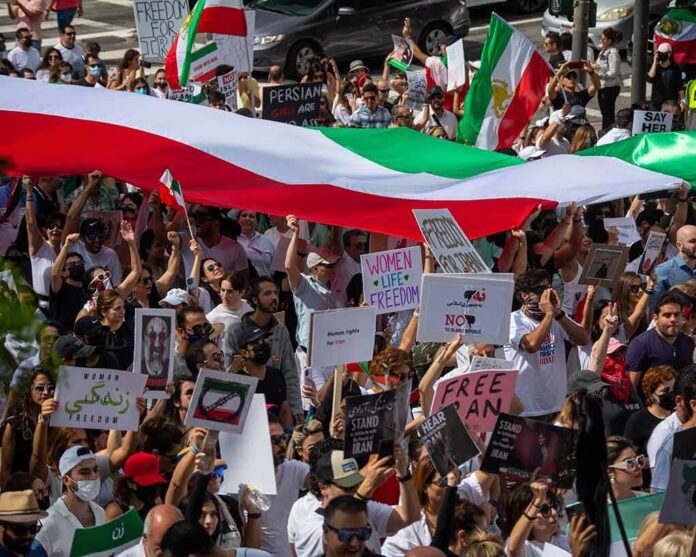
Iran’s elite Revolutionary Guard is turning its guns inward, as reports show it firing on civilians during growing unrest.
Story Snapshot
- Witness accounts say Iran’s Revolutionary Guard opened fire on crowds during unrest.
- Rights groups tie deadly crackdowns to the Guard and linked security forces across protest waves.
- The Guard frames protests as foreign-backed “terrorism” to justify mass arrests and force.
- The fight is inside Iran: citizens versus a regime power center defending itself, not the nation.
IRGC Firepower Used Against Iranians
Reuters reported that a witness in western Iran said the Islamic Revolutionary Guard Corps opened fire as unrest spread in January 2026. The report described Guard deployments and a public statement casting the unrest as a security fight against “terrorists,” even as authorities acknowledged casualties among citizens and security personnel. This is not a border battle. This is a state force using battlefield tools to police its own streets. That matters for how Washington reads the map.
British government documentation, drawing on open-source reporting, cited an Iranian official who said thousands were killed in the late 2025 to early 2026 protests, including security personnel, underscoring the scale of the bloodshed. Amnesty International has tied past mass repression to the Guard and Iran’s police command, documenting lethal force, mass arrests, and internet blackouts to hide abuses. These patterns show a system that treats dissent like war, and its people like an enemy force.
Tehran’s Script: Blame Outsiders, Crush Dissent
Iran’s Revolutionary Guard and its media allies insist unrest is foreign-directed. A Guard intelligence statement, reported by the Long War Journal, called protests a United States and Israeli conspiracy run through a multi‑phase plan. Chinese state media relayed Guard claims that 10 foreign intelligence services drove “terrorist” incidents and that hundreds tied to “anti‑security networks” were detained, with weapons seized. Iran’s clerical state uses this storyline to brand citizens as threats and justify sweeping force.
Tasnim and other regime outlets say the Guard protects sovereignty and will answer any United States move with a decisive response. Another outlet amplified threats in the Strait of Hormuz, signaling the Guard Navy’s readiness to meet “interference” with force. These messages aim outward, but the steel lands inward. While leaders talk about foreign plots, ordinary Iranians face checkpoints, arrests, and gunfire when they demand basic rights at home.
The Real Front Line: Citizens Versus a Regime Power Center
Human Rights Watch and Amnesty describe a broader system at work. Police, Basij militias, intelligence units, and Guard elements move together to smother protest, with tactics that include live fire, beatings, and disappearances. Amnesty says authorities even cut all internet access in January 2026 to hide abuses. This is why the central struggle is inside Iran. It is people demanding dignity versus a security machine designed to hold power, not defend liberty.
Only days ago, the president of the Islamic Republic claimed, without hesitation, that the regime had not murdered its own people.
The collected footage from January 8 and 9 says otherwise. What it records is not a chaotic clash or a few tragic errors. It is the scale of a… https://t.co/VrHEygJDbl
— Michael G Reno 🇺🇸 𓆩☆𓆪 🎗️ (@MichaelGReno) September 27, 2026
For Americans, the lesson is simple. Tyrants abroad also threaten us when they export terror or choke energy routes. But the most potent check on Iran’s rulers is the courage of Iranians who still march, teach, and speak despite the Guard’s guns. U.S. policy should call the Guard what it is, keep pressure targeted on the regime’s enforcers, and stand with the Iranian people who want what we all want: safety, honest work, and a free future.
Sources:
pjmedia.com, reuters.com, telegraph.co.uk, gov.uk