

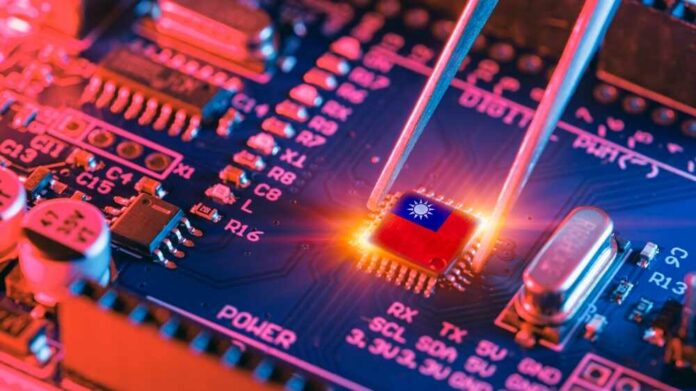
A quiet warning from the world’s top chipmaker just exposed how fragile America’s high-tech supply chain still is.
Story Snapshot
- TSMC’s chief says Taiwan now faces serious shortages of both skilled workers and water, even as demand for artificial intelligence chips explodes.
- Taiwan’s chip industry is already short more than 30,000 workers, and its own government admits the gap threatens long-term growth.
- Water and power strains in Taiwan show why bringing more chip production back to the United States under Trump is a national security priority.
- Global talent competition means American leaders must defend border security, real STEM education, and energy reliability or risk falling behind China.
TSMC’s CEO sounds the alarm on talent and water
The head of Taiwan Semiconductor Manufacturing Company, the world’s largest contract chipmaker, just gave a blunt warning that should get the attention of every American who cares about secure supply chains. Speaking at a ceremony for a new science park in rural Pingtung, Taiwan, Chief Executive Officer C.C. Wei said the thing his company “still lacks most is talent,” and that he is also worried about future water shortages for chip plants.[2][3][4][6] These comments came even as he joked about heavy rain at the event, a reminder that water can swing from floods to drought in the island’s unstable climate.[3][6][8] Taiwan produces most of the world’s advanced chips that power artificial intelligence tools, data centers, and modern weapons systems, and industry leaders there have long complained about what they call the “five shortages” – water, power, labor, land, and talent.[2][3][4][6]
Wei’s concern is not just theory. He said he had recently wondered if the company would have to rely on water trucks to keep fabs running, a drastic step for a nation at the center of the digital economy.[4] Taiwan imposed wide water controls as recently as 2021 during a serious drought, and chip factories were among the biggest users under tight rules.[8] At the same time, Wei called on both business and government to train more workers and keep people in rural areas like Pingtung, where many new plants are planned.[2][3][6] He also described how Taiwan’s government is trying to make it easier to attract and retain foreign talent through looser work permit rules, a sign that local labor alone cannot fill the gap.[2] For American readers, that means our supply of key chips still hinges on an island struggling to find enough engineers and even enough water to keep the lights on.
Tens of thousands of chip jobs sit empty in Taiwan
Reports over the last several years show that Taiwan’s chip industry has a deep and growing labor problem. A study cited by the Global Taiwan Institute found more than 27,000 unfilled engineer positions in 2021 across the semiconductor sector, jumping to over 35,000 by early 2022 as new fabs and artificial intelligence demand took off.[1] A later report from Focus Taiwan said that by May 2025, the industry still faced a shortage of about 34,000 workers, based on data from a major job bank and a government-linked research institute.[6] Analysts writing in The Diplomat described the situation as a long-term threat to the island’s semiconductor leadership, warning that companies are struggling to recruit enough chipmakers and that rising overseas demand for talent is draining the local pool.[3] Taiwan’s government has responded with big spending on training, including about 35 billion New Taiwan Dollars devoted to semiconductor talent programs that produced hundreds of new master’s and doctoral graduates from 2021 to 2023.[2] But even these efforts, along with new training centers run by TSMC itself, have not yet closed the gap between the number of skilled workers needed and the number available.[2][3]
TSMC’s own executives have been warning that talent is now the company’s biggest single risk. A report from Intellectia.AI quotes C.C. Wei saying that while the firm faces shortages of water, electricity, and land, “the most critical issue” is still talent. Another Taiwanese outlet recently framed the talent gap as a key threat to TSMC’s ability to keep its global lead, especially as artificial intelligence chips require even more advanced design and manufacturing skills.[5][7] This is not just about one company’s hiring headaches. Taiwan’s aging population, brain drain to other countries, and limited housing in tech hubs all make it harder to staff new plants.[2][3][4] The Executive Yuan – Taiwan’s cabinet – shifted policy in 2021 to focus more directly on talent cultivation and later launched the Chip-based Industrial Innovation Program to widen the training pipeline.[3] Still, none of the public data yet proves that these measures are enough to match the huge wave of planned chip capacity at home and abroad.[2][3]
Why this matters for America, Trump’s chip push, and China
For the United States, TSMC’s warning hits right at the heart of national security and economic policy. Under past globalist thinking, Washington allowed core manufacturing like chips to move offshore, telling Americans not to worry as long as supply chains were “efficient.” Now the world relies on a small island just off China’s coast for most leading-edge chips, and that island is short on engineers and water.[2][3] American conservatives have long argued that this is reckless, especially when the Chinese Communist Party claims Taiwan as its own and builds up its military across the strait. President Trump’s push to bring more chip plants to the United States is meant to fix this, but Taiwan’s struggle shows that money alone will not solve the problem. We also need real workers, reliable power, and water for these huge factories.
🇹🇼 TSMC CEO Highlights Talent and Water Shortages
Details Here:
TSMC CEO C.C. Wei stated that his company lacks talent the most among its operational needs while also voicing concerns over water shortages in Taiwan. He referenced considering the use of water trucks last month and…— the-news24.com (@thenews24com) June 12, 2026
Global labor competition adds another layer. Taiwan is trying to attract foreign engineers with easier permits,[2] Europe is throwing subsidies at chip companies, and China is using state power to lure high-end talent away.[3][4] That means the United States cannot afford policies that weaken science and math education, drive families away from trades and engineering, or flood the labor market with unvetted migration that depresses wages for skilled Americans. To win this race, America needs a serious pipeline of homegrown talent, secure borders, and schools that focus on excellence, not “woke” social experiments. On top of that, Taiwan’s water and power worries are a warning about what happens when green ideology beats common-sense energy policy. Chip fabs do not run on wishful thinking; they run on stable electricity and large amounts of clean water. If we want secure chips for our military, our grids, and our homes, we must back policies that protect affordable energy, invest in infrastructure, and keep critical manufacturing closer to home where our Constitution and our voters still have a say.
Sources:
[1] YouTube – TSMC boss frets about shortages of talent, water in Taiwan
[2] Web – Taiwan’s Shortage of Chipmakers: A Major Threat to the Industry’s …
[3] Web – Talent Shortage Threatens Trump’s Chip Plans as TSMC Struggles …
[4] Web – Taiwan’s Semiconductor Talent Shortage – The Diplomat
[5] Web – Taiwan’s Brain Drain: Can the Silicon Shield Survive a Skills Crisis?
[6] YouTube – TSMC talent shortage threatens its global leading edge: US media
[7] Web – Taiwan’s semiconductor talent shortage reaches 34,000 in May
[8] Web – Taiwan didn’t just join the semiconductor race, it changed the rules …