

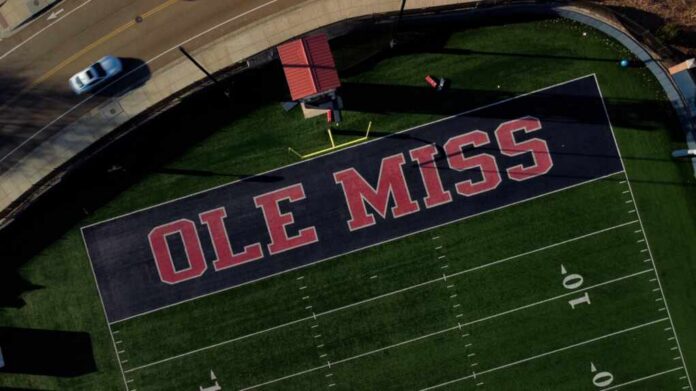
Ole Miss now faces a college football mess that cuts straight to a familiar conservative frustration: rules for everybody else, excuses for the insiders.
Quick Take
- Ole Miss coach Pete Golding is publicly pushing back on tampering allegations tied to linebacker Luke Ferrelli.
- Clemson coach Dabo Swinney accused Golding of improper contact and said Clemson filed a complaint with the National Collegiate Athletic Association (NCAA).
- Recent reporting says the NCAA opened a probe the same day Clemson raised its complaint, adding real administrative risk for Ole Miss.
- Golding’s comments try to frame the contact as roster planning and recruiting context, not impermissible tampering.
Golding’s Public Defense
Pete Golding has not quietly taken the hit. According to reporting on his response, Golding argued that the Ferrelli recruitment began before the player’s Clemson enrollment and unfolded around roster availability, which he used as the basis for saying the public version of the story left out key context.[1] That matters because it is the line every coach tries to draw: ordinary recruiting versus contact that crosses into tampering.
Golding’s position also appears designed to shift the focus away from a simple accusation and toward timing, roster needs, and what was said when. In the reporting, he did not publicly admit any improper conduct; instead, he framed the communication as part of the transfer-portal process and said compliance would handle the matter.[1] For supporters who are tired of elite programs operating by separate rules, the dispute reads like another test of whether accountability still means anything.
Clemson’s Accusation And The NCAA Response
Clemson’s side is much more aggressive. ESPN reported that Dabo Swinney accused Ole Miss of tampering, said Ferrelli had enrolled at Clemson before leaving, and described the pursuit as a “straightforward case of tampering.”[2] ESPN also reported that Clemson submitted a complaint to the NCAA, while Swinney alleged Golding texted Ferrelli during class and sent a photo of a one million dollar contract offer.[2] Those are not vague complaints; they are specific allegations tied to timing and inducement.[2]
The NCAA’s involvement raises the stakes beyond public posturing. ESPN reported that the NCAA enforcement staff opened an investigation into Ole Miss the same day Swinney held his news conference, and that officials asked for Golding’s university-issued and personal phones to be forensically imaged.[2] That step does not prove wrongdoing, but it does show the inquiry is real, active, and serious enough to put records, messages, and institutional conduct under a microscope.[2]
Why The Story Resonates Beyond One Roster Fight
This dispute fits the modern transfer-portal era, where schools chase players aggressively while denying they crossed the line. Reporting around the story says Golding tried to explain that Ole Miss had liked Ferrelli earlier but did not have a spot ready at the time, which is the kind of defense schools now lean on when accusations surface.[1] The broader problem is simple: when roster building becomes a nonstop arms race, the temptation to blur the line between recruiting and tampering gets stronger.
Ole Miss coach Pete Golding has told NCAA he will expose rampant tampering if he is sanctioned amid Dabo Swinney allegations. https://t.co/67WuwB5jXq
— USA TODAY (@USATODAY) May 28, 2026
For conservative readers, the issue is bigger than one football program. It is about whether institutions still respect boundaries, or whether the culture keeps rewarding the same loopholes, the same spin, and the same refusal to own the consequences. If Ole Miss is cleared, Golding can say the criticism went too far; if the NCAA finds evidence, the case will reinforce what many fans already suspect: college sports has turned into another system where the powerful expect special handling.[1][2]
Sources:
[1] Web – Pete Golding makes it known he has tampering receipts, while also …
[2] Web – Pete Golding responds to Dabo Swinney’s tampering claims