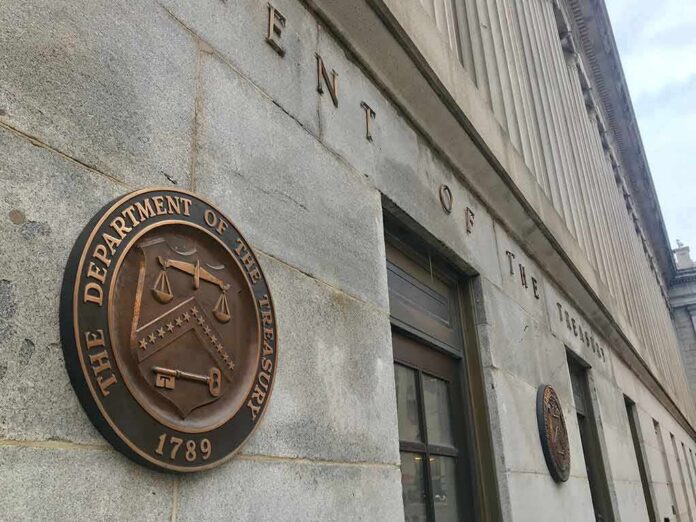
Treasury Secretary Scott Bessent told Congress the $5,000 “Trump dividend” can be sent without adding to the debt or deficit — and that Treasury is already working on how to do it.
Story Highlights
- Treasury says it is examining a way to deliver $5,000 checks without new debt.
- Commerce Secretary Howard Lutnick backed a no-deficit approach to the payouts.
- Outside groups warn the plan could cost about $1.2 trillion if not offset.
- Trump tied the dividend to Republicans holding Congress and strong growth.
Bessent Signals A Path To Checks Without Bigger Deficits
Treasury Secretary Scott Bessent told the House Financial Services Committee on September 15 that he believes there are ways to send $5,000 checks without increasing the debt or deficit. He said Treasury has been working on the concept “for quite a while” and that the process is underway now. Reporting on the hearing adds that Treasury is studying whether the administration can deliver the payments without going through Congress, a key legal and budget hurdle.
Bloomberg and other outlets described Bessent as supportive of the plan and focused on keeping it deficit neutral. He did not give a funding blueprint at the hearing. That kept the headline promise clear while leaving the mechanics under review. The message from Treasury was simple: get money to working adults, avoid new borrowing, and do it by the book. The open question is which lawful cash stream or offset would cover the full amount.
Administration Framing: Pay Households Without Tapping Taxpayers
Commerce Secretary Howard Lutnick said the goal is to pay out “not from the deficit and not from taxpayers,” reinforcing the idea that the money would come from separate receipts or offsets, not higher taxes or new borrowing. That aligns with the White House push to relieve families from high costs without repeating the old spend-and-borrow model that drove inflation and punished savers. Lutnick’s public comments suggest a coordinated posture inside the administration.
President Trump pitched the dividend as a reward for growth and a mandate from voters. On September 9, he said that if Republicans win both chambers, every adult citizen would receive a $5,000 “Trump dividend.” He did not cite a statute or line-item funding source in those remarks. The political design points to a legislative path with Republican control, while Treasury is examining whether any lawful executive mechanism exists to move faster if Congress stalls.
Cost Concerns And Debt Skepticism From Outside Analysts
Critics and some outlets estimate the plan at roughly $1.2 trillion to $1.35 trillion if paid to all adult citizens. They argue that, without a detailed offset, the checks would widen the deficit or raise borrowing costs. Fortune and others highlighted the debt backdrop and warned that markets could push yields higher if Washington adds a large, unfunded outlay. Those analyses hinge on the assumption that no equal revenue or savings exists to match the payments.
Reuters and several watchdog voices say the program would likely require congressional approval and could add interest costs if financed through debt. They also warn about near-term inflation risk if the payout lands all at once. These arguments are not new; they mirror past fights over rebates and stimulus, which often center on timing, cash sources, and whether offsets are real or temporary. The fiscal pushback remains strong until Treasury shows a complete pay-for.
What To Watch: Legal Authority, Offsets, And Timing
Fiscal transparency will decide credibility. A clear memo from Treasury and the Office of Management and Budget that maps the gross outlay and matching offsets would calm markets and answer critics. A formal estimate from the Congressional Budget Office or the Joint Committee on Taxation could also verify no net deficit impact if a bill moves. If the administration proceeds without Congress, a legal opinion on authority and anti-deficiency rules will be essential.
For families, the stakes are simple. A $5,000 check helps cover high energy bills, groceries, and credit card balances that rose after years of runaway spending. For conservatives, the guardrails matter just as much: no new taxes, no budget gimmicks, and no end-run around the Constitution. The administration says a path exists. The next step is to publish the mechanism, show the offsets in black and white, and get relief to Americans without growing Washington’s tab.
Sources:
finance.yahoo.com, fortune.com, cnn.com, bloomberg.com, washingtonexaminer.com, nytimes.com