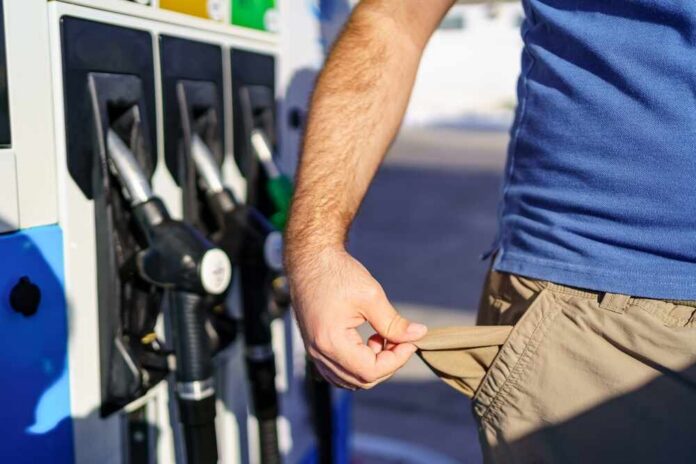
President Trump just flipped his position and backed a federal gas tax suspension, but the 18-cent-per-gallon relief voters crave won’t solve the real problem driving prices to six dollars in California.
Quick Take
- Trump reversed course on May 11, endorsing a federal gas tax suspension after the White House denied considering it just days earlier
- The suspension would trim roughly 18 cents per gallon, dropping average prices from $4.52 to approximately $4.34, but requires Congressional approval
- The move costs the federal government $2.1 billion monthly in Highway Trust Fund revenue, threatening long-term infrastructure projects nationwide
- Energy Secretary Chris Wright acknowledged the administration is “open to all ideas” to combat Iran conflict-driven oil shocks, but experts warn the tax cut addresses only a fraction of the $1.54-per-gallon surge since February
The Political Calculation Behind the Shift
Three weeks ago, the White House told Axios a gas tax suspension was not under consideration. Today, President Trump champions it as the answer to voter fury over record fuel prices. The reversal exposes the political mathematics of an election year. With gas averaging $4.52 nationally and California hitting six dollars per gallon, Republicans face midterm backlash. Trump’s CBS News interview endorsement signals desperation to deliver visible relief before voters head to polls, even if the economics don’t match the optics.
What Drivers Would Actually See at the Pump
The federal gasoline tax sits at 18.4 cents per gallon, unchanged since 1993 despite inflation eroding its purchasing power. A full suspension would theoretically drop prices by that amount, bringing the national average to roughly $4.34 per gallon. For a typical 15-gallon fill-up, that means savings of about $2.76 per tank. GasBuddy analyst Patrick De Haan confirms the math: modest relief for consumers, but far from transformative given prices remain 46 percent above pre-war levels.
Diesel drivers would see 24.4 cents relief per gallon, offering slightly better savings for trucking operations and commercial fleets. Rural and suburban drivers, already hit hardest by fuel costs, would capture the most tangible benefit. Yet the suspension addresses only 12 percent of the total price surge since February, when US-Israel strikes on Iran disrupted global oil markets.
The Infrastructure Cost Nobody Wants to Discuss
Every month the tax remains suspended costs the Highway Trust Fund approximately $2.1 billion. That money funds roughly $50 billion annually in road repairs, bridge maintenance, and infrastructure projects across all fifty states. Suspend the tax for six months, and infrastructure spending faces a $12.6 billion hole. States already scrambling to maintain crumbling roads would face additional pressure to raise local taxes or cut services.
The Bipartisan Policy Center estimates the suspension delivers only 10 to 16 cents of relief per gallon against the $1.50-plus spike caused by geopolitical oil disruption. Translation: Congress sacrifices long-term infrastructure funding to address a problem the tax suspension barely touches. Democratic lawmakers including Senators Mark Kelly and Richard Blumenthal proposed suspending the tax only through October 1, limiting the damage. Republican Senator Josh Hawley introduced a competing bill on May 11, but neither proposal specifies an end date, raising questions about whether the suspension becomes permanent.
The Real Enemy: Global Oil Markets
Energy Secretary Chris Wright’s May 10 statement that the administration is “open to all ideas” reveals the uncomfortable truth: federal policy levers are limited when global supply shocks drive prices. The Iran conflict disrupted oil production at precisely the moment when US crude inventories were already tight. No tax suspension rewrites geopolitics or increases Saudi production. The administration has already released Strategic Petroleum Reserve oil and eased fuel regulations, yet prices remain elevated.
JUST IN – Trump to suspend US federal gasoline tax over high prices: US media pic.twitter.com/FyB39m24It
— official Denton James (@Dentonjameso) May 11, 2026
Conservative policy experts recognize that tax cuts feel good politically but ignore root causes. The suspension offers temporary consumer relief while signaling to voters that government action matters, even when markets ultimately determine outcomes. Wright’s acknowledgment that “everything has tradeoffs” hints at internal administration debate over whether the political gain justifies the infrastructure sacrifice.
The Congressional Gauntlet Awaits
Trump cannot suspend the tax unilaterally. Congress must approve any federal excise tax change, requiring 60 Senate votes or passage through budget reconciliation. Republicans control the Senate but face Democratic resistance to draining the Highway Trust Fund without offsetting revenue. Some Democrats support the suspension on populist grounds, but others demand guarantees that infrastructure funding gets protected through alternative revenue sources.
The May 11 announcement of Hawley’s bill and Democratic counterproposals suggests bipartisan appetite for action, yet partisan incentives complicate passage. Republicans want credit for relief; Democrats want to highlight that the suspension barely dents prices while harming roads. The White House’s recent flip from “not under consideration” to full endorsement signals confidence in Congressional movement, but timeline and duration remain unresolved.
What Happens Next
Gas prices typically respond to global supply shifts within weeks, not months. If the Iran conflict de-escalates or production recovers, prices may fall naturally, allowing politicians to claim credit for the suspension regardless of its actual impact. Conversely, if geopolitical tensions worsen, the 18-cent relief becomes politically insufficient, pressuring Trump to pursue more dramatic interventions. States like Georgia, Indiana, and Utah already suspended their own gas taxes, creating a patchwork of relief that complicates federal action.
The suspension represents a political response to economic pain driven by forces beyond Washington’s control. It offers measurable relief to drivers while preserving the appearance of action, even as experts acknowledge it addresses a fraction of the problem. Whether Congress approves it depends on whether Democrats accept the infrastructure tradeoff or demand alternatives. Either way, voters will remember that Trump tried, even if the tax suspension’s impact fades as quickly as the political headlines.
Sources:
Trump says he aims to suspend gas tax “for a period of time”
Trump backs federal gas tax suspension
As fuel prices rise, US lawmakers push to suspend the federal gas tax