
Washington’s newest weapon against Tehran isn’t a missile or a drone—it’s a banking decision meant to make payroll impossible.
Quick Take
- Treasury Secretary Scott Bessent says “Operation Economic Fury” aims to choke Iran’s finances until the regime can’t reliably pay its soldiers.
- The campaign blends secondary sanctions, aviation restrictions, and maritime pressure to make Iran’s commerce harder, riskier, and more expensive.
- Secondary sanctions turn foreign banks and service providers into the front line: do business with Iran, or keep access to U.S. markets.
- Bessent frames the strategy as a financial substitute for kinetic warfare, but independent verification of the most dramatic outcomes remains limited.
Operation Economic Fury turns money flows into a battlefield
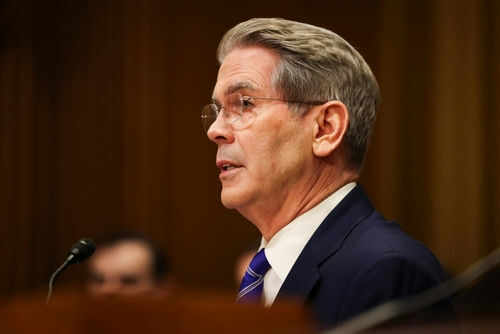
Scott Bessent’s public message is unusually blunt: the U.S. wants Iran’s leadership squeezed so tightly that basic state functions start to fail, with military payroll held up as the telltale sign. “Operation Economic Fury,” announced April 15, 2026, packages familiar tools—sanctions, enforcement, interdiction—into a single theory of victory: deny the regime access to dollars, buyers, insurers, fuel suppliers, and compliant intermediaries.
Bessent’s most attention-grabbing claim is also the hardest to confirm from public reporting: that the pressure has progressed to the point where Iran “is not able to pay their soldiers.” Readers should treat that as an administration assertion, not a settled fact. Even so, it reveals the intended pressure point. A regime can spin inflation, ration gasoline, and blame outsiders, but missed paychecks in security forces test loyalty fast.
Secondary sanctions force third parties to choose sides
Primary sanctions target Iran directly. Secondary sanctions target everyone else. That distinction is where the campaign gets teeth. Bessent describes measures aimed at financial institutions and governments that hold Iranian funds or facilitate Iranian transactions, raising the cost of “looking the other way.” For banks, shipping firms, and commodity traders, the choice becomes brutally practical: access to the American financial system, or access to Iranian business.
This is economic statecraft built around U.S. leverage, and the leverage is real. The dollar’s central role means compliance departments take Treasury warnings seriously. A middleman bank doesn’t have to love U.S. policy to fear getting cut off from correspondent accounts, clearing, or global counterparties that demand clean paperwork. That’s the quiet force multiplier conservatives tend to appreciate: deterrence without deploying troops.
Aviation restrictions hit a regime where it can’t improvise
Aviation sounds like a niche target until you follow the logistics. Bessent’s framework highlights restrictions tied to jet fuel, maintenance, and landing services for sanctioned Iranian airlines and related providers. Planes don’t fly on slogans; they fly on parts, inspections, trained mechanics, and predictable supply chains. Squeezing aviation can disrupt business travel, diplomatic movement, and cargo routes, while also raising internal friction for any network relying on fast movement.
Sanctions skeptics often say, “They’ll just find another supplier.” Aviation makes that harder. Black-market workarounds exist, but safety, insurance, and airport permissions are choke points. A foreign airport that refuels a sanctioned carrier risks becoming a sanctions story itself. That is the design: spread the pain outward so the easiest option becomes noncooperation with Iran, not creative evasion on Iran’s behalf.
Maritime pressure and an “economic blockade” aim at revenue, not symbolism
Bessent also points to maritime pressure—described in coverage as a naval blockade reducing Iran’s maritime commerce and toll collection. Blockade language grabs attention because it sounds like wartime. The more important detail is the economic logic: restrict revenue sources and disrupt trade routes that keep money and goods moving. If oil exports and shipping income weaken, the regime must triage: guns, butter, or patronage.
That triage matters because authoritarian systems rarely “tighten belts” evenly. They protect the inner circle first. They sacrifice private-sector vitality, pensions, and middle-class savings long before they sacrifice elite security units. That history is why Bessent’s payroll claim, if true, would be significant—paying soldiers is usually the last line item to fail. If it’s not yet true, it remains the North Star of the strategy.
Sanctions as the “financial equivalent” of kinetic action: a sober comparison
Bessent’s framing—sanctions as the financial equivalent of kinetic operations—invites both respect and caution. The respect comes from the objective: Americans prefer pressure that avoids new wars, limits U.S. casualties, and reduces the temptation for endless nation-building. The caution comes from the limits: sanctions don’t “capture territory,” don’t guarantee behavior change, and can produce unintended alliances among sanctioned states and illicit networks.
One counterargument appearing in the surrounding discourse is that sanctions can harden an “axis” rather than break it, encouraging workarounds and deeper ties with other isolated powers. That critique deserves daylight. A common-sense conservative test is outcomes, not slogans: does pressure reduce Iran’s capacity to fund proxies and threaten neighbors, or does it merely shift those activities into darker channels that are harder to monitor and punish?
The open question: measurable success or confident messaging?
Public evidence clearly supports the existence of the campaign and its components—secondary sanctions threats, aviation-sector pressure, and maritime enforcement. Public evidence does not yet conclusively prove the headline outcome that Iran can’t pay soldiers. That gap matters because credibility is strategic capital. If Washington claims decisive effects too early, Tehran and skeptical allies will hunt for contradictions. If Washington understates, deterrence weakens.
The smart way to read Bessent’s message is as a signal to three audiences at once: Tehran, to warn of escalating costs; third-party institutions, to demand compliance; and American voters, to show resolve without war. Whether “Operation Economic Fury” becomes a durable model for future conflicts depends on one simple measure: does financial pressure actually change enemy behavior faster than it punishes ordinary people and enriches smugglers?
Sources:
https://www.foxbusiness.com/video/6394197634112
https://www.foxnews.com/video/6394492838112