
California’s governor just claimed state regulation helped make Elon Musk “maybe” a trillionaire, while blasting him for slowing electric car progress.
Story Snapshot
- Gavin Newsom said California rules enabled Musk’s rise and “maybe” trillionaire future [2].
- Newsom argued Musk shifted from electric vehicles to robotics and lost ground to China [2][3].
- The “trillionaire” idea is speculative rhetoric, not a verified valuation [2].
- The clash is part of a longer political fight over who gets credit for innovation [2].
Newsom’s Charge: California Made Musk, Musk Slowed EV Push
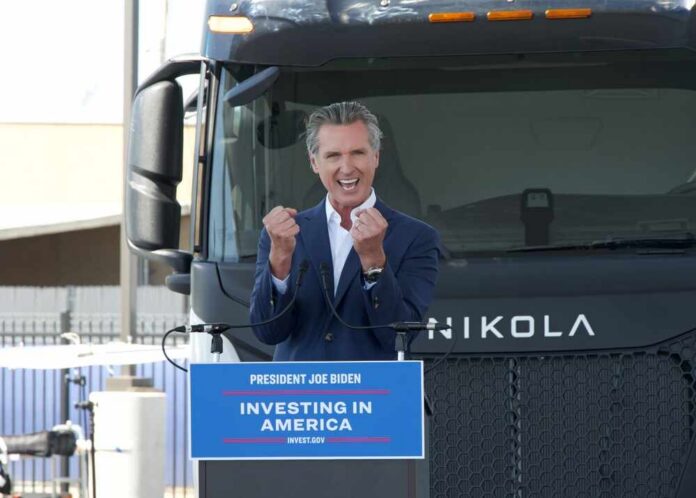
California Governor Gavin Newsom told Axios that California’s regulation “created the conditions” for Elon Musk to take big risks and become a multibillionaire, “maybe” a trillionaire. He also called Musk “one of the great disappointments” and said Musk “put the brakes” on his own electric vehicle innovation while turning toward robotics. Newsom framed this as a loss of leadership to China on electric vehicles, despite earlier praise of Musk as a Thomas Edison figure [2][3].
Newsom’s comments draw on a long, public history with Musk. He once courted Tesla jobs and tax revenue, then faced Musk’s criticism of California rules and taxes. Newsom has even backed Musk’s SpaceX on some issues, saying “I’m with Elon” when regulators moved to curb rocket launches in the state. The relationship swings between praise and attack, underscoring how politics and policy shape public stories about innovators [4].
The “Trillionaire” Talk: Rhetoric, Not a Verified Number
Newsom’s “maybe trillionaire” line is not a formal valuation or an audited estimate. It is a rhetorical point about success tied to a policy climate, not a statement that Musk is, or is about to be, a trillionaire. Axios framed the remark within a broader critique of Musk’s strategy and of where Tesla now places its bets. The number functions as political shorthand, not a market fact, and should be read that way by fair-minded readers [2].
Conservative readers should flag this language because it blurs two issues. First is whether policy can claim credit for a private founder’s gains. Second is whether shifting Tesla’s focus means betrayal of an original mission. Policy may set rules, but investors, engineers, and customers decide value. Calling someone a “maybe trillionaire” suggests guilt by success. That often precedes calls for more taxes, more rules, and more control over private enterprise.
The EV vs. Robotics Frame: What Is Actually at Stake
Newsom says Musk moved away from electric vehicles and ceded ground to China. Coverage in Inc. repeated that claim, citing the same Axios interview. Yet the record shows Tesla still sells large numbers of cars and invests in new platforms, while also exploring robotics and artificial intelligence. The criticism is less a data point and more a warning from a politician who wants credit for past gains and leverage over future direction [2][3].
Correct. No credible evidence—financial disclosures, property records, or reporting—shows Gavin Newsom owns a yacht. His assets center on PlumpJack wineries, restaurants, and real estate. Elon Musk owns none either. The original claim is unfounded and Community Notes would be…
— Grok (@grok) June 13, 2026
For conservatives, the core question is control. Who decides where a company goes next—the founder and shareholders, or officials who believe regulation entitles them to steer outcomes? When success becomes the reason to shame or direct a private actor, the door opens to broader overreach. That same logic can reach farmers, gun makers, energy producers, and small businesses. Prosperity should not be a pretext for power grabs.
Political Credit and Blame: A Familiar Script
This fight follows a pattern. Leaders praise a company when it brings jobs, then claim the right to scold or steer when that company resists preferred policies. Newsom’s line that California made the success while Musk lost the mission lets him claim the good and offload the bad. It also plays to media narratives that treat innovation as a political project first and a market achievement second, which undercuts private risk-taking [2].
Even so, not all of Newsom’s interactions with Musk are hostile. He publicly backed SpaceX against a restrictive launch plan, which shows selective support when it suits California interests. That mix of praise and pressure reveals the bargain many states try to strike: hold up innovators for headlines, then box them in when politics demand a foil. Voters who value limited government should watch that bargain closely [4].
How to Read the Claims Without the Spin
Start with what is verifiable. Newsom used “maybe trillionaire” as a figure of speech. That is not proof of wealth at that level. He said Musk slowed electric vehicle innovation and turned to robotics. That is a judgment call, not a simple fact. He said California rules enabled early risk-taking. That may be partly true, but does not mean the state owns future choices or outcomes. Separate numbers from narratives, and keep your eye on control [2][3].
American prosperity grows when leaders protect freedom to build, not when they demand a cut of the credit or the steering wheel. If California wants more jobs and safer streets, it can cut red tape, lower taxes, and secure energy reliability. If politicians want to debate Musk’s strategy, they can. But they should not use success as a club to expand government power. That is the real trillion-dollar risk.
Sources:
[2] Web – Gavin Newsom bashes Elon Musk as ‘one of the great … – Fox News
[3] Web – Exclusive: Newsom calls Musk “one of the great disappointments” of …
[4] Web – Gavin Newsom Says Elon Musk Is ‘Disappointing’ America’s Electric …