

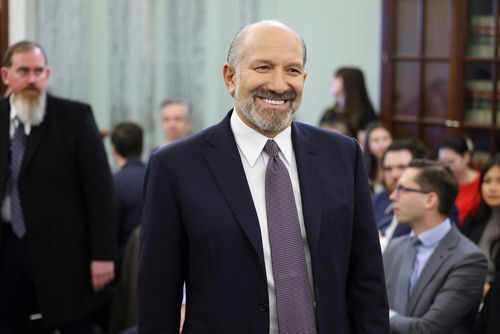
A Trump Cabinet secretary is now under oath behind closed doors over why his public story about Jeffrey Epstein keeps changing.
Quick Take
- Commerce Secretary Howard Lutnick is testifying May 6 in a closed-door House Oversight session about his post-2008 contacts with Jeffrey Epstein.
- Lawmakers are focused on inconsistencies between Lutnick’s earlier “barely anything to do with him” testimony and details described in newly released Epstein files.
- The committee probe is broader than one official, reflecting bipartisan public anger that powerful networks escape accountability.
Why Lutnick’s Epstein testimony is landing like a credibility test
Commerce Secretary Howard Lutnick is appearing May 6 for a closed-door interview with the House Oversight Committee as lawmakers examine his contacts with Jeffrey Epstein after Epstein’s 2008 conviction for soliciting prostitution from an underage girl. The scrutiny centers on whether Lutnick minimized the relationship in earlier public statements. The stakes are heightened because the hearing touches a raw nerve across the political spectrum: whether elites face real consequences or get special treatment.
Reportedly, the “Epstein files” released in 2026 include material describing emails, meetings, and social and business overlaps that go beyond a casual brush-by. The timeline described in reporting includes a 2011 visit to Epstein’s New York home and a 2012 lunch involving Lutnick’s family on Epstein’s private island. These events matter politically because they occurred after Epstein’s conviction, when many Americans believe any prudent leader would have cut ties.
The timeline lawmakers are probing, and what it does (and doesn’t) prove
Public reporting describes a series of contacts stretching years: a 2013 investment in an unspecified business venture, a 2014 investment by both men in Adfin (an advertising company that later collapsed), a 2015 invitation from Lutnick to Epstein tied to a Hillary Clinton fundraiser, and a 2017 Epstein donation of $50,000 for a dinner honoring Lutnick. In 2018, an email reportedly shows Lutnick contacting Epstein about a neighborhood museum expansion.
Those details do not, by themselves, prove criminal conduct by Lutnick, and none of the provided reporting claims the committee has made that allegation. What they do establish is why Oversight investigators are treating this as a truthfulness and judgment problem. Americans who are tired of “connected” people skating past consequences will see any gap between sworn testimony and documented interactions as a serious governance issue, regardless of party.
What Lutnick has said publicly, and why the “inconsistency” question won’t go away
Reporting highlights a key contrast: Lutnick told senators in February 2026, “I did not have any relationship with him. I barely had anything to do with him.” In a separate setting earlier in 2026, Democrats questioned him and he described limited contact—some emails and two meetings around 2011–2012. The committee’s job now is to reconcile those statements with the file-based timeline being cited in news coverage.
The Commerce Department’s public posture is defensive but cooperative. A spokesperson said Lutnick looked forward to answering questions and “putting to rest inaccurate claims,” and Lutnick has said he welcomed the interview and did nothing wrong. That posture may help if investigators conclude the discrepancy is about wording or memory. It will hurt if committee members view the pattern as strategic minimization designed to survive confirmation and headlines.
Closed-door oversight, public distrust, and the “elite immunity” problem
The Oversight Committee’s interview is closed-door, and reporting indicates it is part of a much larger run of depositions and interviews related to the Epstein network and the newly released files. That format can protect sensitive information and encourage candor, but it also collides with a public that increasingly doubts Washington’s motives. With no transcript available yet, Americans are asked to trust that the same government many view as self-protective will police itself.
Lutnick set to testify in House committee's Epstein probe todayhttps://t.co/ZARLrLpY4R
— MSN (@MSN) May 6, 2026
Politically, the hearing also tests Republican leadership in a GOP-controlled Congress during Trump’s second term. Democrats have incentives to weaponize any damaging detail, but Republicans have incentives to show they are willing to scrutinize their own side when facts demand it. If Oversight members press hard and release a clear, well-documented summary, it could rebuild some trust. If the result is vague, partisan, or overly secretive, it will fuel the belief that rules are different for the powerful.
Sources:
Lutnick will appear before a House panel to answer for his changing story on Epstein
How Howard Lutnick’s Epstein deposition fits into the House Oversight Committee probe
Lutnick faces Hill’s Epstein gauntlet