
The most dangerous bargaining chip on Air Force One this week isn’t a tariff schedule or a sanctions list—it’s Taiwan.
Quick Take
- Trump’s May 14–15 Beijing summit with Xi lands amid Iran-war energy shocks, tariff hangovers, and Taiwan brinkmanship.
- The flashpoint is a proposed $14B Taiwan arms package, with Trump signaling openness to discussing it directly with Xi.
- That posture collides with long-standing U.S. practice, including Reagan-era assurances that Washington won’t let Beijing mediate arms sales to Taiwan.
- Xi arrives with leverage: rare earth pressure, trade endurance, and China’s connection to Iran’s oil lifelines.
Beijing’s real agenda: Taiwan first, everything else second
Trump heads to Beijing for the first U.S. presidential state visit there since his 2017 spectacle, but the choreography won’t be the point. Taiwan will. Chinese messaging has repeatedly centered Taiwan as the “biggest risk” to the relationship, while U.S. readouts emphasize economics. That mismatch matters because it signals different definitions of “progress”: Washington wants stability; Beijing wants movement on sovereignty claims.
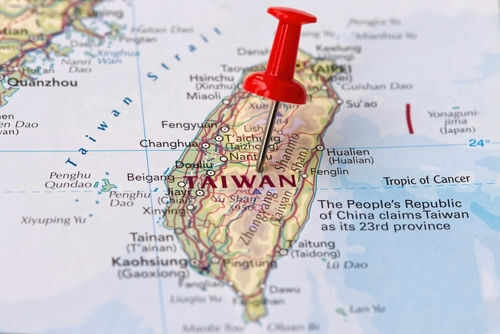
The immediate catalyst is the $14 billion Taiwan arms package reportedly sitting in limbo after an earlier $11 billion sale in late 2025. Trump’s willingness to discuss that package with Xi reads as pragmatic dealmaking in a crisis-laden world. It also reads, to Beijing, like proof that pressure works. Once an American president treats Taiwan’s defense needs as a negotiable item in leader-to-leader horse-trading, the entire deterrence picture changes.
Why the $14B arms package is more than hardware
Taiwan arms sales function as signaling devices as much as weapons deliveries. They tell Taipei it isn’t alone, and they tell Beijing the cost of coercion rises. The Reagan-era “Six Assurances” helped anchor that message by rejecting Beijing’s role in setting the terms. Negotiating arms with Xi, even rhetorically, risks swapping a clear policy for a personal understanding—exactly the kind of arrangement that evaporates when headlines shift.
Common sense says a president should talk to adversaries; conservatives generally agree. The question is what you put on the table. A tariff can be adjusted next quarter. A concession on Taiwan’s security posture can’t be un-conceded without inviting escalation. China has spent years trying to frame Taiwan as an internal matter and U.S. support as interference. A U.S. president treating arms sales as a bargaining chip validates that framing, even if unintentionally.
Iran war pressure turns energy into diplomatic currency
The summit’s backdrop is the Iran war’s disruption of global energy flows through the Strait of Hormuz. That turmoil gives Beijing unusual relevance because China is a top buyer of Iranian oil and can influence Tehran’s calculations. Analysts quoted in the research argue Xi “holds high cards” because Washington wants to prevent China from backfilling Iran economically or politically. When gasoline prices and shipping lanes wobble, every other issue becomes easier to trade away.
Trump’s incentive is clear: tamp down the energy shock, steady markets, and show voters a tangible “result” from great-power diplomacy. Xi’s incentive is equally clear: convert America’s urgent needs into durable advantage on Taiwan and on the broader narrative that “East is rising, West is declining.” The danger for the United States is allowing a short-term crisis to rewrite long-term commitments in the Indo-Pacific.
Rare earths, tariffs, and the lesson Beijing thinks it already taught
Trade remains the silent third party in the room. The timeline in the research describes tariff levels that surged dramatically before de-escalation, and rare earth threats from China that helped force a truce. Beijing learned that targeted leverage on critical inputs can produce political movement in Washington. Xi doesn’t need to “win” a trade deal in Beijing; he needs to reinforce the idea that he can tighten the screws whenever U.S. policy crosses China’s red lines.
For American readers tired of abstract geopolitics, here’s the kitchen-table translation: rare earths sit inside everything from smartphones to missiles; tariffs behave like taxes that ripple through prices; energy shocks punish commuters first. A summit that promises “stability” can sound like relief. Stability bought by softening on Taiwan, though, becomes an expensive calm—one that invites the next demand when the next crisis hits.
What success looks like, and what a bad deal would smell like
Trump can claim success without touching Taiwan’s security. He can press for tangible China steps that align with U.S. interests: discouraging Tehran from widening the war, clarifying export-control boundaries, and keeping trade channels predictable for American businesses. Xi will likely push for different deliverables: language that edges the U.S. closer to opposing Taiwan independence explicitly, or informal understandings that slow-walk arms approvals.
Conservatives should judge outcomes by whether they strengthen deterrence and protect American credibility, not by whether the summit ends with flattering optics. Xi can offer photo-op warmth and still pocket structural wins. The clearest warning sign would be any U.S. statement that looks like Beijing helped “approve” or “shape” U.S. arms policy toward Taiwan. The second warning sign would be unexplained delays packaged as “confidence-building.”
NEW: President Trump prepares for a high-stakes summit with President Xi, signaling that the future of U.S. weapons sales to Taiwan is on the negotiating table.
"I'm going to have that discussion with President XI. President XI would like us not to, and I'll have that… pic.twitter.com/HDy2kanQo8
— Fox News (@FoxNews) May 11, 2026
The summit may deliver a temporary cooling of rhetoric, but the strategic test comes after the handshakes: whether Washington signs, ships, and stands by its commitments when Beijing disapproves. Taiwan’s defense posture, not the banquet hall mood, will reveal who really had the leverage in Beijing.
Sources:
Taiwan, Trump summit, China, Xi Jinping
Trump China visit: Iran war, Xi Jinping, tariffs cast shadow over Beijing trip
At the Trump-Xi Summit, China Will Have the Upper Hand
Watch high-stakes Trump-Xi meeting