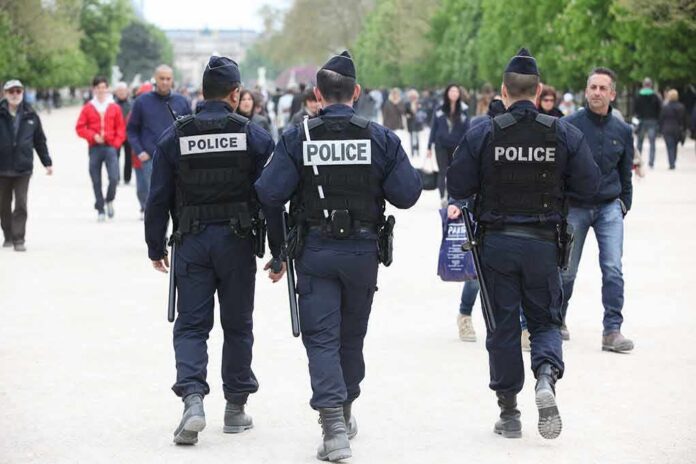
Paris police issued region-wide bans on carrying petrol and fireworks after riots, tightening controls to restore order.
Story Snapshot
- Police orders barred carrying petrol or gas containers and most consumer fireworks across greater Paris.
- The bans followed weekend riots, looting, and curfews in targeted city zones.
- Orders set dates from October 17–19 for fireworks and October 20–22 for fuel and fireworks.
- Officials said deployments would enforce compliance to stabilize public safety.
What Police Ordered And Where It Applies
Paris police signed a formal order on October 16 that restricted fireworks across Paris and three nearby departments from October 17 through October 19, 2026. The order listed which fireworks and pyrotechnic items were banned to buy, sell, carry, or transport. It applied to Paris, Hauts-de-Seine, Seine-Saint-Denis, and Val-de-Marne. The measure targeted items that can be used as projectiles during unrest and covered private carrying and transport, not just sales or transfers.
The police then issued two new orders that covered October 20 through October 22, 2026. One order regulated the transport and distribution of fuel and flammable gas in individual containers. The other continued restrictions on fireworks and pyrotechnic articles. The police archive lists both orders for departments 75, 92, 93, and 94, which are Paris and the same surrounding areas. These measures aimed to reduce tools used to start fires or spark clashes.
Why The Bans Followed A Violent Weekend
Authorities moved after a weekend that saw riots, looting, and damage in parts of France. Reporters described shops looted or damaged and thousands of arrests as the government tried to calm streets. In Paris, officials used curfews in specific zones, such as around Place de la République and Les Halles, and barred protests in parts of the city. Police stated that deployments were in place to ensure strict compliance with these measures.
International outlets also confirmed the temporary scope and timing. One report said Paris police ordered a ban on people carrying cans or bottles of petrol or gas, or possessing fireworks, through Thursday across the greater Paris region. Another outlet described plans to deploy some military forces for a weekend protest as part of a wider security push. The reports placed the restrictions in a short time window tied to public order needs.
How Far The Measures Reach, And What Remains Unclear
The fireworks order spells out item categories and lists, but the fuel order’s full text was not available in the public record cited here. The archive confirms the fuel order existed and covered individual containers, but it does not show all exceptions or penalties. Some reports focus on city zones covered by curfews, while others describe region-wide restrictions, which can blur how each order applied across the four departments. Officials have not publicly detailed the precise causal rationale for each ban.
This response follows a pattern France has used during past unrest. During major crises, authorities have relied on temporary curfews, protest limits, and object bans to steady streets. One report emphasized that Paris police also barred weapons, fireworks, and dangerous flammables in certain curfew areas. The aim is to remove items that can ignite fires or launch attacks. Available coverage says public peace improved, though it does not isolate which action drove that change.
What It Means For Public Order And Civil Liberties
Short-term limits on fuel containers and fireworks are common tools when crowds turn violent. Supporters say these steps cut risk, give officers space to work, and protect shops and homes. France’s use of such powers has deep roots, especially during emergencies. The key policy question is whether the narrow bans, combined with curfews and policing, restore calm without lasting trade-offs. Current reports document the orders and deployments; they do not offer detailed cause-and-effect results.
Sources:
prefecturedepolice.interieur.gouv.fr, bbc.co.uk, aljazeera.com, reuters.com, rmb.reuters.com, nine.com.au