

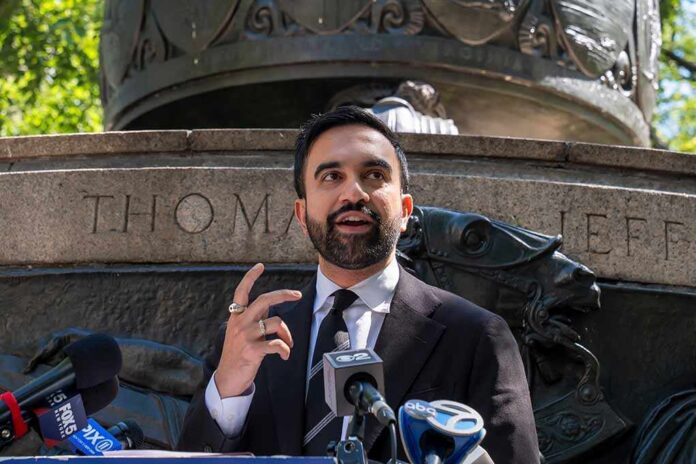
Nine months into his term, New York City Mayor Zohran Mamdani still lacks federal security clearance, raising real questions about who is in the room when threats are briefed.
Story Highlights
- Mamdani and City Hall say his federal clearance is still “in process” and on a normal timeline.
- Average clearance times can run months, but the exact level sought here is not public.
- Rep. Andy Biggs formally urged the Department of Homeland Security to deny Mamdani a clearance.
- No federal agency has publicly confirmed the case status, fueling public concern.
Nine Months, No Clearance: What City Hall Confirms
City Hall says the mayor’s federal security clearance remains in progress and within the current timeline. On January 5, 2026, Mayor Zohran Mamdani said he was “in the process of applying,” and described the review as moving forward as expected. In September, a City Hall spokesman repeated that the process is ongoing and within normal bounds for such checks. Those statements establish the undisputed fact: there is no clearance in hand yet, and the review continues.
Reports also note that senior city officials already hold federal clearances. Mamdani has pointed to Police Commissioner Jessica Tisch and his chief counsel as examples, saying their access helps bridge gaps during the mayor’s pending review. That arrangement can allow federal-city coordination to continue, but it still leaves the mayor himself outside classified briefings. That matters when fast-moving threats demand direct, timely decisions from the person elected to lead the city.
How Long Do Clearances Usually Take?
Federal timelines for security clearances often stretch for months, even in normal cases. Congressional Research Service material summarizing intelligence community data shows the fastest 90 percent of initial cases historically taking about 125 days for Secret and 172 days for Top Secret, depending on agency workload and case complexity. Those ranges explain why many reviews feel slow. But the level sought for the mayor has not been publicly stated, which limits precise comparison to averages.
That lack of detail is part of a broader pattern. Clearance adjudications are confidential, and agencies rarely discuss active files. Without a federal confirmation of status, the public hears only City Hall’s assurances and news accounts framing the delay. That vacuum invites skepticism, especially when the job involves urgent threat briefings and counterterror planning. The result is a trust gap: officials cite routine vetting; critics see red flags in the calendar.
National Security Concerns Raised by Congress
Representative Andy Biggs sent a formal letter urging the Department of Homeland Security to deny Mamdani a clearance, arguing the mayor’s record raises “serious national security concerns.” He warned that granting access would be “reckless” and could endanger city and federal personnel who share sensitive information. The letter puts political and security arguments on the record and intensifies pressure on federal adjudicators to scrutinize the case.
Arizona Republicans echoed those concerns in public statements, casting the mayor as unfit for classified access based on his past positions. These are political assertions, not agency findings. Still, they shape public debate and raise the stakes for coordination between New York City and federal partners. The claims heighten scrutiny precisely while the process remains sealed, further fueling doubts that the city argues are not grounded in new facts.
What We Know, What We Do Not
We know the mayor lacks a clearance today. We know City Hall says the review is proceeding on a normal timeline. We know federal timelines can span months. We also know there is no public statement from the Federal Bureau of Investigation or the Department of Homeland Security that confirms where the case sits in the pipeline. Those gaps prevent outsiders from judging whether the delay is ordinary throughput or driven by unresolved concerns.
Why Can’t Mamdani Get Security Clearance? https://t.co/OP4MOS2Wxx
— Nicholas Tesdorf (@NicholasTesdorf) September 17, 2026
Conservatives expect strong leadership on security, clear lines with federal law enforcement, and no politics inside life-and-death briefings. The Trump administration has pushed for tighter vetting and tougher standards. That approach should apply evenly. The cleanest path now is transparency within lawful limits: specify the clearance level sought, confirm that the file is active, and keep the public updated when milestones are reached. Until then, the clock keeps running while the mayor waits outside the secure room.
Sources:
cityandstateny.com, foxnews.com, amny.com, news.meaww.com, x.com, politicalwire.com, politico.com, theyeshivaworld.com