

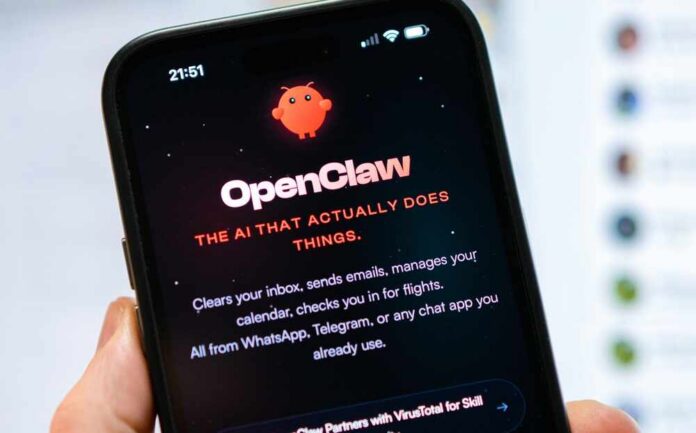
China’s local governments are dangling free housing and six-figure checks to turbocharge an AI “agent” boom—while even China’s own security watchdogs warn sloppy deployments can leak data and invite attacks.
Story Snapshot
- Wuxi and Shenzhen’s Longgang district have floated draft policies offering subsidies, rent-free offices, and housing perks to OpenClaw-focused startups and developers.
- Incentives reportedly reach as high as about $720,000, with additional rewards tied to industrial AI, robotics breakthroughs, and open-source contributions.
- Tencent and other Chinese tech giants are accelerating adoption with cloud integrations and even free on-site installations that drew long lines in Shenzhen.
- China’s National Vulnerability Database and other official channels have flagged security risks tied to misconfiguration and unsafe deployments.
China’s “OpenClaw” Subsidy Blitz Targets the Next AI Platform Layer
Officials in Wuxi’s high-tech zone and Shenzhen’s Longgang district have moved to capitalize on OpenClaw, an open-source AI agent that can automate tasks by breaking down instructions, browsing the web, and correcting its own errors. Draft measures described in early March 2026 include cash subsidies, multi-year rent relief for office space, and temporary free housing—benefits meant to pull developers into local AI ecosystems and turn hype into jobs and tax base.
Longgang’s published draft and Wuxi’s policy outline are framed around practical deployments: industrial AI applications, robotics, and “embodied” intelligent devices that blend software agents with real-world hardware. The incentives appear structured to reward both outcomes and participation—ranging from support for “outstanding contributors” to larger prizes for technical breakthroughs. The core point is competitive municipal industrial policy: Chinese districts are trying to buy speed and concentration of talent in the AI-agent race.
Tech Giants Fuel Demand With Integrations and On-the-Ground Promotion
Tencent, Alibaba, and ByteDance have pushed support for OpenClaw through their cloud platforms, a contrast highlighted that notes U.S. cloud providers have been more restrained. In Shenzhen, Tencent set up free installation stalls at its headquarters that attracted large queues, turning what looks like a developer tool into a public craze. Xiaomi has also tested an internal agent initiative aimed at deeper ecosystem integration.
That commercial momentum matters because AI agents can be token-hungry: complex, multi-step automation can require far more model calls than a simple chat session. Analysts cited in Chinese tech coverage have described local OpenClaw deployments as a “24-hour computing pump,” generating steady cloud usage and revenue while expanding platform lock-in. For American readers, the takeaway isn’t the metaphor—it’s the strategic logic: infrastructure players want the agent layer to run on their rails.
Security Warnings Highlight the Risk Side of “Move Fast” Automation
Official warnings have followed the surge. It notes that China’s National Vulnerability Database flagged security risks tied to OpenClaw deployments in late February 2026, and other official channels have warned about misconfiguration that can lead to cyberattacks and data leaks. Those cautions underline a basic reality of agent-style software: giving a tool broad permissions to browse, run tasks, and connect services expands the blast radius when settings are wrong.
It does not specify how widespread real-world incidents have been; it mainly documents the warnings and the continued acceleration of adoption. That limitation matters when weighing claims, but it doesn’t erase the policy dilemma: local governments are incentivizing rapid deployment while security authorities warn that deployment mistakes can expose sensitive data. In any country, that tension raises questions about whether speed and subsidies are outrunning safeguards and accountability.
Why U.S. Policymakers Should Read This as Industrial Strategy, Not a Gimmick
China’s push is less about one open-source project and more about capturing a new interface layer—AI agents that sit between citizens, businesses, and digital services. If that layer becomes dominant, it can reshape how work gets done, which platforms win, and which standards spread. The open-source angle lowers barriers for startups, while municipal subsidies and cloud support concentrate adoption. That combination can tilt markets fast, even if some draft policies change before finalization.
Free housing, offices, and up to $720,000 subsidies: Chinese cities go all in on OpenClaw startups https://t.co/75G3vxOoJ6 #news
— Business News (@15MinuteNewsBus) March 10, 2026
From a conservative, common-sense standpoint, the U.S. response should avoid copying top-down subsidy sprees that pick winners and invite waste, but it also shouldn’t ignore the competitive reality. The stronger lane is protecting innovation through predictable rules, secure deployment standards, and defenses against data exploitation—especially when agent systems can touch emails, files, and business systems. It shows China racing to scale; it does not provide enough detail to judge effectiveness yet.
Sources:
China OpenClaw cash subsidies housing office startups developers “raise the lobster” (March 2026)
SCMP: OpenClaw fever and why China is rushing to “raise the lobster”