

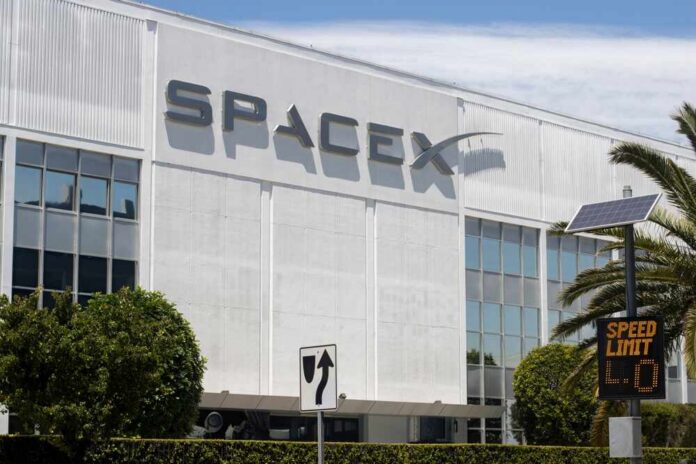
SpaceX’s rumored 2026 mega-IPO is being hyped as a once-in-a-generation moneymaker—but for everyday Americans, the real question is whether “profit before the IPO” is even possible without getting burned by private-market gatekeepers.
Quick Take
- Reports point to a full-company SpaceX IPO target in 2026, not a Starlink-only spinout, with talk of raising more than $30 billion.
- Elon Musk publicly affirmed a report as “accurate,” signaling serious momentum even without a filed prospectus yet.
- Commentary emphasizes that Starlink revenue and SpaceX launches are intertwined, making a split difficult and shaping how Wall Street may value the business.
- Retail investors are largely locked out pre-IPO, where access tends to favor insiders and secondary-market buyers.
What’s Driving the 2026 SpaceX IPO Chatter
Reporting and industry discussion now center on SpaceX pursuing a 2026 initial public offering for the entire company, with estimates floating above a $1 trillion valuation and a raise exceeding $30 billion. Elon Musk has also weighed in publicly by confirming a report as “accurate,” giving the speculation more weight than the usual anonymous-source buzz. No prospectus or official IPO filing is publicly cited in the research, so timing and terms remain unfinalized.
The business case presented is straightforward: Starlink has grown from a risky idea into a material, recurring-revenue engine, while Starship development remains capital-intensive. That mix—stable cash flow paired with moonshot spending—is exactly the kind of profile that often pushes private firms toward public markets. The research also frames the IPO as a way to fund next-stage ambitions, including upgraded Starlink capabilities and broader AI-related initiatives, without relying only on private rounds.
Why a Full SpaceX IPO Matters More Than a Starlink Spin-Off
Analyst commentary highlighted argues that carving Starlink out as a standalone company is less practical than many headlines assume. Starlink depends heavily on SpaceX launch economics, and SpaceX’s broader roadmap depends on Starlink’s scale and cash generation. Keeping the businesses together also avoids forcing the market to value Starlink like a conventional internet service provider while leaving SpaceX’s launch and exploration side with heavier risk and fewer predictable revenues.
This integrated approach also helps explain why the “SpaceX IPO” story captures so much attention. A combined company bundles America’s most dominant launch operator with a fast-scaling satellite communications network. That package can attract a broader range of institutional buyers than a narrower, single-division listing. At the same time, it invites more scrutiny: public investors typically demand clearer disclosure around spending, timelines, and performance—areas that can be harder to pin down in frontier industries.
The “Profit Before the IPO” Pitch vs. How Access Really Works
The promotional framing—“how to profit before the IPO”—runs into a reality many conservative savers already know from other hot offerings: pre-IPO access is usually restricted. Secondary-market opportunities, private placements, and specialized funds can exist, but they frequently come with high minimums, limited liquidity, and pricing that already bakes in optimistic expectations. That structure can leave everyday retirement investors buying late, after insiders and connected players have already positioned themselves.
Musk has also floated the idea of giving Tesla shareholders some form of priority access to SpaceX shares. It points to that concept being discussed around a Tesla shareholder meeting, which would be unusual in a traditional IPO process and could create a new pathway for retail participation. Still, no final mechanism is documented in the provided materials, and the gap between “would like to” and “will do” matters when real money is on the line.
Key Risks Conservatives Should Watch: Hype, Valuation, and Public-Market Pressures
The biggest caution flag in the research is uncertainty: valuations in the $1 trillion to $1.5 trillion range and capital raises above $30 billion are discussed, but the IPO is not yet backed by filed documentation in what’s provided. That matters because pre-IPO hype can inflate expectations, and public markets can punish missed timelines—especially for expensive R&D programs. Investors should separate what’s confirmed (Musk’s public affirmation of a report) from what’s still projection.
The public-market shift can also change incentives. Once a company must report quarterly, management attention and investor messaging can tilt toward near-term optics, even when long-cycle engineering is the core mission. Supporters of American innovation can still want SpaceX to thrive while recognizing that Wall Street’s demand for predictability can collide with the realities of rockets, satellites, and testing. The research does not provide final IPO dates or allocation rules, so any “how to profit” claim should be treated as incomplete until official terms are public.
Sources:
musk-confirms-spacex-ipo-2026-targets-1-trillion-valuation
The Key Questions for a Potential SpaceX IPO in 2026: Analyst Roundtable