

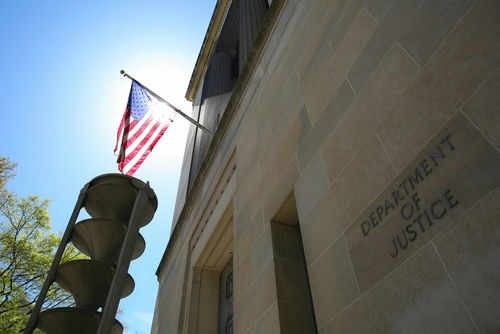
New Senate documents suggest Biden-era DOJ leaders signed off on a sweeping subpoena operation that targeted hundreds of Republicans—raising fresh questions about whether federal power was turned into a political weapon.
Quick Take
- A Senate Judiciary subcommittee held a March 24, 2026 hearing titled “Arctic Frost: A Modern Watergate,” the second in a series that began in 2022.
- Sen. Chuck Grassley released 30 new records tied to “Arctic Frost,” including details that the probe involved 197 subpoenas reaching more than 400 Republican individuals and entities.
- Republicans argue the investigation was formally authorized at the top of DOJ and the FBI in April 2022, making it a test case for government overreach.
- Democrats counter that Republicans are staging political theater and should hear from Jack Smith and Kash Patel, not just outside witnesses.
What the Senate hearing says “Arctic Frost” was—and why it matters
The March 24, 2026 hearing took place in the Hart Senate Office Building and carried a loaded subtitle: “A Modern Watergate.” The probe at the center of the dispute—nicknamed “Arctic Frost”—is described in committee materials and allied reporting as an election-related investigation led by former Special Counsel Jack Smith that reached President Trump and a wide universe of Republican affiliates. Republican senators say the defining issue is scale plus authorization: subpoenas and data collection executed through official channels, not a rogue operation.
Sen. Ted Cruz chaired the subcommittee session and heard testimony from Will Chamberlain of the Article III Project, former FBI Special Agent Christopher O’Leary, and Margot Cleveland, a senior legal correspondent at The Federalist. Republican investigators point to whistleblower disclosures that helped trigger Senate scrutiny starting in 2022. Their core claim is not simply that the government investigated Trump-world, but that the method functioned like an institutionalized dragnet—broad enough to pull in organizations and private data far beyond any narrow suspect list.
The subpoena numbers and the newly released records
Grassley’s document release is the factual centerpiece of the week. According to the records summarized in committee communications and subsequent coverage, “Arctic Frost” involved 197 subpoenas reaching more than 400 Republican targets, including political organizations and individuals; one summary also notes that roughly 20% of Senate Republicans were touched by the subpoena activity. The newly released batch totals 30 documents and is presented as the first meaningful public window into internal decision-making and the intended breadth of collection.
The hearing also revived a key allegation about who authorized the machinery. The underlying narrative advanced by Republican investigators is that senior Biden administration law-enforcement leadership approved the investigation via a signed memo dated April 4, 2022. The officials named in that claim include Attorney General Merrick Garland, Deputy Attorney General Lisa Monaco, and FBI Director Chris Wray. If that authorization is accurately characterized, it shifts the public debate from a single prosecutor’s choices to institutional accountability—who approved what, and under what limits.
Democrats’ response: “Sham hearing” claims and missing witnesses
Democrats on the committee reject the “modern Watergate” framing and argue the hearing format is designed to land political hits without hearing directly from the main actors. They point to claims that Jack Smith was offered as a witness as far back as October 2025, and they criticize Republicans for not compelling his testimony if the goal is transparency. Democrats also press for testimony connected to Kash Patel, arguing that if Republicans want to scrutinize law-enforcement decisions, they should also examine statements made to grand juries and other relevant proceedings.
This disagreement is more than partisan noise; it shapes what the public can verify. A hearing stacked with outside analysts and former officials can highlight patterns and risks, but it cannot fully resolve disputed intent or operational details without direct testimony and full documentation. The current record, even with new releases, reportedly includes redactions and incomplete visibility into subpoena categories and collection parameters. That limitation leaves Americans with competing narratives about “Arctic Frost” rather than a final adjudication of misconduct.
Why conservatives see a constitutional problem—especially in a war-footing era
For a conservative audience already skeptical of bureaucratic power, the “Arctic Frost” dispute lands in a moment when trust is thin. In 2026, with the country on a war footing abroad and voters demanding competence at home, expansive domestic surveillance-like subpoena practices—especially when aimed at political associations—raise First and Fourth Amendment alarms. Conservatives who spent years fighting administrative overreach hear “197 subpoenas” and think of a federal apparatus that can pressure citizens, donors, and advocacy groups without a vote of Congress.
WATCH LIVE: Senate hearing on 'Arctic Frost: A Modern Watergate'
https://t.co/P5WtkLrsU7— Fox News (@FoxNews) March 24, 2026
The political context also matters: many Trump voters are already frustrated that Washington keeps expanding its reach while failing at basics like secure borders, stable prices, and energy affordability. Add a new war and rising costs, and even loyal supporters split between “back the mission” instincts and exhaustion with open-ended conflict. In that environment, revelations of past DOJ and FBI targeting controversies don’t feel like ancient history—they feel like evidence that the same institutions asking for unity abroad may still be unaccountable at home.
Sources:
Arctic Frost: A Modern Watergate
Fox Business Video 6391529377112
Newly Released Records Show Expanded Data-Sweep Plans of Jack Smith’s Arctic Frost Probe