
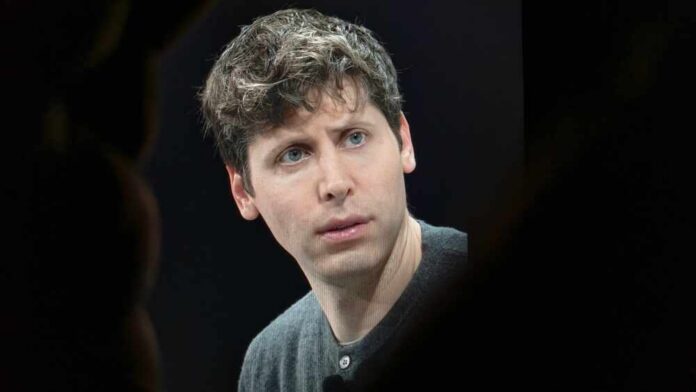
Sam Altman sat in a federal courtroom and declared himself “an honest and trustworthy businessperson” — but a high-profile lawsuit from Elon Musk is forcing a very public reckoning over whether the man steering the world’s most powerful artificial intelligence company can actually be taken at his word.
Story Snapshot
- Elon Musk’s lawsuit against OpenAI and CEO Sam Altman went to trial, with closing arguments now complete and a federal jury deliberating.
- Altman testified that a founding principle of OpenAI was that it “shouldn’t be controlled by any one individual,” even as critics argue he steered it toward a for-profit structure that benefits insiders.
- OpenAI’s defense countered that Musk himself supported a for-profit subsidiary model to raise the massive capital required for AI development.
- House Republicans have separately launched a probe into Altman over potential conflicts of interest ahead of a planned OpenAI initial public offering.
Altman Takes the Stand in High-Stakes AI Trial
Sam Altman testified in federal court on May 13, 2026, defending his leadership of OpenAI against claims brought by co-founder Elon Musk. Musk’s lawsuit alleges OpenAI abandoned its original mission as a neutral nonprofit in favor of a for-profit structure that enriches insiders. Altman pushed back directly, telling the court he disagreed with testimony portraying him as dishonest and asserting his belief in his own integrity as a business leader.
Altman acknowledged under questioning that one of OpenAI’s founding principles was that the organization “shouldn’t be controlled by any one individual.” That admission carries weight in the broader case, since Musk’s legal team argues the for-profit restructuring effectively concentrated power and financial benefit in ways that contradict the company’s original charter. The courtroom exchange exposed a tension at the heart of OpenAI’s evolution from research nonprofit to trillion-dollar technology player.
Musk’s Core Accusation: Mission Betrayed for Money
Musk’s lawsuit contends that OpenAI “flipped its original structure as a neutral nonprofit in favor of a for-profit business,” a move he argues violates the commitments made to early donors and the public. Musk was a founding backer of OpenAI and departed its board before the company’s commercial explosion. His legal team pressed Altman directly on questions of honesty and whether the structural shift served the public interest or private financial gain.
The case raises legitimate questions about accountability in an industry that now shapes how Americans access information, conduct business, and interact with government services. When an organization built on a public-interest mission quietly restructures to generate private profit, the people who trusted that mission — donors, early employees, and the broader public — deserve honest answers. That concern is not unique to conservatives, but it aligns squarely with skepticism of powerful, unaccountable institutions operating without transparency.
OpenAI’s Defense: Musk Wanted the Same Thing
OpenAI’s attorneys introduced emails and meeting notes during trial indicating that Musk himself advocated for a for-profit subsidiary as a mechanism to raise the enormous capital needed for expensive artificial intelligence computing resources. If accurate, that evidence significantly undermines Musk’s portrayal of the for-profit pivot as a betrayal he never anticipated or supported. The defense argues the structural evolution was both necessary and consistent with the organization’s long-term mission.
Elon Musk lawsuit against OpenAI and CEO Sam Altman
Arguments, worthy read.
https://t.co/45YuVx7EwM— Murari (@murarivarma) May 16, 2026
The competing accounts leave jurors — and the public — sorting through a complicated record of internal emails, board decisions, and conflicting testimony from some of the most powerful figures in technology. What is clear is that OpenAI transformed from a small research nonprofit into one of the most valuable and influential companies on earth, and the question of whether that transformation was handled honestly and legally is now in a jury’s hands.
Congressional Scrutiny Adds Another Layer
Separate from the Musk trial, House Republicans on the Oversight Committee have launched a probe into Altman over potential conflicts of interest connected to OpenAI’s planned initial public offering. The investigation reflects growing concern in Washington that the rapid commercialization of artificial intelligence is outpacing the accountability structures needed to protect the public. Altman’s dual role — as the face of AI’s promise and the target of multiple integrity challenges — makes the outcome of both proceedings consequential far beyond Silicon Valley.
For Americans who have watched institutions from universities to federal agencies abandon their stated missions in pursuit of money or ideology, the OpenAI saga carries a familiar frustration. A company founded to develop artificial intelligence “for the benefit of humanity” now faces serious legal and congressional scrutiny over whether its leadership kept that promise. The jury’s verdict will not settle every question about Altman’s character, but it will establish a legal record that shapes how AI’s most powerful players are held accountable going forward.
Sources:
[1] YouTube – OpenAI CEO Sam Altman pushes back against Elon Musk during …
[2] YouTube – OpenAI CEO Sam Altman testifies in lawsuit launched by Elon Musk
[3] YouTube – Sam Altman testifies in Elon Musk-OpenAI trial
[4] Web – Musk lawyer presses Altman on honesty in OpenAI trial testimony