

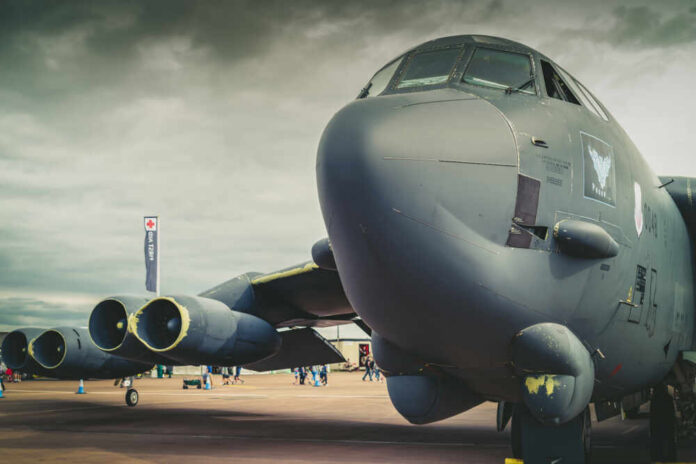
A routine “defensive” bomber mission tied to the Iran war suddenly looked a lot less routine when a U.S. B-52 threw an emergency code over England and had to turn back.
Story Snapshot
- A U.S. Air Force B-52H Stratofortress declared a general emergency (7700) while flying over southern England near Southampton and later returned safely to RAF Fairford.
- Reporting linked the incident to a depressurization problem; no injuries or damage were reported.
- The flight happened amid heightened Iran tensions, with B-52 deployments to the UK tied to “defensive” operations targeting Iranian missile threats.
- UK approval for U.S. use of RAF Fairford and Diego Garcia was described as limited to specific defensive actions intended to protect British lives.
Emergency Signal Over Southern England Raises New Questions
Flight trackers and reporting indicated a B-52H Stratofortress declared a general emergency while over the south of England, near Southampton, after squawking the 7700 transponder code used for in-flight emergencies. The aircraft reportedly circled at roughly 10,000 feet and then descended as the crew worked the problem. The bomber ultimately returned safely to RAF Fairford in Gloucestershire, the aircraft’s deployment base during the current surge.
Available reporting described the likely issue as depressurization, but details remain limited because no public U.S. Air Force statement was included. That gap matters because it leaves the public relying on secondary reporting and flight-tracking data to reconstruct what happened. Even when an incident ends safely, an emergency in peacetime airspace highlights how quickly a mission can go sideways—especially with heavy, long-range aircraft.
RAF Fairford’s Role in Iran-Related Operations
RAF Fairford has long served as a U.S. Air Force hub in the United Kingdom, in part because its runway and infrastructure can support heavy bombers. The current deployment drew attention because B-52 visits are relatively rare compared with routine fighter rotations. Earlier in the month, reporting said three B-52s arrived after UK Prime Minister Sir Keir Starmer approved limited U.S. use of RAF Fairford and Diego Garcia for defensive actions.
UK messaging has emphasized that the authorization is constrained. A UK Ministry of Defence spokesman described the U.S. use of bases as tied to “specific defensive operations” intended to prevent Iran from firing missiles that could put British lives at risk, alongside UK defensive actions. That framing may be politically important in London, but it also underscores how narrow language can be in wartime. “Defensive” can still involve strikes, and voters on both sides of the Atlantic pay attention to what that means in practice.
What the Incident Suggests About Readiness and Risk
The B-52H is a strategic bomber platform that has been in service since the 1960s, and it remains central to U.S. long-range strike planning. Reporting tied the emergency to a depressurization issue, not hostile action, but mechanical problems still affect readiness. In a war environment—where deployments can be extended and sortie tempo can rise—maintenance reliability becomes part of deterrence. When a high-profile aircraft declares an emergency over an ally’s territory, the optics travel fast.
The short-term operational impact appears limited because the aircraft landed safely and no further incidents were reported in the provided sources. The longer-term significance is harder to measure from the available information alone. Coverage suggested the episode could prompt extra checks or maintenance scrutiny for deployed bombers. Without official details, the public cannot assess whether this was a routine malfunction handled by the book or a more serious event that could affect future mission planning.
The Politics at Home: A Base, a War, and a Divided Coalition
For Americans watching the Iran war unfold in 2026, the story lands in an already tense domestic environment. It focuses on the aircraft emergency and the UK’s defensive-only posture, but the larger context is unavoidable: bomber deployments from allied soil signal a deeper level of commitment than “over-the-horizon” posture. When operations expand, so do questions about objectives, exit ramps, and constitutional accountability—especially for voters who have lived through decades of open-ended conflicts.
It also highlights how alliances shape operational choices. The United States controls the aircraft and missions, but host nations can limit how bases are used and how leaders describe the mission to their own citizens. That reality can collide with public expectations at home, including among conservatives who support strong defense but increasingly demand clarity about goals, limits, and oversight. Based on the sources provided, key facts remain: a B-52 declared an emergency over England, returned safely, and the deployment is tied to defensive Iran-related operations approved under UK restrictions.
Sources:
US war plane declares emergency mid-air while flying over Britain
US B-52 bomber declares emergency while flying over UK: report