

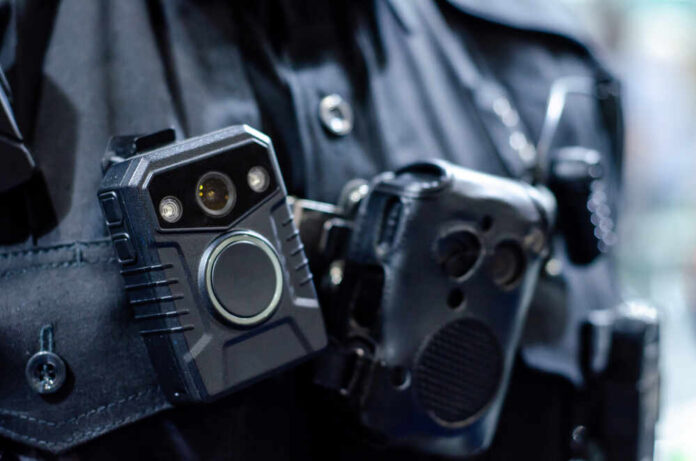
When the video finally drops, it doesn’t just answer questions—it decides who gets believed.
Quick Take
- A late-April 2026 police shooting in Plymouth, Minnesota flipped public expectations once bodycam footage went public on May 11.
- The family of 27-year-old Desaver Hollis asked for transparency, then faced footage showing Hollis fleeing and exchanging gunfire with officers.
- Conservative commentators called it a “backfire” moment: the very accountability tool demanded for years ended up supporting the police narrative.
- The family’s attorneys pivoted to questions about editing and whether 20 shots were necessary, signaling the next phase: process fights, not facts fights.
Plymouth, Minnesota: A demand for answers that produced a hard answer
Plymouth sits close enough to Minneapolis to live under the long shadow of George Floyd-era scrutiny. That context matters because it trains the public to expect one kind of storyline: officers overreact, family pleads, video proves misconduct. The Hollis shooting didn’t follow the script. After Desaver Hollis died in a late-April encounter, his family pushed for bodycam footage—then watched the release depict him running and firing back.
The footage release on May 11 changed the power dynamics in a single news cycle. Sympathy does not disappear when a family grieves; it shouldn’t. But narrative certainty collapses fast when the core claim shifts from “unarmed and fleeing” to “armed and shooting.” The public also heard a specific, memorable number—police fired 20 shots—which became the new battleground for debate once the underlying threat shown on video became harder to dispute.
Why bodycams became the referee, not just a recording device
Bodycams exploded after 2014 because Americans wanted proof. Communities wanted accountability; officers wanted protection from false claims; politicians wanted a policy that sounded like reform without restructuring anything. That mix produced a tool that behaves like a referee: it doesn’t pick a side, but it ends arguments. In cases like Hollis, bodycams don’t merely document an incident—they compress the space for spin by anchoring the timeline to visible actions.
That’s the uncomfortable part for activists who treated cameras as guaranteed evidence of police wrongdoing. Cameras don’t hunt misconduct; they capture behavior. If a suspect escalates, the camera doesn’t soften it. If an officer panics, the camera doesn’t excuse it. Conservative readers tend to like that bluntness because it maps to common sense: a threat is a threat. The camera’s biggest “bias” is simply being there, forcing claims to match physics.
The new rhetorical playbook: if the video hurts, attack the video
After the footage went public, the family and attorneys reportedly questioned whether the video had been edited and whether the volume of gunfire was necessary. That move fits a pattern seen across the country: when the central allegation fails, the fight shifts to framing. “Show us the whole thing.” “Why is there a gap?” “Why did they fire so much?” Some questions are legitimate; selective clips can mislead. But not every edit equals deception.
The “20 shots” talking point is especially sticky because it sounds like excess even when an armed exchange lasts seconds. Most civilians don’t train for gunfights; they imagine one shot, one outcome. Real shootings don’t work that way. Officers fire until the threat stops, and in a chaotic burst, multiple officers may fire nearly simultaneously. Conservatives should still demand clear policies and clean investigations, but common sense rejects the idea that a precise shot count alone proves wrongdoing.
How this story fits a repeating national loop
The Hollis case echoes other recent incidents where families demanded bodycam footage expecting a smoking gun against police, only to find the video complicating or contradicting early claims. In Homewood, Alabama, the Jabari Peoples case carried similar pressure after a district attorney deemed a shooting justified and the family sought fuller footage. The recurring theme isn’t that families lie; it’s that early information travels through emotion, rumor, and advocacy before evidence shows up.
That loop damages trust in two directions. Communities see delay and assume a cover-up; officers see instant condemnation and assume a rigged public trial. Bodycams can reduce that gap, but only if agencies release footage with credible speed and context. Delay creates conspiracy space. Overediting creates suspicion. Dumping raw video without explanation can also mislead. The public doesn’t just need footage; it needs a timeline that a reasonable adult can follow.
The conservative takeaway: transparency wins, but only if we accept the results
Conservatives have a straightforward principle available here: insist on transparency, then live with what transparency reveals. If video shows an officer abusing power, prosecute and reform. If video shows a suspect trying to shoot his way out, stop pretending the officer had a menu of safe options. The Hollis footage, as described in the reporting, strengthened the argument that bodycams protect good cops and expose bad assumptions—no matter who makes them.
The next shoe often drops after the headlines fade: civil litigation, public-records fights over full footage, and political campaigns promising “accountability” without acknowledging the threat captured on camera. Americans over 40 have seen this pattern enough to predict it. The question for Plymouth isn’t whether video matters. It’s whether local leaders, media, and activists will treat the video as evidence—or as an obstacle to a narrative they already committed to.
Backfire: Family Demands Answers in Police Shooting, Gets Them in Bodycam Footage https://t.co/yy6g8OjmV9
— JimmyMacTonite1968 (@MacTonite1968) May 12, 2026
Bodycams were sold as sunlight. Sunlight doesn’t flatter; it clarifies. When families demand answers, they deserve them, and when officers face accusations, they deserve evidence-based judgment. The Hollis case is a reminder that the camera can vindicate the badge as easily as it can expose it—and the public’s credibility now depends on accepting whichever direction the truth points.
Sources:
Backfire: Bodycams Continue to Prove to Be Valuable Assets for Police Officers
Jabari Peoples family demands full bodycam footage after DA says shooting justified