

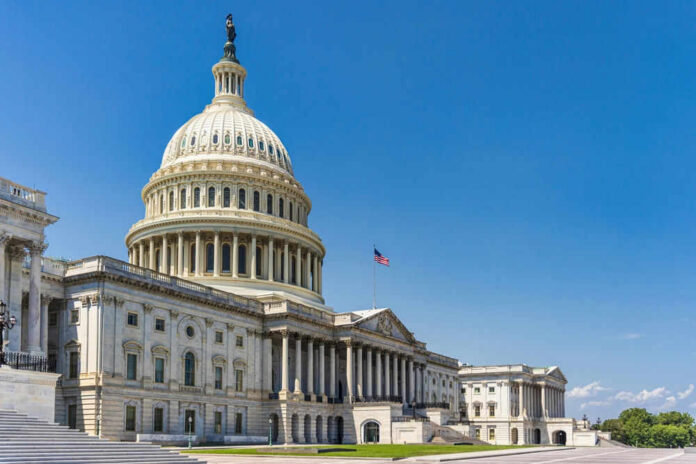
A secretive corner of Congress is facing a credibility test as overlapping scandals force the House to decide whether it can police itself—or whether politics and secrecy will win again.
Quick Take
- The House Ethics Committee has opened an investigation into Rep. Eric Swalwell following reports of alleged sexual misconduct, while an expulsion threat builds in the GOP-led House.
- Swalwell denies wrongdoing, paused his California governor campaign, and faces parallel scrutiny reported to involve a local prosecutor and immigration-related questions about household employment.
- The controversy lands as public trust in Congress remains weak, and as both parties accuse “the system” of protecting insiders.
- A separate but related debate over oversight secrecy lingers from the House Intelligence Committee’s classified assessment of Edward Snowden’s leaks.
Swalwell ethics probe intensifies pressure on a body built for quiet discipline
House investigators publicly disclosed a probe into Rep. Eric Swalwell (D-CA) after news reports described allegations involving at least four women, including a claim centered on a subordinate. The Ethics Committee’s announcement signals procedural seriousness, but it also underscores a central weakness: Congress often relies on internal, slow-moving processes to judge powerful members. Swalwell has denied wrongdoing and says the allegations are false, while political consequences are already spreading.
Rep. Anna Paulina Luna (R-FL) has said she plans to move toward an expulsion effort if Swalwell does not resign, escalating what can become a high-stakes floor fight. Democrats have not spoken with one voice, with some calling for resignation and others emphasizing due process. For voters who think Washington elites protect their own, the optics of lawmakers judging lawmakers—behind closed doors and on shifting timelines—can fuel the belief that accountability depends on who you are.
What’s known, what’s alleged, and where the process can still break down
Public reporting describes multiple strands: alleged sexual misconduct, a campaign suspension, and separate scrutiny that reportedly includes a criminal inquiry by a local prosecutor as well as immigration-related questions tied to household employment. At this stage, the Ethics Committee has not declared a violation; it has only confirmed an investigation. That distinction matters legally and politically, but it also highlights a recurring frustration: the public often receives fragments while key facts sit inside sealed inquiries.
Expulsion is rare and politically explosive, which is why leadership in both parties tends to be cautious even when allegations are serious. The House can also use lesser tools—reprimand, censure, loss of committee assignments—but those measures can look like insider discipline rather than public justice. Conservatives who prioritize equal treatment under the law often argue that a member of Congress should not get softer handling than a private-sector supervisor facing similar claims. Liberals concerned about workplace power dynamics in institutions make a similar point.
The “secretive panel” problem: oversight that depends on trust Americans no longer give freely
The Swalwell matter collides with a broader concern: key House panels operate with limited transparency by design, especially when national security or member conduct is involved. That structure can be necessary, but it also creates a persistent legitimacy problem. When citizens already believe government serves insiders first—whether they call it corruption, elites, or a “deep state”—the combination of secrecy and scandal becomes combustible. Every closed-door decision risks being seen as rigged.
Snowden’s shadow: classified findings, disputed numbers, and lasting skepticism
The credibility debate is sharpened by the still-controversial legacy of Edward Snowden’s disclosures and the House Intelligence Committee’s assessment that the leaks were highly damaging to U.S. security. Even years later, major factual questions remain contested in public discussion, including how many documents were taken and what motivated the leak. Supporters have portrayed Snowden as a whistleblower, while the committee’s findings rebut that narrative, creating a long-running clash over trust, surveillance, and accountability.
Why this moment matters in 2026: Congress, credibility, and the demand for real accountability
Republicans control the House and Senate in President Trump’s second term, giving the GOP more leverage to press internal discipline and force votes that Democrats would rather avoid. Democrats, meanwhile, have incentives to frame Republican moves as partisan weaponization. The risk for the country is that both sides focus on messaging while the public sees another insider drama with no clear closure. If the House cannot act swiftly and transparently within legal limits, distrust will deepen.
Deluge of scandals raises stakes for secretive House panel https://t.co/TPH7dYwe9Z
— Mark Hultmark (@HultmarkMark) April 25, 2026
For conservatives frustrated by rule-bending, selective enforcement, and a culture that seems to protect connected people, the key question is simple: will the same standards apply to a member of Congress as to everyone else? For liberals worried about unequal power and workplace coercion, the question is also simple: will institutions finally treat allegations involving senior officials with seriousness rather than caution? The Ethics Committee now sits at the intersection of those demands—under pressure to prove it can deliver accountability without becoming a political weapon.
Sources:
United States House Panel Calls Snowden Leaks ‘Highly Damaging’
Swalwell faces House ethics probe over alleged sexual misconduct; expulsion threat looms