

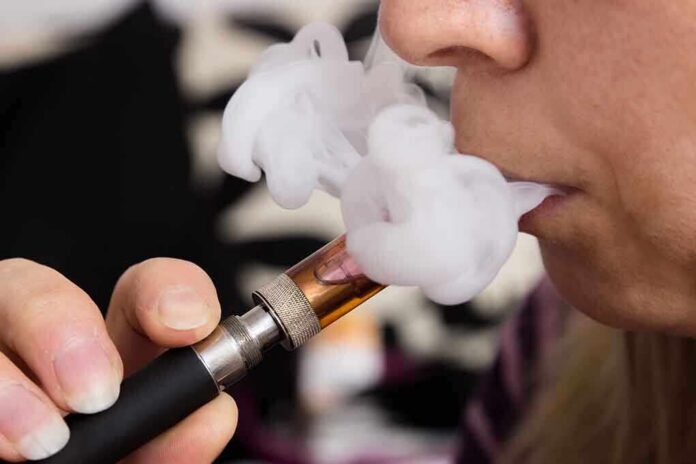
Doctors are warning that vaping nicotine while on GLP-1 weight-loss drugs can intensify nausea, reflux, and dehydration risks.
Story Highlights
- Clinicians report no direct chemical clash, but nicotine can worsen stomach side effects on GLP-1 drugs.
- Nausea, vomiting, and diarrhea are common on GLP-1 medicines and can lead to dehydration.
- Health agencies and reviews urge patients to stay hydrated and watch for severe symptoms.
- Vaping or smoking may add fuel to reflux and queasiness already caused by these drugs.
Doctors Flag Added Stomach Trouble When Vaping On GLP-1s
Medical guidance says there is no direct chemical conflict between nicotine and GLP-1 weight-loss drugs like semaglutide or tirzepatide. Doctors still warn that vaping can make nausea and acid reflux worse for patients on these injections, since both can irritate the stomach and slow digestion. That mix can push mild queasiness into vomiting for some users. Clinics advise avoiding triggers during dose starts and increases, when side effects tend to peak.
Public health notices and clinical reviews list nausea, vomiting, diarrhea, constipation, and reflux as common effects of GLP-1 therapy. These can affect more than one in ten patients and sometimes last for days. When vomiting or diarrhea limits fluid intake, dehydration risk rises. That can strain the kidneys in severe cases, which is why many guidance documents stress early, steady hydration and symptom tracking.
Why Dehydration Risk Rises And What To Watch For
Dehydration follows when patients throw up, have diarrhea, or stop drinking enough due to queasiness. Guidance warns that dizziness, a rapid heartbeat, dry mouth, and little urine can be danger signs that need prompt care. Clinical recommendations advise small sips between meals, bland foods, and pausing dose increases until symptoms settle. In rare severe cases, doctors may give intravenous fluids to restore balance and protect the kidneys.
Vaping or smoking adds a second hit to the stomach. Nicotine can aggravate reflux and upset stomach, which stack on top of the known effects of GLP-1 drugs. Several clinic advisories now tell patients to avoid nicotine while on these medicines, especially during the first weeks or dose changes, to cut the chance of vomiting and severe dehydration. This is practical risk control, not a ban, since no direct drug-nicotine interaction is established.
Practical Steps For Patients And Caregivers
Patients using GLP-1 drugs can lower risks with simple steps. Doctors suggest slowing down meals, choosing bland foods like toast or crackers, and skipping very fatty or spicy foods during nausea spells. Taking fluids between meals, not during them, can help calm the stomach. Ginger or peppermint may ease queasiness for some people. If vomiting lasts or worsens, patients should call their clinician and discuss holding the dose or stepping back.
Families and caregivers can help watch for red flags of dehydration. They can track fluid intake, check for dizziness on standing, and note urine output. If symptoms escalate or new severe pain appears, patients should seek medical care quickly. Conservative common sense applies here: do not stack avoidable risks. If you vape or smoke, consider cutting back or pausing while starting or titrating GLP-1 therapy to protect your health and avoid an emergency.
Sources:
mirror.co.uk, ubiehealth.com, goodrx.com, pmc.ncbi.nlm.nih.gov, medsafe.govt.nz, londonslimmingclinic.co.uk, rehab.com, gov.uk