

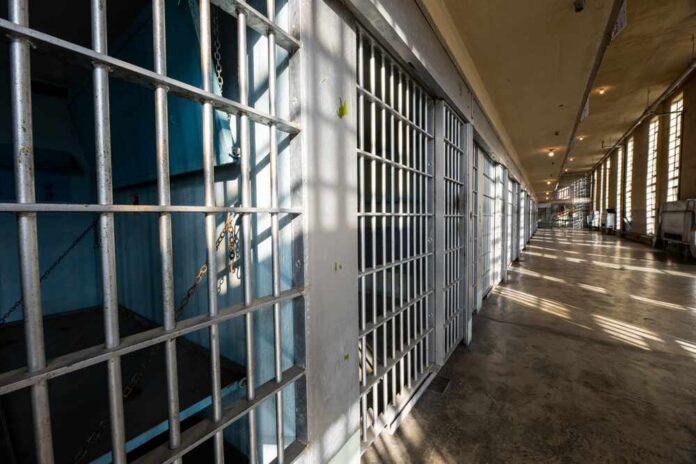
A federal appeals court just handed the Trump administration a major win on deportations—but it also raises a constitutional question conservatives can’t ignore: how far can Washington go using wartime powers without full due process?
Quick Take
- A federal appeals court ruled that harsh prison conditions in El Salvador are not, by themselves, enough to justify U.S. asylum claims from deportees.
- The ruling strengthens the administration’s use of the Alien Enemies Act to remove suspected gang-linked migrants, even as courts continue to scrutinize due process.
- The U.S. agreement to pay El Salvador about $6 million for a year of detention has become a flashpoint for executive power, accountability, and cost.
- Specific cases—like Maryland resident Kilmar Abrego Garcia’s mistaken deportation—keep the debate focused on safeguards, not just slogans.
Appeals Court Narrows Asylum Claims Tied to El Salvador Prison Conditions
The federal appeals court decision centered on a narrow but consequential question: whether conditions in El Salvador’s prison system meet the legal threshold for persecution or torture that would justify asylum in the United States. The court concluded they do not, even acknowledging the facilities are harsh. That ruling matters because it removes a key argument used by some deportees sent to El Salvador under the Trump administration’s expanded enforcement approach.
The practical effect is straightforward: people facing removal can’t automatically convert “I’ll be jailed in El Salvador” into an asylum claim unless they can show something beyond generally severe conditions. For law-and-order voters, that may sound like a long-overdue tightening of loopholes. For civil-liberties conservatives, it still leaves a crucial question: what minimum process is guaranteed before a person is branded an “enemy” and flown out.
Alien Enemies Act Deportations Keep Running Into Due-Process Headwinds
The deportations at issue trace back to early 2025, when the administration invoked the Alien Enemies Act, a 1798 law associated with wartime authority, to remove alleged Tren de Aragua members. The Supreme Court later allowed the deportations to continue but emphasized due process hearings as a safeguard. District courts then pressed the administration on whether those safeguards were real in practice or merely theoretical on paper.
In February 2026, U.S. District Judge James Boasberg ordered the government to facilitate the return of certain Venezuelan migrants from El Salvador so they could challenge their removals. Reporting described sharp court frustration with the administration’s posture in the litigation. The administration, for its part, has argued that it can facilitate logistics such as transportation while El Salvador ultimately controls who is released from its custody.
The Abrego Garcia Case Illustrates the Risk of Errors Under High-Speed Enforcement
The case of Kilmar Abrego Garcia, a Maryland resident, has become the clearest example of what critics mean when they warn about mistakes in mass deportation systems. He was deported despite prior protection from removal, and his attorneys have disputed claims tying him to MS-13, saying the allegation stemmed from a confidential informant and did not match his personal history. Separate proceedings have weighed whether officials complied with court directives.
These details matter because conservatives who support strong borders often still insist on clean procedures and accountability when the government acts. A system that can wrongly deport a protected resident to a foreign megaprison is a system that can fail in other ways too—especially when decisions are rushed, evidence is disputed, and the public is asked to simply “trust the process.” Trust has to be earned through transparent standards and enforceable remedies.
The U.S.–El Salvador Detention Deal Raises Cost and Sovereignty Questions
The enforcement model relies in part on cooperation with El Salvador’s government under President Nayib Bukele, whose anti-gang crackdown expanded incarceration on a massive scale. The U.S. agreed to pay roughly $6 million for one year of detention for deportees held there, according to reporting. Bukele has publicly rejected releasing prisoners at U.S. courts’ request, framing it as a security issue and refusing to “smuggle” alleged terrorists.
For American taxpayers, the payment adds an uncomfortable layer: Washington is outsourcing incarceration abroad while domestic budgets remain strained. For constitutional conservatives, the sovereignty issue cuts both ways. If U.S. courts say someone must be returned to challenge removal, but a foreign leader effectively holds the keys, then the practical power to remedy a rights violation may be slipping out of American hands.
Why This Immigration Fight Lands Differently in 2026
This fight is unfolding in a year when many MAGA voters feel pulled in multiple directions at once—demanding stronger borders and less crime, while also bristling at high costs and open-ended commitments abroad. The country is also at war with Iran, and that broader atmosphere intensifies skepticism of any “wartime” legal theory that expands executive power. Even supporters who want tough enforcement can still demand tight guardrails.
El Salvador's prisons may be notorious for their harsh approach to law and order, but they aren't bad enough to justify someone gaining asylum or similar protections in the U.S., a federal appeals court ruled this week. https://t.co/5ACaSjQmqU
— The Washington Times (@WashTimes) March 25, 2026
The appeals ruling strengthens the administration’s hand on asylum claims tied to El Salvador’s prisons, but it does not settle the deeper question about due process under the Alien Enemies Act. Courts have already signaled they will keep probing procedure, not just outcomes. Conservatives who care about limited government have a stake in that balance: border security that works, yes—but also a system that doesn’t normalize shortcuts, because shortcuts rarely stay targeted for long.
Sources:
Federal appeals court says El Salvador’s prisons aren’t bad enough to justify U.S. asylum
SCOTUStoday for Friday, February 13
Judge orders Trump administration to allow men expelled to El Salvador to return, challenge removal
Despite Supreme Court ruling, El Salvador President Bukele says he won’t be releasing