

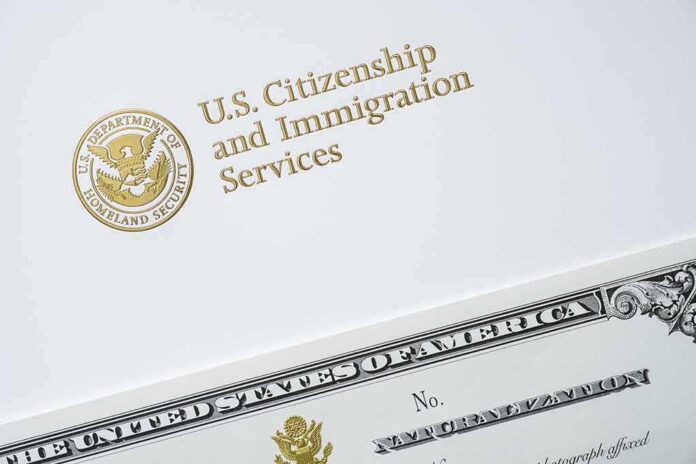
A record surge in civil denaturalization cases is stripping U.S. citizenship from naturalized criminals who lied to get it, marking a sharp shift in enforcement under President Trump.
Story Highlights
- The Department of Justice filed denaturalization suits against 17 accused criminals and later a record 25 more in two weeks.
- Since January 2025, the Department of Justice has filed about 123 civil denaturalization cases, far above historic norms.
- Transactional Records Access Clearinghouse data shows at least 105 cases in the first seven months of 2026, with 50 in July.
- Critics warn civil denaturalization lacks some protections, while law requires proof of illegal procurement or material lies.
Justice Department Accelerates Denaturalization Actions
The Department of Justice announced denaturalization suits against 17 naturalized individuals accused of serious crimes on June 8, 2026, citing the Immigration and Nationality Act standard: citizenship can be revoked if it was illegally obtained or secured by concealment or willful misrepresentation. Weeks later, the Department of Justice reported a record 25 new filings in a two-week span and stated that since January 20, 2025, it has filed 123 civil denaturalization cases nationwide. Officials describe a focus on fraud and public safety.
Syracuse University’s Transactional Records Access Clearinghouse reported at least 105 civil denaturalization lawsuits in the first seven months of 2026, with an all-time monthly high of 50 in July. That pace contrasts with historic levels that averaged far fewer cases per year. The new tempo reflects a clear enforcement priority. Supporters argue the effort protects the value of citizenship and deters criminals who abuse the naturalization process to shield themselves from consequences.
Legal Grounds and Guardrails Under Longstanding Law
The government must show citizenship was illegally procured or obtained through concealment of a material fact or willful misrepresentation, which are the two established legal paths for revocation. Courts have stressed that minor errors or small omissions do not justify denaturalization unless they mattered to the award of citizenship. That “material” link protects honest applicants while allowing action against people who hid crimes or key facts to pass background checks. These standards anchor the current push.
NPR reported the Department of Justice says it is “laser-focused on rooting out criminal aliens defrauding the naturalization process” and moving “at warp speed” to hold fraudsters to account. That message tracks the public filings detailing cases tied to serious offenses, fraud schemes, and other disqualifying conduct. For many readers, the bottom line is simple: if you lied to get the highest privilege America offers, you should lose it. Lawful immigrants who followed the rules keep faith with that standard.
Due Process Concerns and Transparency Questions
Advocacy groups and some legal commentators say civil denaturalization lacks core safeguards because defendants who cannot afford a lawyer do not get one appointed, and there is no right to a jury trial, raising due process worries. A policy analysis also notes that government disclosures about many individual complaints are limited, which makes it harder for the public to gauge the evidence in each case. Those critics urge narrow use tied to clear proof of illegal procurement or material lies.
Balancing firmness with fairness is vital. The Trump administration’s surge aims to defend citizenship and public safety by targeting proven fraud. The legal rules already require material misrepresentation, not harmless mistakes, and courts remain a check on overreach. Readers should expect more filings as prosecutors work through backlogs and data-matching. The mission is straightforward: protect the honest, expose the dishonest, and keep citizenship worthy of the oath.
Sources:
feedpress.me, justice.gov, tracreports.org, amren.com, nixonpeabody.com, npr.org