

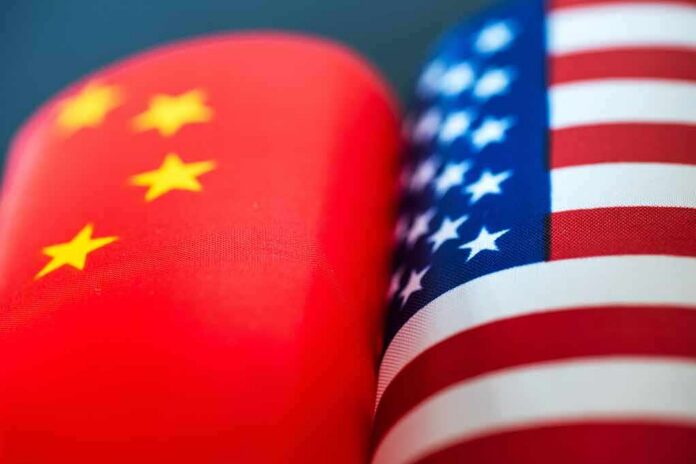
After meeting President Trump, Xi Jinping cast China as a “strategically stable” partner, signaling a bid to outflank America’s leadership in the eyes of uneasy allies.
Story Highlights
- Xi said he and President Trump agreed to pursue a “constructive, strategically stable” relationship.
- Chinese statements portray stability as the guiding theme for the next several years.
- Beijing has used summits and speeches to sell a stability brand to U.S. and global audiences.
- Analysts say both sides use “strategic stability,” but they often mean different things.
Xi’s Post-Summit Message Centers on “Strategic Stability”
Reuters reported that on May 14, 2026, Xi Jinping said he and President Donald Trump agreed on a “constructive, strategically stable relationship.” Xi described ties that keep differences “controllable” and hold “lasting” prospects for peace. The Chinese foreign ministry statement, as quoted in the report, said the language would guide relations “in the next three years and beyond”. The same day, coverage of Trump’s Beijing stop highlighted warm public language from both sides, even as core issues remained.
That phrasing fits a pattern. Chinese officials have long used summits to project order and predictability, especially when tensions rise. The theme appeared at the 2022 Bali meeting between Xi and then-President Joe Biden, where Beijing framed the encounter around steady statecraft and managing competition. The approach continued in 2023 at San Francisco, where Xi paired engagement with calls for orderly ties while addressing prominent American civic groups.
How Beijing Sells “Stability” to U.S. and Global Audiences
Chinese readouts emphasize routine, calm handling of disputes and cooperation where interests align. In San Francisco in November 2023, Xi delivered a high-profile dinner speech, courting U.S. business and policy figures and promoting predictable relations and economic links. The Chinese embassy account of the Biden-Xi summit the same week also underscored diplomacy and channels for dialogue. The broader method is consistent: mix top-level summits, public speeches, and official talking points to anchor a stability brand.
Beijing’s playbook is not new. During Xi’s 2015 state visit, he joined a major welcome banquet in Seattle and spoke to American audiences to signal engagement and steady ties. The 2026 language after the Trump meeting updates that line, placing “constructive” and “strategically stable” at the center. Reuters’ same-day wrap on Trump’s Beijing stop noted few concrete wins but “warm words,” showing how China’s message can highlight tone and process even when hard outcomes remain in dispute.
What “Strategic Stability” Really Means in Practice
Policy experts explain that Washington and Beijing often use “strategic stability” to calm risk and keep channels open, but they define it differently. A Council on Foreign Relations analysis says both governments endorse the term while loading it with different aims. Washington tends to focus on preventing crises and arms races. Beijing often links stability to respect for its core interests and limits on U.S. pressure. Those gaps matter when each side later claims the other broke the “stability” spirit.
For readers at home, this matters to pocketbooks, energy costs, and security. Stable ties can lower market shocks, protect supply chains, and reduce the risk of conflict in the Pacific. But if “stability” masks one-sided demands, America’s factories, farmers, and families can pay the price. That is why the Trump administration seeks fair terms, clear red lines, and balanced engagement that defends American workers and keeps our military edge strong while talking with Beijing when it serves U.S. interests.
Why Xi’s Framing Targets U.S. Leadership Perceptions
The Washington Post described a rare burst of trips in which Xi pitched China as a “stable alternative,” seeking to sway governments that feel whiplash from global crises. The push highlights Beijing’s belief that branding can shape alignments and deals, even without big treaties or alliances shifting overnight. The move leans on showy summits, disciplined language, and imagery of order, hoping to contrast with U.S.-led pressure campaigns or sanctions that some partners see as disruptive.
The research record here captures the messaging but not the verdict. It documents summits, speeches, and readouts that elevate “stability,” including after the Trump-Xi meeting in 2026, in Bali in 2022, and in San Francisco in 2023. It does not prove that other governments have embraced China as a steadier partner. For now, the facts show a coordinated communications drive. Results will be judged by later deals, votes, and durable behavior changes abroad.
Sources:
feedpress.me, reuters.com, cfr.org, fmprc.gov.cn, thinkchina.sg