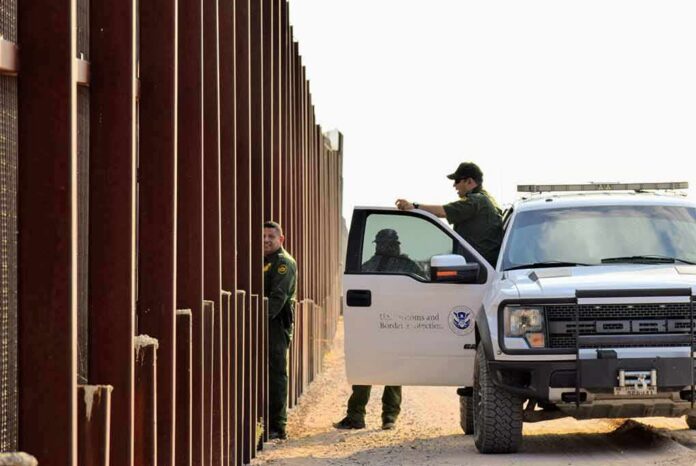
The Justice Department asked the Supreme Court to let border wall work restart in Texas’s Big Bend, arguing a judge’s order is blocking efforts to stop illegal crossings and drug smuggling.
Story Highlights
- The Justice Department filed an emergency stay request with the Supreme Court to lift a Big Bend construction halt.
- A district judge’s injunction paused barriers, roads, and ground work across the Big Bend Sector until laws are followed.
- The government says the injunction undercuts efforts to combat illegal immigration and drug flows.
- Opponents highlight Big Bend’s small share of apprehensions and raise environmental and access concerns.
What the Government Asked the Supreme Court to Do
The Department of Justice filed an emergency application on October 21, 2026, seeking a stay of a lower court’s injunction that halted border-wall related work across the Big Bend Sector. The filing asks the Supreme Court to allow construction to proceed while appeals continue. The application comes in the case Friends of the Ruidosa Church v. Mullin and targets an October 2 order that froze activity tied to Department of Homeland Security waivers for the area.
The filing argues that the injunction blocks a lawful border-security program and prevents the use of waivers Congress authorized to speed barrier projects in key areas. The government says the pause harms operational control of the border and weakens efforts to stop illegal immigration and drug trafficking along that stretch of the Rio Grande. The application seeks relief while the Court considers a petition for review, which the government plans to file soon.
What the Lower Court’s Injunction Actually Does
Judge Kathleen Cardone issued a preliminary injunction that bars building of border barriers, related infrastructure, or any ground-disturbing activity across the Big Bend Sector unless and until the government complies with applicable laws. The order also stayed the effect of the “Big Bend Waivers” for the duration of the injunction. The judge said she reached the decision after hearing witness testimony, reviewing exhibits, and weighing the legal arguments from both sides.
The injunction’s reach is broad. It covers not only wall panels but also roads, staging, and construction actions linked to the project footprint. That scope gives opponents a strong process argument focused on legal compliance, including environmental and cultural-protection laws. The government’s Supreme Court request frames this breadth as an overreach that blocks tools Congress allowed under border-barrier statutes and undermines on-the-ground security needs.
The Evidence Dispute and What Is at Stake
The Justice Department says the injunction “significantly frustrates” the mission to stop illegal entries and drug smuggling. Public reporting notes, however, that court records show Big Bend has accounted for no more than 2.2 percent of border apprehensions from 2021 to 2025, which critics say undercuts the urgency claim without sector-specific proof. The Supreme Court application does not, in public view, supply detailed Big Bend intelligence or seizure data to answer that point.
Opponents, including the Center for Biological Diversity and local guides and landowners, argue waivers bypass vital safeguards and that work would damage parklands and limit river access. Their statements highlight impacts on wildlife, recreation, and local economies. Those claims drove much of the narrative around the injunction. The Supreme Court has not ruled yet. Until it does, the project remains on hold under the district court’s order, and the administration must either win a stay or meet the compliance conditions.
How Conservatives Should Read the Fight
Border security remains a core federal duty. Congress gave the Department of Homeland Security tools, including targeted waivers, to build barriers faster in tough areas. The government’s request follows that path. Past Supreme Court actions show the Court can stay broad injunctions that handcuff national policy during litigation, even while leaving final merits for later review. A stay here would restore border tools while courts sort out the legal questions.
At the same time, the government faces an information gap. Critics cite Big Bend’s small share of apprehensions and claim work already scarred land. The fastest way to answer that is data: sector maps, detection logs, response-time gains, and seizure records that show why this terrain matters. Clear, public facts can beat activism and courtroom spin. If the Court grants a stay, the administration should still publish sector-specific evidence and mitigation steps to maintain public trust.
What Comes Next and Why It Matters
The Supreme Court could grant a full or partial stay, allowing limited work like access roads or surveillance while barring heavy ground disturbance. The government could also narrow requests to focus on security-critical segments. Either path would keep agents safer and cut cartel freedom of movement while litigation continues. If the stay is denied, the administration must move fast on documented compliance plans to avoid long delays and higher costs from stalled crews and idled materials.
For families, ranchers, and small towns, border order matters. Walls, roads, and sensors slow illegal traffic and give agents time to intercept. That reduces trespass, cut fences, high-speed chases, and drug drops that endanger communities. The Big Bend case is about more than one sector. It tests whether one sweeping injunction can sideline tools Congress provided for national security. The Justice Department’s move asks the Court to let border protection continue while the legal fight plays out.
Sources:
courtlistener.com, redstate.com, biologicaldiversity.org, vtcng.com, congress.gov