
Iran’s decision to waive Hormuz tolls for Chinese tankers is a blunt reminder that America’s rivals will exploit every crack in U.S. deterrence—and every opening in great-power diplomacy.
Quick Take
- Iranian state media says roughly 30 Chinese vessels will receive “safe” and toll-free passage through the Strait of Hormuz, even as the broader shipping crisis remains unsettled.
- The announcement follows Trump’s China visit and a Trump–Xi emphasis on free navigation, creating a high-stakes test of whether “no tolls” can be enforced without escalation.
- China appears to be securing energy flows while others face higher costs and risk, underscoring how selective enforcement can reshape global shipping behavior.
- U.S. naval response and rules of engagement remain unclear publicly, leaving markets and shippers to read signals rather than rely on certainty.
Iran’s Toll-Free Promise to China Puts a Price Tag on “Free Navigation”
Iranian state media, citing the Fars News Agency, reported that Tehran will allow about 30 Chinese vessels—including oil tankers—safe, toll-free transit through the Strait of Hormuz. The timing is central: the pledge comes as President Donald Trump meets with China’s Xi Jinping and as both leaders publicly stress the principle of free navigation without tolls. The report also ties Iran’s move to formal Chinese diplomatic requests.
The immediate trigger, according to the same reporting, was a Chinese supertanker operated by Cosco Shipping that carried roughly 2 million barrels of Iraqi crude and transited toll-free after being stranded for more than two months. That toll-free crossing is being treated as a precedent that Tehran can replicate at scale. What is not settled is how, or whether, the U.S. Navy will attempt to enforce Trump’s stated posture against toll-paying vessels.
How the Crisis Built: From Blockade and Toll Demands to Selective Exceptions
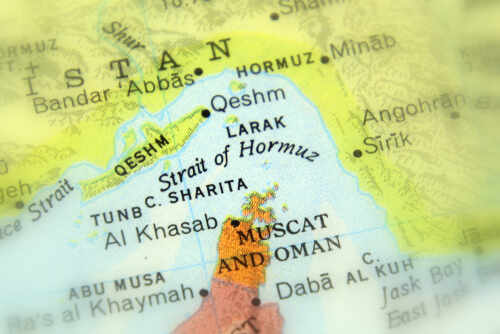
The Strait of Hormuz is a narrow chokepoint that handles roughly one-fifth to one-quarter of global seaborne oil, which is why even limited disruptions ripple into prices, insurance, and consumer costs. Reporting and compiled timelines indicate the 2026 crisis escalated after Iran blocked shipping beginning in late February and imposed steep tolls—reported as about $2 million per supertanker—before later carving out exceptions for Chinese ships.
That pattern matters because it suggests Tehran isn’t simply making a legal argument; it is using access as leverage. China, as a major buyer of Iranian oil, has strong incentives to keep lanes open and costs predictable, while Iran has incentives to reward an economic partner even if it concedes toll revenue. For U.S. policymakers, selective exemptions raise a practical question: whether “freedom of navigation” is being defended consistently or negotiated case-by-case under pressure.
Trump’s Blockade Message Meets China’s Defiance and Iran’s “Strategic Partnership” Logic
Over the recent weekend, coverage said Trump announced a U.S. naval blockade posture aimed at vessels that pay Iran’s tolls, framing tolling in international waters as unacceptable. The State Department’s spokesperson, Tommy Pigott, echoed that “no tolls” should be allowed. China, for its part, criticized the U.S. move as dangerous and warned it could jeopardize a fragile ceasefire environment, while Chinese-linked vessels continued transits that drew headlines.
Iran’s stated rationale for toll-free passage is grounded in its “strategic partnership” with China, which is an explicit admission that access is being used as a geopolitical favor. That creates an uncomfortable dynamic for Washington: if Beijing gets a carve-out while other flag states face tolls or heightened risk, then Iran is effectively rewriting the rules of the waterway through selective permission. Conservatives who prioritize national sovereignty and deterrence will read this as a direct test of U.S. credibility.
Why This Matters for Americans: Energy Prices, Shipping Risk, and Government Competence
Oil and shipping markets respond less to speeches than to whether tankers actually move safely. Analysts cited in industry coverage have framed the situation as a delicate balance among the U.S., China, and Iran, with tracking of specific vessels treated as real-time indicators of stability. Any perception that the U.S. cannot uphold its declared position—while China secures special treatment—can harden a global expectation that the strongest actor isn’t always the rule-setter.
Domestic frustration also fits a broader trend: many voters on the right and left believe government works best for elites and insiders, not ordinary families who feel energy and inflation shocks first. Even if Washington’s intentions are to prevent toll extortion, uncertainty about enforcement, escalation risk, and strategic follow-through leaves Americans watching a familiar pattern—big promises, confusing outcomes, and costs that can show up at the pump and in everyday prices.
The key limitation in the public record is verification: the “about 30 vessels” figure is attributed to Iranian state-linked reporting, while other coverage has described smaller numbers, and a definitive U.S. operational response has not been publicly detailed. Still, the direction of travel is clear—China is pressing its advantage to secure energy flows, and Iran is using the crisis to reward allies and probe boundaries. In a chokepoint this critical, ambiguity itself becomes a strategic weapon.
Sources:
Iran Proclaims Safe, Toll-Free Passage For 30 Chinese Tankers Amid Xi-Trump Summit
Chinese Oil Tanker Tests Safe Passage Through Strait of Hormuz
Iran International – Report on Hormuz-related tanker incident (May 2026)
Chinese tanker goes through Strait of Hormuz, defying Trump