
A left-wing New York City mayor just forced a sweeping rent freeze on 1 million apartments, handing tenants a short-term win while quietly setting up a long-term housing crunch that will hit property owners, neighborhoods, and free markets hard.
Story Snapshot
- New York City’s Rent Guidelines Board approved a 0% rent increase for one- and two-year leases in about 1 million rent-stabilized apartments[5].
- Mayor Zohran Mamdani stacked the board with allies to fulfill his “freeze your rent” campaign vow[4][10].
- Landlords warn rising costs and rigid rent rules will starve buildings of maintenance and drive units out of the market[11].
- Decades of rent control research show tenants gain short-term relief while overall housing quality and supply suffer[17][15].
Mayor’s Allies Lock In a Sweeping Rent Freeze
New York City’s Rent Guidelines Board, the nine-member panel that sets legal rent changes for rent-stabilized units, has now approved a full rent freeze on both one-year and two-year leases for about 1 million apartments[5][1]. This move locks rents in place for tenants in older, regulated buildings, covering roughly half of the city’s rental stock and more than 2 million residents according to prior board estimates[7][20]. The decision follows months of hearings and a preliminary spring vote that floated a 0–2% range for one-year leases and 0–4% for two-year leases[1][2].
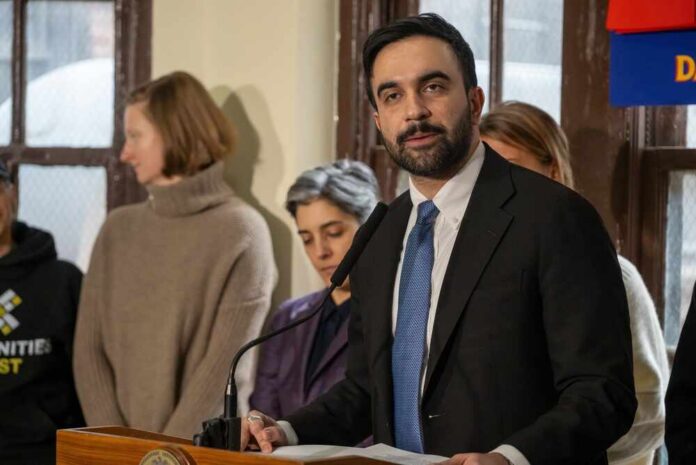
Mayor Zohran Mamdani built his campaign around a simple promise: “As your next mayor, I will freeze your rent,” repeating it in ads, speeches, and rallies across the city[5][2]. After taking office, he moved quickly to push that agenda through the Rent Guidelines Board, an “independent” body whose members are appointed by the mayor[8]. Reporting notes that the current board is “stacked with Mamdani appointees,” and that this time the panel “quickly greenlit the freeze,” unlike past boards that raised rents or adopted smaller pauses[4][5]. Tenant advocates in the audience cheered as the zero-percent adjustment passed[4].
Short-Term Relief for Tenants, Rising Pressure on Owners
Supporters of the freeze claim it will save tenants billions over Mamdani’s term and ease an affordability crisis where many renters spend 40% or more of their income on housing[11][15]. They point to past years under former Mayor Eric Adams, when the board approved hikes of 3% for one-year leases and 4.5% for two-year leases, and say cumulative increases above 12% must be corrected[5][15]. For a $2,000 rent-stabilized apartment, even a 2% hike adds about $40 per month, while a 4% hike adds $80, so locking in zero clearly helps current tenants’ monthly budgets[4].
Landlord groups and housing economists, however, warn that the math does not stop at the tenant’s front door. A recent Rent Guidelines Board Price Index cited by small property owners shows utility costs up 5.6%, maintenance up 6%, and total building operating costs up 5.3% in rent-stabilized properties[11]. When income is frozen but expenses keep rising, owners say they have to cut back somewhere. That usually means delaying repairs, trimming staff, or raising rents faster on unregulated units to keep the books balanced[12][13].
Evidence From Past Rent Control: Fewer Homes, Worse Conditions
Economic studies on rent control, from places like Cambridge, Massachusetts, and decades of New York City policy, show the same pattern over and over: sitting tenants with protected leases gain stability, but the overall housing stock shrinks or decays and average quality falls[17][4]. Research summarized by the Brookings Institution finds that strict rent caps can lead landlords to convert rentals to other uses, reduce maintenance, or avoid investing in new housing, so the “insurance” for current renters comes with a high hidden cost[17]. In New York City, analysis of the last decade of heavy regulation—rent freezes, eviction moratoria, and “good cause” eviction limits—shows tighter supply, deteriorating stock, and rising prices in the unregulated segment[15].
One study notes that under former Mayor Bill de Blasio, rent freezes in 2015, 2016, and 2020 stopped increases for rent-stabilized tenants even as the Consumer Price Index rose more than 25% between 2013 and 2023[15]. That relief was real. Yet the same review warns that repeated price ceilings and strict eviction rules “choked” investment and helped drive up rents where controls did not apply[15]. Another paper from the American Enterprise Institute describes how a 1969 rule limiting public housing rent to 25% of income acted as a de facto freeze and cut the revenue needed for upkeep, contributing to long-term decay in those buildings[18].
Process Fights and Warnings of Political Control
Critics of Mamdani’s plan are not only worried about economics; they also question the process. Business coverage before the vote noted that Mamdani openly vowed to replace Rent Guidelines Board members with people committed to freezing rent every year of his term[10]. That raised alarm among legal experts, who pointed out that under state law, board members are supposed to weigh studies and economic forecasts, not simply carry out a mayor’s campaign slogan[7][8]. Landlord representatives have described the new board as “rebuilt” to deliver a freeze, arguing the outcome was largely predetermined[18].
Housing advocates on the left see the vote as proof that aggressive city-level intervention can beat market forces and help tenants who feel squeezed by inflation and stagnant wages[5][10]. But conservative policy analysts caution that each new layer of control—rent caps, strict eviction limits, and heavy tenant regulation—pushes New York further down a path where government, not supply and demand, sets housing prices[15][19]. Over time, that path can erode property rights, discourage family investors from buying small buildings, and widen the gap between heavily protected insiders and new families trying to find an affordable place to live[21][3]. For Americans who value limited government and healthy, growing communities, New York’s latest rent freeze looks less like a fix and more like another step into a deeper housing mess.
Sources:
[1] Web – Rent board fulfills Mamdani vow to freeze the rent on 1 million NYC …
[2] Web – Rent Guidelines Board Takes Step Toward A Rent Freeze – City Limits
[3] Web – New York City’s Rent Guidelines Board preliminarily votes for range …
[4] Web – Mamdani’s Rent Freeze Faces First Major Test in Preliminary Vote
[5] Web – Rent Freeze Still Possible for 2026–27 (Public Hearings Open)
[7] Web – 2026 Meetings and Hearings – Rent Guidelines Board
[8] YouTube – Rent Guidelines Board votes on potential increase for rent-stabilized …
[10] Web – NYC Rent Freeze 2026: What Mamdani’s Rent Guidelines Board …
[11] Web – Rent board fulfills Mamdani’s vow to freeze the rent on 1 million NYC …
[12] Web – NYC Moves Closer to Enacting Rent Freeze Promised by …
[13] Web – Rent board fulfills Mamdani vow to freeze the rent on 1 million NYC …
[15] Web – Rent Board Poised to Fulfill Mamdani’s Vow to Freeze the Rent on 1 …
[17] Web – New York City Freezes Rents for One Million Apartments in Mayor …
[18] Web – Mamdani’s Rent Freeze Could Make the NYC Housing Crisis Worse
[19] Web – Mamdani Promised to Freeze the Rent. Now the Fight Begins.
[21] Web – The decade of regulation: How New York City’s housing policies …