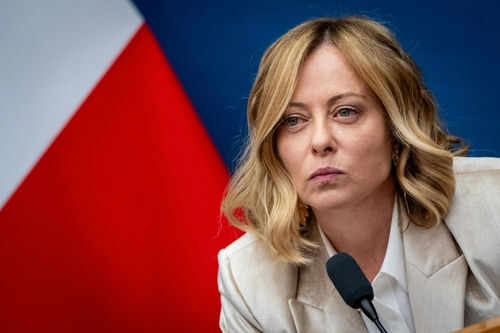
President Donald Trump just publicly torched his closest European ally, Italian Prime Minister Giorgia Meloni, accusing her of cowardice for refusing to drag Italy into a war with Iran that threatens to reshape NATO and global oil markets.
Story Snapshot
- Trump calls Meloni’s refusal to join Iran war a lack of courage, claiming she doesn’t care if Tehran gets nuclear weapons
- The public attack marks a stunning reversal from Trump’s praise of Meloni as “a great leader” just one month earlier
- Italy’s constitution repudiates war, and Meloni defends national interests while caught between US pressure and domestic constraints
- The rift emerges amid ongoing US naval blockades in the Strait of Hormuz, threatening Italy’s oil supply despite its dependence on the region
- Meloni simultaneously battles Trump over his criticism of Pope Leo XIV, who called for an end to Middle East hostilities
When Allies Become Adversaries
Trump unleashed his criticism in an interview with Italian newspaper Corriere della Sera published April 14, 2026. He stated he was “shocked at her” and believed Meloni possessed courage but proved him wrong. The president accused Italy’s leader of expecting America to shoulder the entire burden of confronting Iran’s nuclear ambitions while Rome sits safely on the sidelines. Trump’s blunt assessment: “She doesn’t care if Iran has a nuclear weapon” and warned that “Iran would blow up Italy” with such weapons. This represents Trump’s first direct frontal attack on a leader he previously championed as his top European partner.
The Constitutional Dilemma Italy Faces
Meloni faces constraints Trump apparently dismisses or doesn’t grasp. Italy’s constitution explicitly repudiates war as an instrument of policy, creating legal and political barriers to military involvement that don’t exist in American law. Elly Schlein, leader of Italy’s Democratic Party, condemned Trump’s remarks as a “serious lack of respect” for Italy’s foundational principles. Meloni herself responded the same day the interview published, defending both her support for Pope Leo XIV and Italy’s national interests. She called Trump’s statements about the Pope “unacceptable” and doubled down on her refusal to commit Italian forces to Middle Eastern combat operations.
Oil Dependence Creates Impossible Choices
The irony cuts deep. Italy relies heavily on oil imports from the very region now embroiled in conflict between the United States, Israel, and Iran. The ongoing US naval blockade in the Strait of Hormuz disrupts oil flows that Italy desperately needs, yet Trump demands Rome join the military campaign that threatens those supply lines. Recently, only one ship managed to cross the blockaded strait. Failed US-Iran peace negotiations mean the standoff continues indefinitely, with Italy caught between energy security and alliance demands. Trump’s warning that “Italy will never be the same country” extends beyond war to immigration concerns he raised in the same interview.
From Friendship to Fracture in Thirty Days
The speed of this diplomatic collapse staggers observers. Just one month before calling her a coward, Trump praised Meloni in another Corriere interview as “a friend and a great leader.” Since October 2022, Meloni has positioned herself as a critical bridge between American and European perspectives, leveraging her far-right credentials to maintain credibility with both camps. That mediator role now lies in ruins. Trump revealed he hasn’t spoken to Meloni “for a long time” because of her stance on the Iran conflict. The president has similarly criticized other NATO leaders including Spain’s Sanchez, France’s Macron, and Britain’s Starmer for insufficient support on Iran intervention and nuclear defense commitments.
NATO Unity Crumbles Under Pressure
Trump’s public rebuke exposes fractures within the Atlantic alliance that adversaries will eagerly exploit. The dispute threatens both short-term coordination on Iran policy and long-term NATO cohesion on security issues. European members face mounting pressure to choose between constitutional constraints, domestic political realities, and American demands for military solidarity. Italy’s opposition parties now wield Trump’s criticism as ammunition against Meloni’s government, yet she cannot simply abandon constitutional principles or ignore public opinion hostile to foreign military adventures. The broader question looms whether Trump’s transactional approach to alliances ultimately strengthens or undermines American interests in confronting genuine threats like Iranian nuclear proliferation.
The Pope Factor Complicates Everything
Religion intertwines with geopolitics in ways that defy Trump’s apparent expectations. Pope Leo XIV called for an end to Middle East warfare, a stance Meloni publicly defends despite her alliance with Trump. The day before the Corriere interview published, Meloni condemned Trump’s criticism of the pontiff as unacceptable interference. For Italy, where the Catholic Church wields enormous cultural and political influence, defending papal independence isn’t optional political theater but essential governance. Trump’s willingness to attack both Meloni and the Pope simultaneously reveals either strategic miscalculation or deliberate pressure tactics designed to force compliance through public humiliation. Neither approach typically succeeds with proud nations possessing their own democratic legitimacy and constitutional frameworks.
Sources:
Italy’s Meloni lacks ‘courage’ on Iran war – Trump
“Shocked At Her”: Trump says Italy’s Meloni lacks ‘courage’ on Iran war
Trump says Italy’s Meloni lacks ‘courage’ on Iran war
Trump says Italy’s Meloni lacks ‘courage’ on Iran war
Trump criticises Italy’s Meloni, says she lacks courage over Iran war