
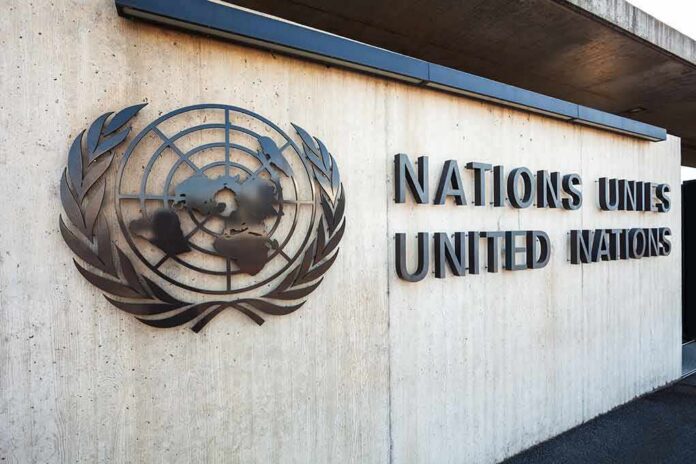
Argentina’s President Javier Milei told the United Nations it has “broken its sacred covenant” and become a useless bureaucracy that ignores real sovereignty disputes.
Story Snapshot
- Milei blasted the United Nations as a failed, bloated bureaucracy in his General Assembly speech.
- He said the body “looked the other way” on Argentina’s Falklands/Malvinas dispute with the United Kingdom.
- United Nations materials defend their mission, citing the Charter and peacekeeping record.
- The clash spotlights a wider fight over national sovereignty versus global institutions.
Milei’s Charge: UN Has Abandoned Its Founding Mission
Argentina’s President Javier Milei used his General Assembly address on September 23, 2026, to accuse the United Nations of failing its core purpose. He argued the organization broke its “sacred covenant,” traded mission focus for bureaucracy, and now serves elites over citizens. He linked that failure to real-world stakes, saying the United Nations avoids hard sovereignty questions. His remarks landed because they matched growing public doubt about expensive global bodies that deliver weak results.
He sharpened the critique by citing the Falklands, known in Argentina as the Malvinas. He said the United Nations chose to “look the other way” while tensions rose with the United Kingdom, including over resource activity around the islands. The pointed claim was not just rhetoric. It framed the United Nations as quick to expand agendas but slow to resolve disputes that can spark conflict. That contrast made his charge feel concrete, not abstract.
What The UN Says About Its Role and Authority
United Nations documents push back on Milei’s view. The Charter says the organization exists to maintain peace, settle disputes by peaceful means, and uphold the sovereign equality of all members. The United Nations also highlights its tools: the Security Council can approve peacekeeping missions, impose sanctions, and authorize force when threats to peace arise. Supporters point to decades of conflict management and a large body of international law as proof of value.
These claims outline a model where rules and dialogue guide outcomes, not raw power. The United Nations frames the “rule of law” as central to peace and as equal in principle for big and small states alike. That is a strong ideal. But it depends on will, resources, and unity from member states. When those are missing, results lag. That gap is where critics like Milei say the machine expands but does not deliver.
The Falklands Flashpoint: A Test Of Sovereignty And Process
The Falklands dispute shows a core tension. The United Nations decades ago placed the issue on its decolonization agenda, balancing territorial integrity and self-determination claims. That balance has meant long talks, careful language, and little movement. For Argentina, that looks like drift. For the United Nations, it reflects a slow process meant to prevent war and keep channels open. Milei argues slow equals failure; the United Nations argues slow can prevent worse outcomes.
🔥🌍 JAVIER MILEI UNLOADS ON THE UNITED NATIONS FROM UNGA PODIUM
Argentine President JAVIER MILEI launched a fierce attack on the UNITED NATIONS, calling it a “USELESS ORGANIZATION” whose purpose, in his words, is to sustain “FATALLY ARROGANT PARASITES” posing as… pic.twitter.com/zPyOQ0Kye2
— LN24 INT'L (@ln24_intl) September 25, 2026
For conservatives in America, this debate feels familiar. People see global bodies grow budgets and missions, while border crises, energy shocks, and conflicts grind on. They hear promises of “collective action,” then watch vetoes, committees, and years of reports. Milei’s message hits because it demands accountability. Either these institutions protect sovereignty and peace, or they become costly forums that scold free nations and duck hard calls.
Why This Matters For U.S. Policy Under President Trump
President Trump has pushed a sovereignty-first approach that favors clear interests, fair burden sharing, and results over process. Milei’s speech aligns with that lens. It challenges mission creep and calls for focus on real security threats. United Nations defenders cite Charter ideals and past peacekeeping gains. The policy choice for Washington is simple: back reforms that streamline mandates, demand outcomes tied to funding, and protect national authority, or accept more drift at higher cost.
Bottom Line: Reform, Results, And Respect For Sovereignty
Milei’s broadside was sharp, but it was rooted in a real pattern: more agendas, fuzzy lines of duty, and weak follow-through. Even reform-minded studies warn about “mission inflation,” where goals multiply faster than tools and accountability. The fix is not blind exit; it is firm reform. Tie resources to measurable results. Prioritize core peace and security tasks. Respect sovereign choices. If the United Nations meets that bar, trust can rise. If not, more leaders will speak as Milei did.
Sources:
reuters.com, infobae.com, news.un.org, c5n.com, anewz.tv, noticias.foxnews.com, en.mercopress.com, un.org