
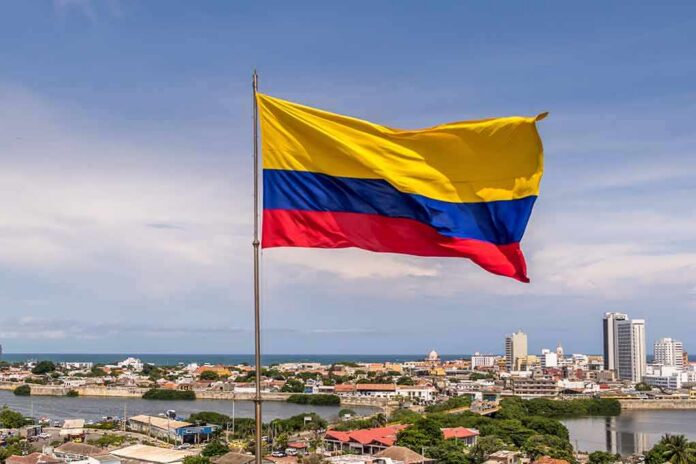
Colombia has authorized joint U.S. military operations on its soil to hunt cartels, marking a major step in President Trump’s hemisphere-wide anti-cartel push.
Story Highlights
- Colombia requested joint U.S. operations to target narco-terror networks, according to the U.S. defense chief.
- Bogotá is joining the Americas Counter Cartel Coalition, expanding a U.S.-led regional effort.
- The move aims to hit cartel leaders, labs, and routes while sharing intelligence across borders.
- Advocacy groups warn militarized drug war tactics can displace crime and raise risks for civilians.
Colombia Invites U.S. Forces To Help Strike Cartels
U.S. Defense Secretary Pete Hegseth said in Panama City that Colombia’s new president asked the United States to conduct joint military operations against narco-terrorism inside Colombia. He said the request authorizes missions to “destroy terrorists and terror networks,” signaling deeper cooperation after years of uneven efforts. Singapore’s Straits Times and wire services also reported that Bogotá cleared joint targeting of traffickers, underscoring that this is a formal step by Colombia’s government, not just talk in Washington.
Hegseth added that Colombia is entering the Americas Counter Cartel Coalition, a U.S.-led network built to fuse partners, intelligence, and rapid strikes against drug labs, smuggling corridors, and cartel leadership. His post on X announced the move alongside images from meetings with Colombia’s defense minister, and video coverage captured the remarks at the coalition session in Panama. The coalition expands the reach of shared targeting, air and maritime patrols, and cross-border criminal finance tracking.
What The Coalition Means For U.S. Security
The State Department has long said most cocaine in the United States originates in Colombia, which means supply chains start there even when routes shift. Joint operations can hit production sites and transit nodes before drugs reach U.S. streets, where cocaine has fueled thousands of overdose deaths in recent years. Deeper cooperation also builds partner capacity so Colombia carries more of the load over time, a lesson Washington took from past security aid programs.
The Trump administration’s regional plan seeks to align willing governments around fast action and clear targets. Colombia’s entry gives the coalition a major source-country partner, which could sharpen interdiction and arrests. U.S. assets can help map networks, jam communications, and track high-value traffickers. Colombian forces bring local knowledge and legal authority on the ground. Together, they can deny cartels safe havens and complicate cross-border moves that feed U.S. crime, addiction, and community harm.
Record, Risks, And Guardrails
Government reviews say U.S. support since 1999 helped Colombia avoid state collapse and rebuilt its security forces, courts, and policing. Those efforts mixed eradication, interdiction, training, and development. The record is not simple, and results have varied by region and year. Still, the security partnership created capable units and improved coordination that are essential for any sustained hit on cartel supply chains into the United States.
Advocacy and policy critics warn that force alone can scatter violence, push trafficking into new areas, and raise risks for civilians. A recent Quincy Institute brief argues that militarized approaches work best only when tied to rule of law, rural development, and steady state presence, not as a stand-alone tactic. That warning is a real constraint on strategy design, not a reason to avoid action. The lesson for Washington and Bogotá is clear: pair precision strikes and arrests with courts, community security, and legal livelihoods to lock in gains.
What To Watch Next
Colombia’s request opens the door to more joint targeting packages, combined training, and air or maritime patrols against smuggling lanes. Watch for early metrics: labs destroyed, key arrests, cargo seizures, and financial network hits. Expect officials to highlight cross-border wins that cut cocaine flow before it reaches American neighborhoods. A steady drumbeat of partner-led arrests, backed by U.S. intelligence, will signal that the coalition is moving from meetings to measurable results.
Conservatives should track two priorities. First, results that protect U.S. communities from cartel poison and crime. Second, limits that keep missions focused, lawful, and effective, with Colombia leading on its soil and the United States providing speed, technology, and intel. President Trump’s team is betting that tight, legal, and partner-approved joint operations can break cartel power without open-ended commitments. If Bogotá and Washington hold that line, the hemisphere gets safer and cartels get fewer places to hide.
Sources:
reason.com, straitstimes.com, x.com, youtube.com, myanmaritv.com