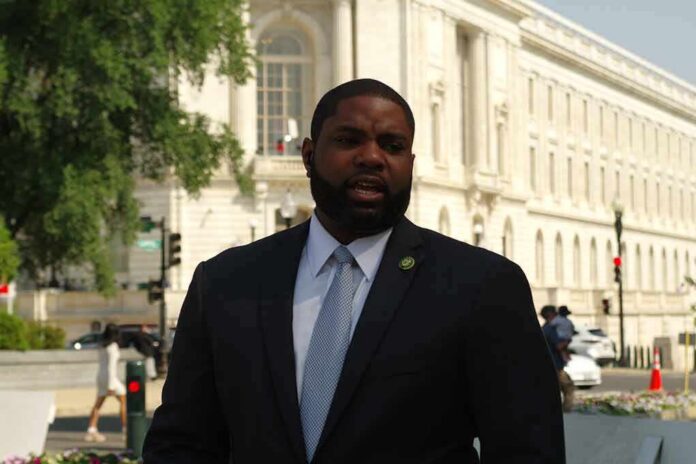
Republican Congressman Byron Donalds told a packed convention crowd in Texas that his home state and its Lone Star neighbor prove conservative government actually works for regular people.
Story Snapshot
- Byron Donalds, the Trump-backed Republican nominee for Florida governor, praised Texas and Florida at the GOP midterm convention in Dallas in September 2026.
- Donalds said both states show that low taxes, less regulation, and strong law enforcement work for everyday Americans.
- President Trump endorsed Donalds for governor before he even announced his campaign, and Donalds won the Republican primary in August 2026.
- Critics argue the “Florida model” also includes strict social policies, though those debates involve older laws separate from Donalds’ economic message.
Donalds Fires Up The Crowd In Dallas
Byron Donalds took the stage at the Republican National Convention gathering in Dallas and opened by calling Florida the best state in America, drawing playful boos from the Texas crowd. He then pivoted to his real point. Florida and Texas, he said, “have something absolutely essential in common.” Both states, he argued, prove every day that Republican policies built on common sense work for the American people.
The line landed exactly as Donalds intended. Conservative commentators and grassroots accounts across social media picked up the clip within hours, sharing it as proof that the red-state model still resonates with voters heading into a tough midterm cycle. For a party trying to hold two of its biggest strongholds, the moment offered a rare shot of confidence on a national stage.
What The Florida-Texas Comparison Actually Means
Donalds is not just making a talking point. His campaign platform for Florida governor commits to lower taxes, fewer regulations, and small-government policies, mirroring the approach Texas Republicans have pushed for years. Neither state charges a personal income tax, and both have built reputations as low-cost, business-friendly destinations for families and companies fleeing high-tax blue states. That contrast has become a central argument in Republican campaigns nationwide.
Academic research on state tax policy backs up part of the claim. Studies tracking state tax rates from 1990 to 2020 found a real and growing gap between Republican-led and Democrat-led states, especially on income taxes. That does not settle every argument about which approach delivers better results, but it confirms the divide Donalds is describing is not just campaign rhetoric. It reflects a documented, decades-long split in how red and blue states tax their citizens.
Trump’s Early Endorsement Fuels Donalds’ Rise
President Trump backed Donalds for Florida governor within weeks of returning to the White House in 2025, before Donalds had even declared his candidacy. That early show of support helped Donalds clear the Republican primary field in August 2026, and he easily won the nomination to succeed Governor Ron DeSantis. Donalds has built his campaign around continuing Trump’s agenda, including securing the border, cutting taxpayer support for illegal immigrants, and keeping Florida’s tax and regulatory climate friendly to families and small business owners.
Governing experts who have interviewed Donalds note he does not plan major policy shifts if elected, signaling continuity with the DeSantis-era approach that made Florida a model for conservative governance. That consistency matters to voters who watched Florida cut red tape and keep taxes low while other states raised costs on families already squeezed by years of inflation and federal overspending.
Critics Push Back On The “Model State” Label
Not everyone agrees the Florida-Texas comparison tells the full story. Older commentary from 2022 and 2023 points to social policies in both states, including restrictions on gender-transition treatments for minors and classroom rules on discussing sexual orientation, as evidence the “model” carries a harder edge than tax charts suggest. Some polling from advocacy groups found many voters in both states oppose those specific restrictions. These arguments target separate laws passed years before Donalds’ 2026 speech and do not dispute the tax and growth claims he made on stage.
For conservative voters exhausted by years of federal overspending, one-size-fits-all mandates, and border chaos under the previous administration, Donalds’ message taps into something real. Florida and Texas built their reputations by trusting families and businesses over Washington bureaucrats. Whether that formula carries Donalds to the governor’s mansion will be decided by Florida voters, but the numbers on taxes and growth give his argument more than just applause lines behind it.
Sources:
facebook.com, washingtonexaminer.com, govtrack.us, byrondonalds.com, whitehouse.gov, local10.com, houstonpublicmedia.org