

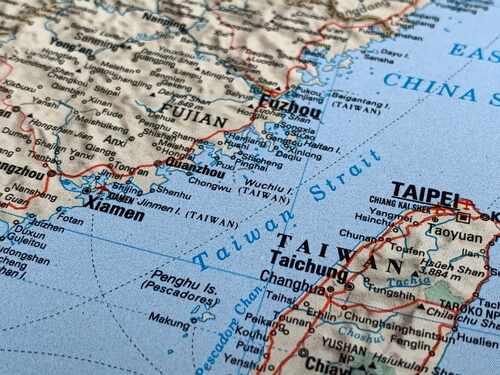
Taiwan’s Hai Kun submarine has successfully completed its fifth dive test, delivering a critical blow to China’s ambitions for a swift invasion across the Taiwan Strait.
Story Highlights
- Hai Kun (SS-711), Taiwan’s first indigenous attack submarine, advances through sea trials, proving capable of denying Chinese naval access to key ports.
- Recent tests confirm maneuverability, periscope function, and combat systems, enhancing deterrence against the People’s Liberation Army Navy (PLAN).
- Despite delays and fines, the $1.55 billion prototype boosts Taiwan’s self-reliance, armed with U.S. Harpoon missiles and Mk-48 torpedoes.
- Long-term fleet of eight submarines will counter PLAN’s 60+ subs, protecting American interests in the Indo-Pacific under President Trump’s strong leadership.
Submarine Program Origins and Strategic Necessity
CSBC Corporation in Kaohsiung laid the keel for Hai Kun on November 16, 2021, launching Taiwan’s Indigenous Defense Submarine program in 2016. Aging Dutch Hai Lung-class boats from the 1980s left naval gaps amid PLAN expansion to over 60 submarines. President Tsai Ing-wen opened the facility in November 2020, securing U.S. exports of sonar, combat systems, and periscopes by early 2021. This $10 billion effort for eight boats, with 40% domestic components, counters arms embargoes and promotes self-reliance against communist aggression.
Design Features Tailored for Strait Defense
Hai Kun displaces 2,460-2,950 tons, stretches 79 meters, reaches 17 knots submerged, and offers an 11,000 km range. Its hybrid hull draws from Dutch Zwaardvis and Walrus classes with X-form rudders for littoral agility. Lacking air-independent propulsion or anechoic coating, it prioritizes attack roles with Harpoon missiles, Mk-48 torpedoes, and Indonesian-licensed AEG SUT-264 torpedoes. These features enable port denial and blockade disruption, complicating PLAN invasion tactics in shallow waters.
Recent Trials Mark Milestone Progress
Harbor trials began February 2024 with no submersion issues. Sea trials started June 2025, culminating in the first submerged trial on January 29, 2026, followed by four shallow dives through February 6. The fifth dive in early March 2026 tested steering, periscopes, and decoys. A sixth sea trial occurred February 16. CSBC released propulsion explainers in January, defending timelines against global benchmarks despite December 2025 fines for delays.
The Hai Kun Factor: Why Taiwan’s New Submarine is the Ultimate Deterrent to a PLAN Invasionhttps://t.co/5jGvnlqIvx
— 19FortyFive (@19_forty_five) March 12, 2026
Expert Views and Delivery Outlook
INDSR deputy CEO Ou Si-Fu calls June 2026 delivery ambitious, projecting full operational capability around 2027 after ROCN trials. CSBC claims lower costs than peers, with trials possibly exceeding one year. Critics highlight no AIP limiting endurance against PLAN nuclear subs, but consensus affirms deterrence value through asymmetric warfare. A South Korean court convicted ex-DSME employees in December 2025 for leaking torpedo designs, underscoring international stakes.
Impacts on Security and Regional Stability
Short-term delays expose integration risks, but long-term, four combat-ready subs by late 2020s strengthen Taiwan’s navy. Thousands in Kaohsiung gain jobs, fostering pride and industry growth. PLAN faces heightened invasion costs, validating small-nation submarine programs. This bolsters U.S.-led alliances, aligning with President Trump’s focus on countering China without endless wars, preserving peace through strength.
Sources:
https://focustaiwan.tw/sci-tech/202603110016