
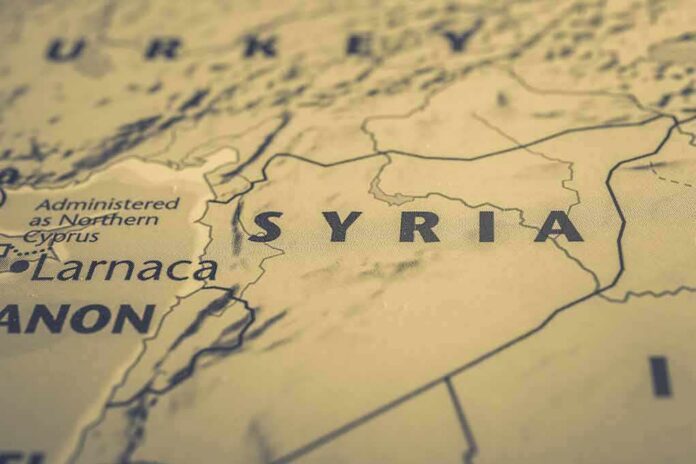
Israel’s defense minister vowed to keep troops inside southern Syria to shield the Golan and Galilee, doubling down on a forward buffer that Israel says blocks border threats.
Story Highlights
- Defense Minister Israel Katz said Israel will not withdraw from Syria’s security zone while threats persist.
- Israel’s military leaders describe the area as a buffer to protect border towns near the Golan Heights.
- Recent actions include strikes on a suspected “terrorist” in southern Syria, which Damascus condemned.
- United Nations materials highlight a 1974 ceasefire framework that critics say Israel risks breaching.
Katz Pledges Troops Will Stay to Protect Israeli Communities
Defense Minister Israel Katz said Israel will remain on Mount Hermon and inside the Syrian security zone as long as threats continue from the Syrian side. He framed the presence as necessary to protect the Golan Heights and Galilee communities from cross-border danger. His remarks matched recent government language stressing a forward defensive area on the Syrian side that serves as a shield for Israeli border towns and patrols that prevent hostile buildup near the line.
Israel’s top general also visited the area and said the military is tracking shifts on the Syrian front and will use force with precision when needed. The message from Israel’s senior ranks is clear: a continued forward posture deters attacks and keeps terrorists from setting up launch sites on Israel’s doorstep. The defense establishment has tied this approach to stopping immediate threats, locating weapons, and blocking armed groups from entrenching in southern Syria.
Military Actions Underscore the Rationale and the Risks
The Israel Defense Forces said they struck in southern Syria toward a suspected terrorist whose activity posed an immediate danger to soldiers. Syria’s foreign ministry denounced the action as a violation of its territory and sovereignty, and blamed Israel for escalations. The incident shows the daily tension at the frontier: Israel acts to remove near-term threats, while Damascus and its backers try to brand those moves as illegal. That dispute shapes how the world hears each side.
Israeli officials say troops operate forward to prevent a significant military threat from forming near the border. They argue that pushing the danger back a few miles saves Israeli lives and reduces the need for larger wars later. This is classic forward defense, not expansion, according to their public statements. The buffer helps shield families in the north who have lived with rockets, raids, and infiltration for years. Israeli leaders view that mission as a core duty of any responsible government.
Legal Backdrop and International Scrutiny Create Pressure
The 1974 disengagement agreement created a demilitarized area of separation between Israel and Syria and set limits on forces nearby. The United Nations Disengagement Observer Force monitors that arrangement to maintain the ceasefire. Critics point to this framework to argue that Israeli moves inside Syria risk breaching the deal. Some recent reporting also cites United Nations voices criticizing construction or incursions that undermine the buffer, adding diplomatic heat to Israel’s posture.
Israel rejects the “occupation” label and says the forward zone is a targeted, conditions-based security step, not a land grab. Officials say they will withdraw when border threats fade and when armed groups cannot stage near Israeli towns. For American readers, this fits a basic principle: secure the border to prevent attacks at home. Under President Trump, the United States expects allies to confront terror networks and hostile militias, not wait for the next rocket to land.
What This Means for U.S. Interests and Conservative Priorities
Border security abroad ties directly to stability that keeps American troops out of larger wars. Israel’s stance puts responsibility on local forces to hold the line against Iranian-backed militias and other extremists who exploit weak borders. That aligns with conservative views on peace through strength and clear red lines. But it also demands careful proof and discipline, because United Nations bodies and rivals will push legal claims and press to box Israel in diplomatically.
Conservatives should watch for three tests. First, whether Israel continues to show specific, verifiable threats that justify a forward presence. Second, whether operations stay precise to limit civilian harm and avoid giving critics easy talking points. Third, whether Washington backs a partner defending its border while pressing for transparency that undercuts bad-faith propaganda. When enemies mass near a border, waiting is not a strategy. Deterrence at the line is.
Key Unknowns and Next Steps
Public evidence of imminent threats is still thin because Israel has not released detailed intelligence to the press. That is common in active zones but leaves space for critics to claim overreach. Israel could strengthen its case by sharing declassified summaries that show weapons flows, staging areas, and command links. Meanwhile, expect more friction at the United Nations and more statements from Damascus, even as Israel continues targeted actions to stop operatives before they strike.
Bottom line for readers: Israel’s leaders say the buffer in southern Syria keeps terror off Israel’s border and protects families in the north. Opponents will keep shouting “violation,” and United Nations debate will continue. The measure of success remains simple and hard-nosed: fewer rockets, fewer infiltrations, and safer homes. That is a security goal Americans who care about strong borders and safe communities can understand and support.
Sources:
insiderpaper.com, nampa.org, jpost.com, aljazeera.com, bbc.com, snhr.org