

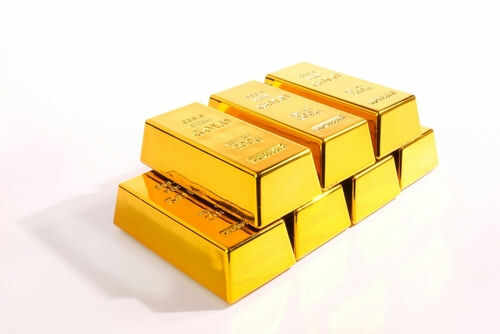
America’s “gold backstop” looks far less spendable than most voters assume, because much of Fort Knox may be stocked with bars that don’t meet modern international trading standards.
Quick Take
- Reporting circulating in April 2026 says a large share of Fort Knox bars are “non-standard” and may not qualify for international settlement without costly refining.
- International “good delivery” norms generally require high purity, and the cited threshold for broad acceptance is at least 995 fineness.
- The U.S. reports total gold reserves of 8,133.5 metric tons, with roughly 147.3 million ounces attributed to Fort Knox, but purity and audit questions complicate real-world usability.
- France’s central bank reportedly swapped out non-standard gold held in New York for higher-quality bars, a move that highlights the practical importance of bar quality.
What the April 2026 claims say about Fort Knox’s “non-standard” bars
Claims gaining traction in April 2026 argue that much of the gold stored at Fort Knox consists of older “coin gold” bars—products of melted Depression-era coinage and other legacy sources—rather than the higher-purity bars used for modern wholesale settlement. The central practical point is not whether the United States “has gold,” but whether those bars are readily deliverable in today’s international market without re-melting and re-assaying.
It points to a specific and provocative figure: roughly 17 percent of Fort Knox bars reportedly meet modern purity expectations, implying the remainder could be illiquid for quick, large-scale international transactions. The story also emphasizes scale: the U.S. reports 8,133.5 metric tons of gold overall—about 261.5 million troy ounces—with about 147.3 million ounces stored at Fort Knox. Those totals may be accurate on paper while still being operationally limited by quality.
Why purity standards matter in real-world crisis finance
Modern bullion markets are governed by “good delivery” standards designed to make settlement fast and trusted across borders. The London Bullion Market Association (LBMA) framework described includes bar size norms and a minimum fineness of 995.0 parts per thousand for broad acceptability, with the market having moved toward even higher purity expectations in practice. A country can own large quantities of gold and still face friction if that gold must be refined before it can clear.
That distinction matters because gold, when used at all in state-to-state settlement, is valued for speed, certainty, and universal acceptance—especially during sanctions, currency instability, or confidence shocks. If a large share of Fort Knox is “non-standard,” the United States could still refine it, but that takes time, capacity, and money, and it introduces bottlenecks exactly when policy makers want optionality. For fiscal conservatives, that’s another reminder that “assets” can be less useful than they look.
The audit gap: where skepticism hardens into a governance issue
It stresses a long-running credibility problem: the lack of what it calls “credible physical audits” of U.S. gold reserves for decades, with a “most recent documented audit” reference tied to materials associated with a 2011 House Committee on Financial Services hearing. That does not prove the gold is missing, but it does explain why speculation persists. In a system already distrusted by many Americans, opacity becomes a political liability.
This is also where left-right frustration overlaps. Conservatives tend to see secrecy as a symptom of entrenched bureaucracy and unaccountable “deep state” management. Many liberals, meanwhile, suspect rigged rules and elite insulation from scrutiny. Either way, when public institutions cannot quickly answer basic verification questions about a strategic asset, it reinforces the broader belief that government systems protect themselves first and provide transparency only when cornered.
France’s reported move shows how other countries treat “deliverability”
It highlights a concrete comparator: France’s central bank reportedly sold 129 tonnes of similar non-standard gold stored in New York and replaced it with higher-quality bars held in France. Regardless of one’s broader view on gold’s role in a fiat era, that decision signals that at least some major players care about deliverability—owning bars that can be readily sold or pledged without conversion delays. It also underscores why custody and quality are separate questions.
Ft. Knox Full Of Impure Gold Unfit For International Transactions https://t.co/PP34OlgPa0
— zerohedge (@zerohedge) April 29, 2026
For the United States, the immediate policy takeaway is narrower than the online arguments suggest. It does not provide a current, independent bar-by-bar assay, and it flags uncertainty about today’s composition and the exact costs or timelines required to upgrade older bars. Still, the combination of aging inventories, evolving market standards, and patchy public verification is enough to justify scrutiny—especially for voters demanding competent stewardship of national assets.
Sources:
https://www.gata.org/node/24624
https://mises.org/power-market/ft-knox-full-impure-gold-unfit-international-transactions