

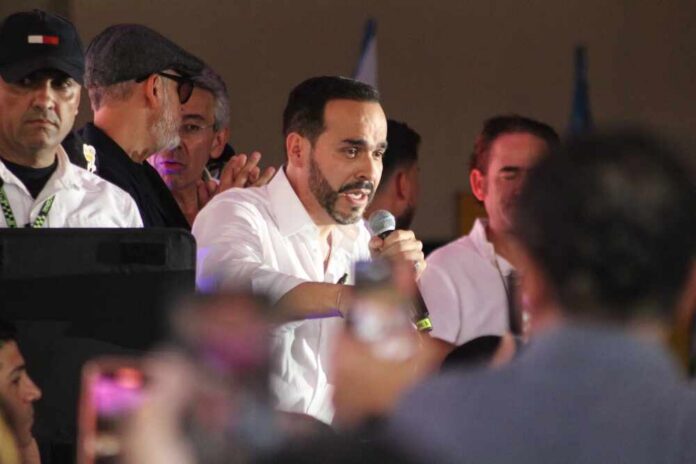
A conservative lawyer who admires Donald Trump just finished first in Colombia’s presidential race — and he could be the next leader of one of America’s most important allies in Latin America.
Story Snapshot
- Abelardo de la Espriella, a conservative attorney, won 43.7% of the vote in Colombia’s first round and advanced to a June 21 runoff election.
- He ran on a tough law-and-order platform — promising to crack down on armed groups, build 10 mega prisons, and strengthen Colombia’s military.
- De la Espriella openly admires President Trump and has expressed plans to work closely with the U.S. on regional security.
- His rise fits a broader trend: right-leaning candidates have won elections across Latin America in recent years as voters reject failed leftist governments.
Who Is Abelardo de la Espriella?
Abelardo de la Espriella is a well-known Colombian attorney who built a public profile long before entering politics. Reuters describes him as a right-wing outsider, while other outlets call him a conservative politician with a sharp anti-establishment message. He positioned himself against both the traditional political right and the struggling leftist government of outgoing President Gustavo Petro. His celebrity-lawyer status helped him connect with voters who felt ignored by career politicians.
De la Espriella captured 43.7% of the vote in the first round, finishing well ahead of his rivals. [3] That result sent him into a June 21 runoff against leftist candidate Iván Cepeda. Polls showed right-leaning voters consolidating behind de la Espriella heading into the second round. [2] His strong first-round showing gave his campaign real momentum and signaled that millions of Colombians wanted a sharp change in direction from Petro’s left-wing policies.
A Platform Built on Security and Order
De la Espriella’s campaign focused heavily on security. He promised to take a hardline stance against Colombia’s armed groups, including guerrillas and narco-traffickers. He proposed building 10 mega prisons and pledged to strengthen the military. [2] He also vowed to protect free trade and private property — priorities that resonate with Colombians tired of economic instability and violence. His supporters, including Colombian Americans in Florida, said they wanted a leader who would fight corruption and end narco-terrorism. [5]
His campaign rhetoric was bold and direct. He said he would stand as “Colombia’s finest warrior to defend our democracy until death.” [2] Critics called his approach fear-based and said he relied too heavily on social media rather than detailed policy plans. [5] That criticism is fair to note. But voters across Colombia and in the diaspora clearly responded to his message. When people feel unsafe and unheard, a candidate who speaks plainly about security tends to cut through the noise.
Trump Endorsement and U.S. Ties
De la Espriella openly admires President Trump and has said he wants to work closely with the Trump administration on regional security. [5] Trump endorsed his campaign, and de la Espriella publicly thanked him for it. [10] For conservatives in the United States, this matters. A pro-America, pro-trade Colombian president would be a strong partner in a region where leftist governments have often pushed back against U.S. interests. His alignment with Trump’s vision for Latin America could help stabilize a key ally.
Colombians are heading to the polls for a presidential runoff between Abelardo De La Espriella and Ivan Cepeda — but here in NYC, hundreds of immigrants from Colombia have already cast their vote. https://t.co/V8lSFG12ni
— Documented (@Documentedny) June 21, 2026
Some critics argue that his U.S. ties make him look like an externally driven candidate rather than a homegrown one. [4] That framing is worth examining honestly. De la Espriella earned his first-round lead through a domestic campaign — not through Washington. Shared values between allies are not a weakness. The real question is whether he can govern effectively and deliver on his security promises for the Colombian people.
Colombia’s Election in a Shifting Latin America
De la Espriella’s rise is not happening in a vacuum. Latin America has been shifting right. In 2025 alone, four countries in the region elected right-wing or conservative leaders. [18] Peru, Chile, and others have seen voters reject left-wing governments that delivered inflation, crime, and instability. Colombia under Petro followed that same failed pattern. Voters there, like voters across the region, appear ready to try a different path — one built on order, economic freedom, and national security rather than socialist experimentation.
Sources:
[2] Web – Abelardo de la Espriella – Wikipedia
[3] Web – Colombia: What to know as presidential vote heads to runoff – DW.com
[4] Web – Poll Tracker: Colombia’s 2026 Presidential Election – AS/COA
[5] Web – Continuity or change? What to know about Colombia’s run-off election
[10] Web – Abelardo de la Espriella: Colombian election 2026 guides
[18] Web – [PDF] Outsiders Get Elected? A Model of Strategic Populists