
Republicans staged a first-ever midterm convention built around President Trump to drive turnout and unify the party ahead of November, with Trump speaking both nights in Dallas.
Story Highlights
- President Trump spoke on both nights at a first-ever Republican midterm convention in Dallas.
- Party leaders framed the event as a unity push to energize voters and defy midterm history.
- High-profile speakers signaled alignment around the agenda and ticket.
- Skeptics questioned whether independents would respond, leaving results to be proven by turnout data.
Trump-Centered Convention Sought to Supercharge Turnout
Republican leaders held a two-night midterm convention in Dallas on September 9 and 10 to rally voters and project unity. President Trump announced the plan in June, calling Dallas the stage to celebrate America and set the fall message. Reuters reported the Republican National Committee billed it as a major effort to energize supporters and beat the usual midterm losses for a president’s party. Organizers cast the gathering as a national push to focus volunteers, donors, and voters before early voting starts.
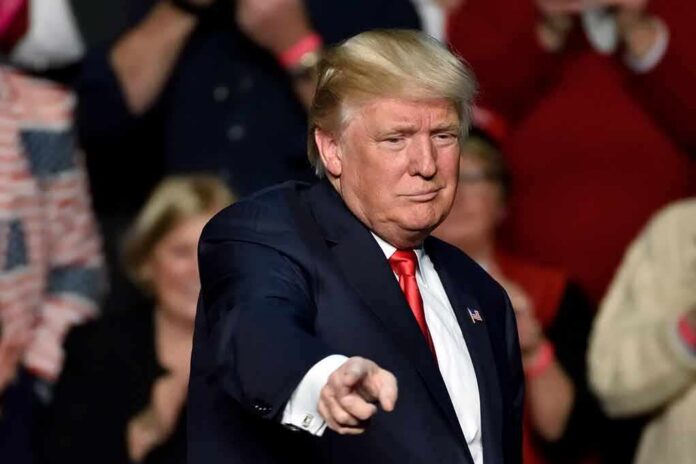
Trump’s role dominated the program. Reuters and CBS reported he would speak both nights, delivering a keynote and the closing message to cap the show of party strength. Photo and on-the-ground reports described a large rally scene and a lengthy speech from Trump to the packed crowd. The aim was clear: center the movement on a simple theme of peace, prosperity, and secure borders, and convert enthusiasm into turnout in swing districts where close races will decide control of Congress.
RNC Framed It as the Biggest GOP Convention in a Decade
CBS reported the Republican National Committee called it the first midterm convention and the party’s largest in ten years, listing dozens of speakers across both nights. That scale signaled full organizational buy-in and cash behind a late-campaign surge. The party promoted the event as a unity moment, not a policy seminar. The message focused on jobs, inflation relief, border enforcement, and restoring order at home and abroad, themes Republicans view as common sense priorities for families.
The speaker list backed the unity pitch. Coverage identified Vice President JD Vance, Donald Trump Jr., Karoline Leavitt, Mehmet Oz, Scott Turner, Scott Bessent, Todd Blanche, and Robert F. Kennedy Jr. among the names drawing attention in Dallas. That lineup blended national security, economic, legal, and culture voices. It also showed a coalition that crosses traditional lanes, designed to keep core voters engaged and to spotlight messengers who can speak to suburban and working-class households feeling squeezed by high costs.
Enthusiasm Was Real, But Measured Impact Remains Unproven
National outlets described a lively, high-energy scene, with NPR calling Trump the party’s key asset for getting out the vote. Reuters described the convention as unusual and a strategic gamble to beat history. That framing matters. The record shows planning, crowds, and speeches, but not yet the hard proof that the event will lift turnout, registration, or vote share in key races. No post-event metrics or district shifts tied to the convention were provided in the cited coverage.
Some attendees and analysts questioned whether independents would engage. Reuters quoted several Republicans who worried the pitch may not reach swing voters needed to hold the House and Senate majorities. The Guardian and The Hill amplified that critique, calling the approach risky in a polarized climate with tough approval numbers, which could limit persuasion beyond the base. That debate sets a clear test: if the Dallas surge powers field work and absentee returns, the strategy pays off; if not, critics will say it narrowed the focus at the wrong time.
What Matters Next: Ground Game, Not Headlines
Election history says big events can spark attention but do not always shift outcomes on their own. Research and reporting suggest convention “bounces” can fade, and midterms often ride fundamentals like the economy, safety, and the president’s standing. For Republicans, the next steps are concrete: convert the Dallas enthusiasm into voter contacts, early voting plans, and precinct coverage. Verified numbers on turnout, registration, and small-dollar donations will show whether “Trumpapalooza” was more than a show.
Republicans argue the stakes are clear for conservative families: secure the border, lower energy costs, protect the Constitution, and stop the left’s habit of spending and control. The Dallas convention put that case on one stage and gave it a simple face. Supporters see unity and momentum. Skeptics see risk with independents. The facts to watch now are measurable: doors knocked, ballots returned, and wins posted. Until then, the crowd energy is real, and the scoreboard is still blank.
Sources:
cnav.news, npr.org, aljazeera.com, pbs.org, politico.com, reuters.com, bloomberg.com, cbsnews.com, thehill.com