
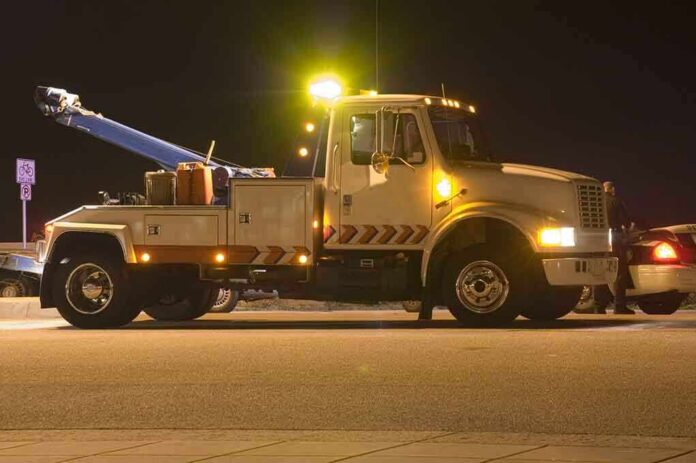
About 90 USS Kearsarge sailors came home from sea to find their cars towed for a base concert, igniting fresh anger over common-sense failures that hit military families where it hurts most.
Story Highlights
- Roughly 90 sailors returned to a fenced lot at Pier 14 and found their vehicles impounded.
- Base officials say advance notice and barriers marked the restricted area before the event.
- Families say sailors were not told, faced hours retrieving cars, and saw a $180 impound fee.
- The base is reviewing procedures after concert-related towing from a designated parking area.
What Happened at Naval Station Norfolk
WHRO reported that roughly 90 sailors from USS Kearsarge returned from 10 days at sea to discover their cars gone from a fenced lot at Pier 14 on Naval Station Norfolk. Reporting tied the towing to an on-base concert on August 29 featuring Teddy Swims and Miranda Lambert, organized under Morale, Welfare, and Recreation. A spouse told reporters that sailors, including senior staff, were not told and then spent hours retrieving vehicles. The incident quickly spread across military circles and raised basic questions about notice and priorities.
Yahoo’s version of the story said sailors were bused to the impound lot and waited more than three hours to get their cars back. WHRO reported a $180 impound fee per vehicle and confusion about who was on the hook for payment or reimbursement. One spouse said she was told the ship’s captain was responsible, which added to frustration and uncertainty. These details painted a picture of a long, stressful day for families who were already managing the strain of time at sea.
Base Officials Say Notices Went Out Early
Naval Station Norfolk officials pushed back on the claim that no one warned sailors. A base spokesperson said the command provided advance notification identifying affected parking areas and the dates those areas needed to stay clear, and that personnel spoke with USS Kearsarge security staff before the ship left port. Officials also said barriers, cones, and caution tape marked the restricted areas in advance, and that the entire waterfront was notified about the August 29 concert restrictions earlier in the month. This sets a direct conflict between family accounts and the base record.
Military.com reported the base acknowledged vehicles were towed from a designated parking area to execute the concert plan and that the ship had been in port when initial notices and barricades were placed. Stars and Stripes reported the base is reviewing “lessons learned,” including waterfront notification and command coordination when temporary restrictions overlap with a ship’s underway period. That review suggests officials see room to improve, even while they say they followed procedures.
The Notice Gap and Who Pays
The core dispute is simple: Did the warning reach the sailors who parked in that fenced lot before sailing? The stories do not show the actual email, bulletin, or written warning. The reported number of tows is based on media accounts, not a public tow log. Those gaps limit what the public can verify right now. Still, the facts that matter to families are clear: cars were towed for an event, recovery took hours, and the fee was set at $180 per vehicle.
Stars and Stripes noted that sailors can usually use that area when at sea if the underway time is 14 days or fewer, which fit this 10-day period, but a temporary event rule appears to have overridden the normal practice. That puts a spotlight on how short-term restrictions are communicated and enforced. If the base did notify the waterfront and ship security, why did so many sailors leave cars where they would be towed? If the warning chain failed at the unit level, who owns that failure? The review needs to answer that.
Why This Hits a Nerve With Military Families
Families live on tight schedules and tighter budgets. Many drive older cars and cannot absorb surprise fees or lost time. When towing supports a concert rather than a clear safety hazard, people see mixed-up priorities. Command morale programs matter. But so does basic respect for the men and women who stand the watch. When planning misses the mark, the fix should be fast, clear, and fair about who pays and how families are made whole, without runaround or finger-pointing.
Common-sense steps can prevent a repeat. Commands should publish event closures through multiple channels, with plain maps and dates. Unit musters should include read-backs for parking changes before underway. If civilian-style towing is required, the base should set up real-time checks and a live hotline. And when enforcement hits sailors who followed normal practice, the base should waive or reimburse fees by policy, not after a fight. The base’s stated review is a start, but families will judge results, not memos.
Sources:
military.com, yahoo.com, stripes.com