

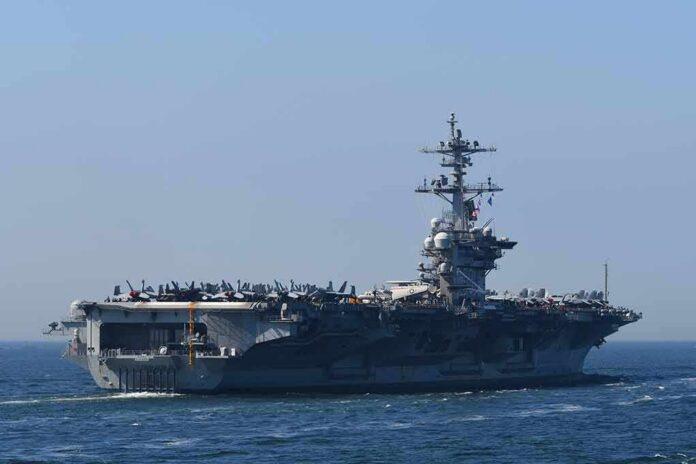
Jet fuel residue seeped into a USS Nimitz drinking-water tank and sickened sailors, and investigators tied it to preventable maintenance and procedural failures.
Story Highlights
- Navy investigators found jet fuel residue entered an unused potable water tank through a failed gasket.
- The carrier identified fuel traces in mid-September 2022; 11 sailors reported symptoms.
- Officials isolated problem tanks and flushed the system before the ship returned to sea.
- Findings cited maintenance lapses and procedural errors, not a catastrophic system break.
Investigators Pinpoint the Cause Inside the Ship
U.S. Navy investigators concluded that jet propellant residue from bilge spaces entered an unused drinking-water tank on USS Nimitz through a deteriorated gasket sometime between 2020 and 2021. The tank sat unused for about 18 months before the ship returned to sea. When the crew prepared for deployment in September 2022, contaminated water reached the system and some sailors noticed a fuel taste and odor. The Navy’s official summary attributes the breach to the failed seal, not a tank rupture or fuel-pipe break.
Investigative write-ups and service reporting linked the broader incident to procedural problems and maintenance lapses aboard two carriers, including Nimitz. The documented chain shows that aging parts and human error allowed contaminated liquid to reach a potable tank and then the wider system. This is not a mystery failure. It is a preventable lapse that better inspections and clear line-up procedures could have stopped. The Navy’s public release tied the contamination to crew and equipment failures, not a one-off fluke.
Timeline: Detection, Containment, and Return to Operations
Ship’s tests on September 16, 2022, detected jet fuel in the water supply, and leaders began flushing and isolating tanks. After several days, testing showed progress, and bottled water supported the crew during the disruption. By October 1, 22 of 26 potable tanks met the fuel-hydrocarbon threshold set by the Hawaii Department of Health; four tanks stayed isolated. The Navy said the water was safe as Nimitz rejoined its strike group soon after, following continued testing and system checks.
Public updates note that sailors reported health concerns as the event unfolded. Officials said five sailors initially came forward, and that number rose to 11 by early October. Reporting at the time said those sailors received treatment and returned to duty. The Navy reported detectable traces in testing during the week of September 21, then cleared most tanks and kept the rest offline until results met safety standards. The service emphasized continued monitoring after the ship got back underway.
Why This Matters for Readiness and Accountability
This incident shows how small maintenance misses can threaten health and mission. A worn gasket on a drinking-water tank allowed bilge residue with jet fuel to enter the system, linger, and later sicken crew. Navy coverage and the investigation stressed procedural and maintenance shortcomings as root causes. That means leadership can fix it with strict inspections, clear rules for tank status, and real oversight. Combat power starts with safe water and trust in the basics aboard ship.
Conservatives expect strong standards, not excuses. The Navy’s findings back that view. The cause was not fate; it was preventable. The fleet must enforce routine checks on gaskets, seals, and valves, and document tank histories so residue cannot sit unnoticed. Crews need simple, written line-up steps for fuel, bilge, and potable-water systems. Commanders should demand rapid reporting and independent spot checks. These steps protect sailors, sharpen readiness, and respect taxpayers who fund the fleet.
Sources:
19fortyfive.com, airpac.navy.mil, news.usni.org, stripes.com, navytimes.com, businessinsider.com