A terror-designated bloc just teamed up for Palestinian elections, raising fresh security stakes for Israel and America’s allies.
Story Highlights
- Hamas, Palestinian Islamic Jihad, and Mohammed Dahlan’s faction agreed to run on a joint electoral list.
- Islamic Jihad’s deputy leader said the groups back a “unified national list” for November’s vote.
- The alliance aims to challenge Mahmoud Abbas and the ruling Fatah party’s hold on the legislature.
- The joint slate could mirror 2006 dynamics that rewarded unified, disciplined lists over divided blocs.
Militant Factions Unite Around A Single Election Slate
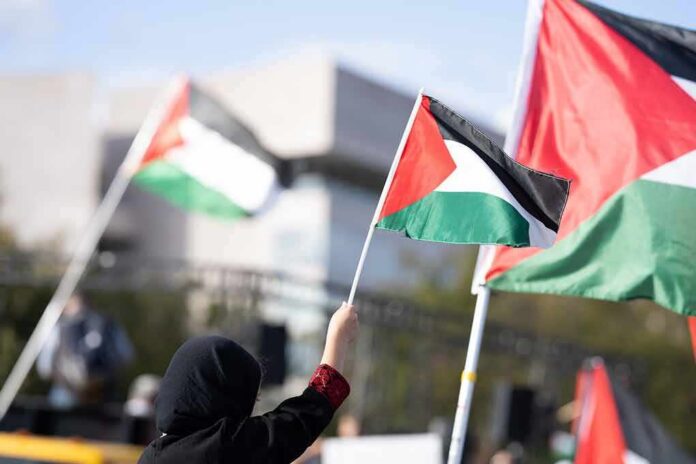
Palestinian Islamic Jihad’s deputy secretary general, Mohammed al-Hindi, said Hamas and his group agreed to support a joint electoral list with a bloc led by ex-Fatah official Mohammed Dahlan. He described the plan as a “unified national list” for upcoming Palestinian legislative elections. The Associated Press reported the unusual partnership and cited Palestinian officials involved in talks. The deal links two U.S.- and European-designated terrorist organizations with a rival of President Mahmoud Abbas inside the Palestinian political field.
Israeli and regional outlets echoed the confirmation that Dahlan’s Democratic Reform Current would align with Hamas and Islamic Jihad. Reporting framed the alliance as a direct electoral challenge to Fatah’s grip on the Palestinian Authority legislature. The coalition would try to convert split opposition energy into seats by appearing on a single slate. That choice matters under a proportional system where unity often beats fragmentation, even when groups differ on goals and methods.
Why This Alliance Matters For Security And U.S. Interests
The alliance could increase the political reach of armed groups that target Israeli civilians and reject Israel’s right to exist. A stronger Hamas–Islamic Jihad presence inside Palestinian institutions would complicate security coordination with Israel. It could also test regional ties with United States partners that back stability and counterterror efforts. The Associated Press noted Dahlan’s ties to the United Arab Emirates, a key United States-aligned state that normalizes with Israel and seeks calm in the region.
For conservative readers, the takeaway is direct. Elections can launder reputations while keeping radical aims. A single list can turn street power into political leverage fast. That is how movements embed inside ministries and budgets. It may also harden rejectionist lines against peace. A unified slate backed by militants is not a path to moderation. It is a bid for authority without disarming or accepting core conditions for lasting recognition and order.
The 2006 Playbook: How Unity Beat Division
Analysts point to a key precedent. In 2006, unified and disciplined organization helped Hamas beat a divided Fatah in legislative polls. The electoral math rewarded a single, focused slate and punished split tickets. Today’s reports describe a similar push to avoid scattering votes across feuding lists. Research on the current race says factions seek pooled strength to raise seat counts and bargaining power inside a list-based system that prizes cohesion on ballot day.
“Quds Press”: A Hamas Leadership Delegation Arrives in Cairo to Continue Consultations on an Electoral Alliance
On Wednesday, well-informed Palestinian sources reportedly said that a Hamas leadership delegation had arrived in the Egyptian capital, Cairo, to continue talks on… pic.twitter.com/7qTYLYRxpT
— Mujamma Haraket (@MujammaHaraket) October 1, 2026
That history explains the rush to combine brands that once fought each other in the streets. It is not about deep ideological harmony. It is about arithmetic. When ballots are counted, a joint list can trade internal debates for public unity and more seats. That edge could sideline rivals, pressure Fatah, and force any talks to include hardline actors. If this slate gains, it would pull Palestinian politics further from security cooperation and compromise.
What Comes Next And How The U.S. Should View It
Election officials set November for voting, and the alliance is moving to finalize names, messaging, and ground game. Observers expect the list to feature figures able to appeal beyond party bases, possibly with more “independent” faces to soften militant branding. But the center of gravity would remain with Hamas and Islamic Jihad. The goal is clear: turn a protest axis into a ruling bloc that can veto reforms, budgets, and security steps that do not match its aims.
American policy should read this as a warning light. A stronger militant footprint in Palestinian governance risks more rocket fire, less security coordination, and new pressure on Israel’s borders. It also invites more foreign meddling from actors who fund or shield these groups. President Trump’s team has stressed peace through strength and clear lines against terror finance. This case calls for the same: tighten oversight, back Israel’s right to self-defense, and insist that ballots cannot excuse violence.
Sources:
youtube.com, jpost.com, nation.com.pk