California’s new polling-place arrest ban collided with a fiery threat from Governor Gavin Newsom to “track down” federal agents, setting up a state–federal showdown over Election Day authority.
Story Highlights
- California’s Protect Our Polls Act bans most arrests within 200 feet of polling places on Election Day.
- Governor Gavin Newsom warned that federal agents who violate the law would be arrested and prosecuted.
- New York’s attorney general said federal law bars armed federal officers from policing polls.
- Trump officials said there would be no broad patrols, but targeted warrants or threat responses could occur.
California’s New Law Limits Arrests Near Polls
California enacted Senate Bill 884 in September 2026. The law bans law-enforcement arrests within 200 feet of a polling place on Election Day. It allows exceptions for crimes that disrupt voting or crimes against people or property. The law took effect at once. It also creates a reporting path. Suspected violations must be sent to the California Secretary of State and the Attorney General. Election officials may extend voting hours if disruption occurs from a prohibited arrest.
The statute’s promise is simple. Keep armed enforcement away from the ballot box unless a clear crime or threat demands it. The goal is to protect voters from fear and keep lines moving. The limits apply to any officer making an arrest in the zone. The rules are designed for Election Day. Reports note that the buffer may not cover early voting or other dates automatically, which narrows how often it applies in practice.
Newsom’s “Track You Down” Warning Ups the Stakes
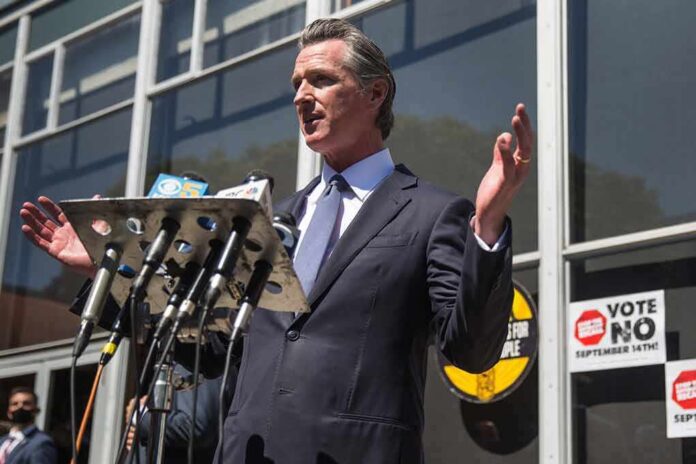
On November 3, 2026, Governor Gavin Newsom responded to reports and warnings with a hard line. He said that if federal agents showed up at polling places illegally, “we will find them. We will track you down, arrest you, and prosecute you. There will be no escape.” His words grabbed headlines and raised the temperature. His statement did not cite a specific statute, warrant, or charging memo to support arresting federal agents.
California officials framed the law as a shield for voters, not a sword. But Newsom’s vow moved the focus to confrontation. That pivot creates legal questions. Can the state arrest federal officers acting under color of federal law? What court would decide the clash? The record does not show that Immigration and Customs Enforcement deployed agents to California polling places or that covered arrests took place on Election Day.
What Federal Law Says About Armed Officers at the Polls
Historical federal law restricts armed federal presence at polling sites. New York Attorney General Letitia James reminded voters that federal officers, including immigration agents, cannot police poll sites. She cited statutes that bar ordering, bringing, or keeping troops or armed federal officers at a poll site and prohibit official interference with a federal election. The guidance drew a bright line against intimidation at voting places.
California Gov. Gavin Newsom is taking a firm stance on Election Day, warning that ICE agents could face arrest if they interfere with voters at polling locations. The warning comes amid tensions over federal immigration enforcement.https://t.co/ZMPgHVr41r
— Fox Reno (@fox11reno) November 4, 2026
Independent reporting noted that some experts read the “troops or armed men” language to include civilian agencies like Immigration and Customs Enforcement. A Campaign Legal Center attorney told a California outlet that the federal restriction can reach such agencies. That view supports state warnings about armed federal presence. But it does not answer every real-world case, such as a valid warrant for a violent felon near a polling site.
Trump Officials: No Patrols, Only Targeted Enforcement
Trump administration officials said they had no plans to patrol or monitor polling places. They said officers could act only if they had a warrant for someone they had been tracking, or if there was a real threat to the polling site. Department of Homeland Security leaders explained that officers would go where needed to serve a warrant, but not to conduct broad patrols. That position narrows conflict with state law but does not erase it.
This leaves a gray zone. California’s law bars arrests in the zone unless an exception applies. Federal officials claim targeted actions for a warrant or an active threat fit within their authority. Disputes may turn on facts: Was there a disruptor? Was there a crime against a person or property? Did the action truly protect the site, or intimidate voters? Without incident reports or charges, the fight is mostly about rules and warnings, not completed cases.
What It Means for Voters and the Constitution
Election Day should never feel like a checkpoint. Voters deserve calm, safe access to the ballot. California’s law aims to secure that space, but its exceptions will be tested. The conservative bottom line is clear. We support law and order and free, fair elections. Targeted arrests for true threats should proceed. Fishing expeditions at the polls should not. Courts, not press conferences, must settle the line when state and federal rules collide.
Here is the practical takeaway. If a federal agency claims a narrow warrant or threat response, it must document it. If the state claims a violation, it must prove it. Both sides should preserve body-camera video, radio logs, and on-scene reports. Transparent records protect voters and officers alike. Until we see those records, there is no evidence of broad federal patrols or state arrests under this law in California’s polling zones.
Sources:
twitchy.com, sd34.senate.ca.gov, lohud.com, ag.ny.gov, kqed.org, mediaite.com, issueone.org, ap.org