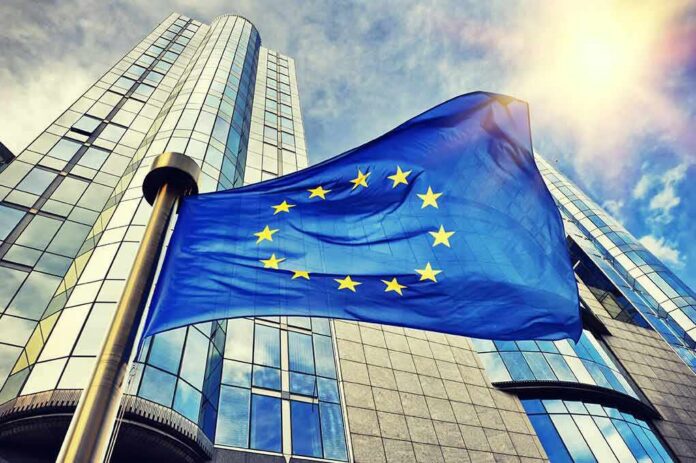
Europe’s leaders agreed to send a single negotiating team to Ukraine peace talks, aiming to speak with one voice while big questions about who leads remain set aside.
Story Highlights
- European Union leaders backed a unified European voice for Ukraine talks.
- Britain, France, Germany, Italy, and Poland will join EU institutions at the table.
- Dublin declaration said European security must include Europeans in decisions.
- Structure and mandate of the team remain unclear despite public agreement.
EU and Key States Set Plan for a Unified Negotiating Front
European Council President António Costa said Europe must “speak with one clear voice” in talks that shape Ukraine’s future and the continent’s security. Leaders meeting in Dublin endorsed a plan to form a team that includes European Union institutions alongside major European powers. Reporting identified Britain, France, Germany, Italy, and Poland as core participants with European Commission and European Council delegates. The goal is a single message from Europe in any talks that follow recent contacts among the warring parties.
Associated Press reported that this hybrid plan explicitly includes the United Kingdom, which left the European Union but remains a top military and diplomatic actor in Europe. Ireland’s prime minister said the representation “can’t just be European Union.” That view reflects a hard lesson from recent years: European security is bigger than Brussels, and lasting outcomes need buy-in from capitals that hold major defense and intelligence weight, including London and Warsaw.
Dublin Declaration and Recent Pre-Talk Diplomacy
Reuters reported that forty European countries in Dublin signed a declaration saying matters that affect European security should involve Europeans. That principle tracks the recent practice on the ground. National security advisers from Britain, France, Germany, Italy, and European Union bodies attended discussions in Abu Dhabi earlier in the week. Those talks did not yield progress on core issues like territory, but they showed Europe is already inside the room and trying to shape the process from within.
Defense News noted that Russia signaled it would allow European representatives to join a coming round, though the scope and terms remain to be set. That outside gatekeeping matters. Access can be narrowed or pulled. The United States also plays a central role as broker, and that reality can shape the agenda, pace, and options on the table. European leaders are trying to lock in a seat and turn presence into leverage in the months ahead.
Open Questions on Mandate, Spokesperson, and Chain of Command
Reuters and other outlets said leaders agreed on the principle of one voice but did not settle on a single spokesperson or detailed rules. Reports described likely participants, such as national security advisers and European Union delegates, but did not identify a formal mandate, voting method, or messaging chain. German Chancellor Friedrich Merz referenced competing formats, from European Union institutions to informal groupings like the E3, which shows the coordination challenge underneath the new umbrella.
This design blends the European Union and sovereign states, including a non-European Union power in Britain. That mix boosts reach but can slow decisions when views split. The research does not show how the team will resolve disputes among London, Paris, Berlin, Rome, Warsaw, the European Council, and the European Commission before entering the room. Without clear rules, rivals can try to divide the group or stall progress when time is short.
Why This Matters for American Conservatives
President Trump’s team is driving a U.S.-led process that seeks real results, not endless meetings. A coherent European partner can help share the load, deter mission creep, and keep costs in check for American taxpayers. A single voice in Europe can also reduce mixed signals that embolden Moscow or stretch the talks. That aligns with core conservative goals: strong defense, tight spending, and avoiding open-ended foreign commitments without clear terms or end states.
Europe named its team for the next Ukraine peace talks: EU officials plus the UK, France, Germany, Italy and Poland. The Kremlin says no decision has been made on letting Europe in. Merz asked Trump for "no surprises" at his expected meeting with Putin in China next week.…
— Scott T Archer (@ScottTArcher) November 14, 2026
At the same time, facts on the ground still decide outcomes. Attendance does not equal leverage. The Abu Dhabi round showed that presence alone did not move hard issues like borders. The European declaration puts down a marker, but progress will hinge on a firm mandate, tight discipline, and real alignment with Washington. If Europe turns unity into concrete offers and red lines, it can help close a deal sooner and on terms that advance stability without dragging America into a blank check.
Sources:
rmb.reuters.com, tagesschau.de, defensenews.com, today.com, reuters.com