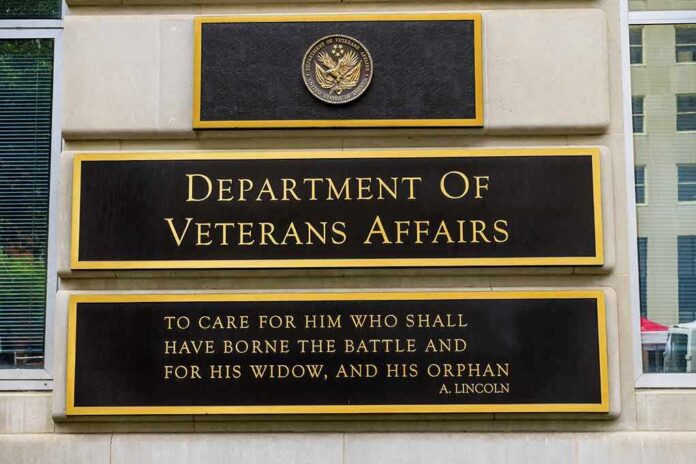
Twenty-three Democratic attorneys general asked a federal court to force the Department of Veterans Affairs to restore abortions and abortion counseling at government facilities.
Story Highlights
- Twenty-three Democratic attorneys general filed an amicus brief to expand abortion at the Department of Veterans Affairs.
- A December 2025 Department of Veterans Affairs rule excludes abortion and abortion counseling, with care only in life-threatening cases.
- A Department of Justice legal opinion says the Department of Veterans Affairs lacks authority to provide abortions under Title 38.
- The court has not ruled on the merits; litigation is ongoing.
What Democrats Are Asking the Court To Do
Illinois and California led a group of twenty-three Democratic attorneys general who filed a friend-of-the-court brief in Minority Veterans of America v. Secretary of Veterans Affairs. They want the U.S. Court of Appeals for the Federal Circuit to reject the Department of Veterans Affairs policy that removed abortion and abortion counseling from covered care. Their press releases describe the filing but do not include the full legal brief or docket details, which limits insight into their exact arguments.
The coalition argues that the Trump administration reversed a 2022 policy that had allowed abortion in cases of rape, incest, or threats to the mother’s health, and had allowed counseling in all cases. Their public statements frame the change as harmful to veterans and inconsistent with prior access. They emphasize patient impact but rely on general claims; the record provided here does not include named patient affidavits or medical data to quantify harm under the new rule.
What the Department of Veterans Affairs Policy Actually Says
A December 22, 2025 Department of Veterans Affairs memorandum ordered immediate compliance with a Department of Justice Office of Legal Counsel opinion and said the Department “will no longer provide abortion or abortion counseling.” It clarified that life-saving care is still covered, including treatment for ectopic pregnancies and miscarriages when medically necessary to save the veteran’s life. The memorandum’s directives were effective right away and guided clinical decisions across facilities.
A December 31, 2025 final rule in the Federal Register reinstated the longstanding exclusion of abortion and abortion counseling from the Department of Veterans Affairs medical benefits package and the Civilian Health and Medical Program of the Department of Veterans Affairs. The rule allows care in life-threatening circumstances and defines when an abortion for Civilian Health and Medical Program of the Department of Veterans Affairs beneficiaries may be considered medically necessary, only when a physician certifies the mother’s life is at risk.
The Legal Foundation: Statutory Authority and Limits
The Department of Justice Office of Legal Counsel concluded that the Department of Veterans Affairs may not provide abortion services under chapter 17 of Title 38. That interpretation is the backbone of the Department’s policy and shapes how the department defines covered services today. The Office of Legal Counsel opinion also explains the narrow path for Civilian Health and Medical Program of the Department of Veterans Affairs when a doctor certifies that continuing the pregnancy would endanger the mother’s life.
The administration’s rule contends that excluding abortion and counseling is consistent with statutory limits and the Department’s duty to provide necessary care within the law. It distinguishes between unlawful abortions and lawful emergency treatment that can include procedures ending a pregnancy when needed to save the mother’s life. This position centers the question on what Congress authorized, not a general policy debate over abortion.
What Conservative Readers Should Watch
The dispute turns on who decides what care taxpayers must fund and what services federal doctors may provide. Democrats want the court to override the Department’s reading of Title 38 and restore broader access. The Department cites law and a formal legal opinion to defend limits, while keeping emergency, life-saving care intact. The case has no final ruling yet. For now, the rule stands, and the Department is following the legal guidance set out in December 2025.
This fight also exposes a larger pattern in federal health programs. Battles often focus on what counts as “medically necessary,” who defines it, and how far agencies can go without Congress. The Department’s move places clear lines around federal involvement, while leaving room for urgent care to save a mother’s life. The coalition’s brief seeks to redraw those lines through the courts, rather than through new laws passed by Congress.
Sources:
lifesitenews.com, va.gov, federalregister.gov, illinoisattorneygeneral.gov, juliabrownley.house.gov, oag.ca.gov, ktvz.com