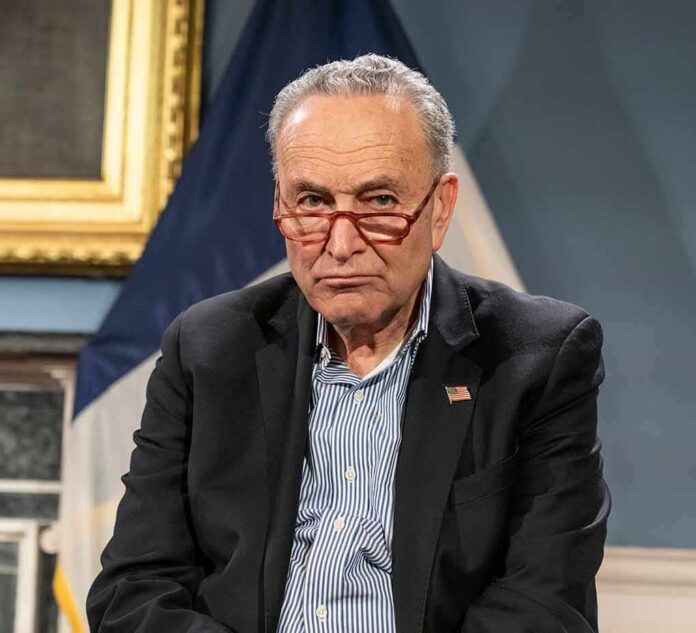
Chuck Schumer pledged a total ban on congressional and White House stock trading, but his own record now undercuts that promise.
Story Snapshot
- Schumer vowed to ban stock trading for Congress and White House officials in a public post.
- Schumer previously argued that letting members keep trading or sell with notice is not a real ban.
- Republicans pushed a bill to stop new stock purchases but allow sales and private shares; Democrats blocked it.
- Trump allies point to a 2024 committee bill that never got a Senate vote under Schumer’s leadership.
Schumer’s New Pledge And What It Claims To Cover
On November 12, 2026, Senate Majority Leader Chuck Schumer posted that Senate Democrats will ban stock trading for all members of Congress and White House officials. Reports repeated the claim and said the promise would reach across both branches. The message landed after sharp political fights and followed barbs traded with President Trump. The statement did not include a bill number, text, or timeline. Without text, the scope and penalties remain unclear.
News coverage linked Schumer’s pledge to his back and forth with Trump over corruption. Outlets described the pledge as a strike back. They also noted the sweeping language about Congress and White House officials. But they did not show draft rules or how any ban would work in real life. That missing detail matters. Real bans define what assets are covered, how to divest, and how to enforce violations. Those pieces were not provided.
What Schumer Says A “Real Ban” Looks Like
Schumer drew a clear line in the Congressional Record this fall. He said a plan that lets lawmakers keep owning, selling, or sometimes buying stocks is not a ban. He argued members should not be allowed to buy stocks after they enter Congress. He criticized a rival plan that would let sales happen with advance notice. He also warned against exempting the president from any rules. These points set a tough standard he says must be met.
The record shows a framework that would allow lawmakers to sell existing holdings with seven to fourteen days’ notice. That design limits trades but still allows transactions. Schumer said that is not a real prohibition. He insisted a true reform stops new stock purchases and tightens what members can do with current holdings. This is a key test he himself introduced. Any new bill he backs will be measured against this bar he set in September.
The Republican Alternative And Why Words Matter
Republicans advanced the Stop Insider Trading Act. Their plan would bar members, spouses, and dependent children from buying publicly traded stocks. It would allow them to keep current shares. It would require notice before sales and still permit buying private-company stock. Democrats blocked the bill, arguing it did not go far enough. The dispute shows how the word “ban” can hide big gaps in what trading is still allowed.
Under that Republican plan, a member could not buy new public stocks but could sell after notice and could buy private shares. That is a serious limit, but it is not a total stop. Schumer used that difference to claim Republicans were not banning trading. Yet his own new promise still lacks legal text. Voters cannot compare plans without side-by-side language. Until then, “ban” may be more slogan than policy, no matter who says it.
Trump War Room’s Hit And Schumer’s Weak Spot
Trump allies seized on Schumer’s history. The Trump War Room said a bipartisan trading bill cleared a Senate committee in July 2024 but never got a floor vote. They argued Schumer ran the Senate and let it die. That blast aims at credibility. It says promises are easy, but action is what counts. While that claim comes from a partisan outlet, it flags a real process question Schumer has to answer.
The deeper issue is trust. Americans are tired of rules for us and perks for them. The decade since the Stop Trading on Congressional Knowledge Act showed that disclosure alone did not fix conflicts. Reports still found late filings and little discipline. Voters want clean rules that stop self-dealing, with teeth to enforce them. Clear bans, clear divestment paths, and clear penalties are the only way to restore confidence.
What To Watch Next: Text, Scope, And Enforcement
The test now is simple. First, bill text. Does Schumer’s plan stop all new stock buys by members and covered White House staff, define covered assets, address private shares, and require blind trusts or full divestment? Second, scope. Does it include spouses and dependent children and apply to the president and senior staff? Third, enforcement. Who investigates, what are the penalties, and when does it start? Answers to these will show if “ban” means ban.
Sources:
twitchy.com, theepochtimes.com, newsable.asianetnews.com, tribuneindia.com, dailypost.ng, ground.news, congress.gov